Archbishop elected head of national body
Group issues guidelines to Catholic dioceses on issues such as reconciliation

Advertisement
Read this article for free:
or
Already have an account? Log in here »
To continue reading, please subscribe:

Digital Subscription
One year of digital access for only $205*
- Enjoy unlimited reading on winnipegfreepress.com
- Read the E-Edition, our digital replica newspaper
- Access News Break, our award-winning app
- Play interactive puzzles
*First annual payment billed as $205.00 + GST for one year. This annual subscription will automatically renew at $233.00 + GST every 52 weeks (10% off the regular annual price of $259.35). Offer available to new and qualified returning subscribers only. Cancel any time.
To continue reading, please subscribe:
Add Free Press access to your Brandon Sun subscription for only an additional
$1 for the first 4 weeks*
- Enjoy unlimited reading on winnipegfreepress.com
- Read the E-Edition, our digital replica newspaper
- Access News Break, our award-winning app
- Play interactive puzzles
*Your next Brandon Sun subscription payment will increase by $1.00 and you will be charged $17.95 plus GST for four weeks. After four weeks, your payment will increase to $24.95 plus GST every four weeks.
Read unlimited articles for free today:
or
Already have an account? Log in here »
Hey there, time traveller!
This article was published 24/10/2019 (2510 days ago), so information in it may no longer be current.
For Winnipeg Archbishop Richard Gagnon, being elected president of the Canadian Conference of Catholic Bishops is a “great honour and privilege.”
Gagnon, who leads the Archdiocese of Winnipeg, was elected to the top position during the Canadian Conference of Catholic Bishops (CCCB) annual meeting in Cornwall, Ont., last month.
“It’s a big responsibility,” he said, adding he’s humbled that his colleagues “have placed their confidence and trust in me.”
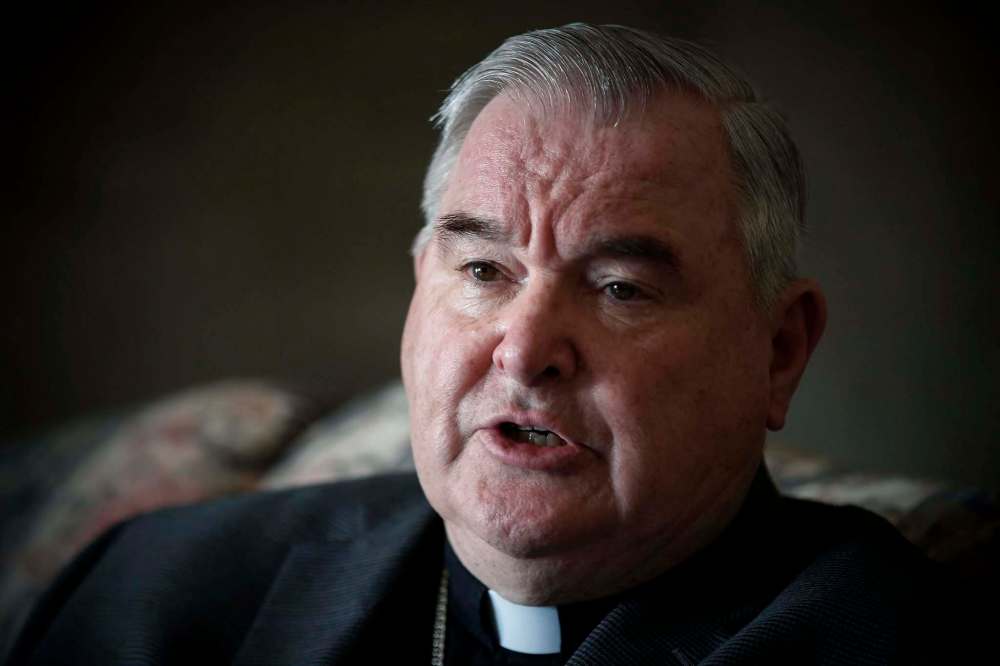
As president, Gagnon will lead the national assembly of the bishops of the Catholic Church in Canada as it addresses various issues.
“We don’t issue orders,” he said. “Our role is to provide guidelines” and assist the dioceses in “moving forward” on various issues.
One of those issues is reconciliation with Indigenous Peoples, and whether the CCCB will invite Pope Francis to Canada to issue an apology for the church’s role in residential schools.
Such an invitation is “an ongoing discussion” Gagnon said, adding the Pope is “open to the idea.”
“I realize many people want him to come,” he said. But “this is not a box for him (the Pope) to tick off.”
A papal visit, he shared, would be just one part of the larger process of reconciliation happening in local dioceses across Canada, although he acknowledged it would be a “powerful symbol.”
Another item on the agenda of the CCCB is clergy sexual abuse.
“It’s a very important subject,” he said, adding it will continue to occupy their attention in the years ahead.
The goal, he added, is to “create a culture of prevention, response and education” in the dioceses. This includes promoting its new guidelines, titled Protecting Minors from Sexual Abuse: A Call to the Catholic Faithful in Canada for Healing, Reconciliation, and Transformation, across the country.
“We want people to be aware of (it), to make sure it is being put into effect… we want to be proactive and preventative,” he said.
The CCCB will continue meeting with survivors, he said, adding he believes they and the CCCB are on the same page when it comes to “getting rid of the abuse of minors in the church and throughout society as a whole.”
With regards to requests from some survivors to release names of credibly accused priests — as has been done by some American bishops — Gagnon says it is under discussion.
He does wonder, however, what that means, since “each case is different.”
“We need to clarify what that means to be credibly accused,” he said, adding he wants to continue to work with survivors on this and other questions related to sexual abuse. “We want their input.”
Another issue that will continue to get the attention of the CCCB is religious freedom in Canada. This includes Bill 21 in Quebec.
People of faith in that province “should be allowed to express it in public, not hide it,” he said, adding the CCCB has no immediate plans to contact the Quebec or federal governments about it.
“We could have more initiatives on this issue,” he said.
Other issues he sees needing attention include the freedom of conscience of medical staff and Catholic hospitals around not participating in medical assistance in dying, and exploring deeper interfaith relations and relations with other Christian groups.
One thing that will not be discussed by the CCCB is whether priests can marry — an issue that has received a lot of attention recently due to a request from bishops in South America’s Amazon region.

Despite the shortage of priests in Canada, especially in the North, “it is not on the agenda,” Gagnon said.
For Gagnon, one of the chief concerns is finding ways to balance his work leading the Archdiocese of Winnipeg with his new national responsibilities.
“Ask me six months from now how it’s going,” he joked, quickly adding he has great teams to work with both here in Winnipeg and at the CCCB. “I’m not on my own.”
Gagnon is the third archbishop from Winnipeg to be elected head of the CCCB. The others were James Weisgerber, 2007-09; and George Flahiff, 1964-67.
faith@freepress.mb.ca
The Free Press is committed to covering faith in Manitoba through our Religion in the News project. This reporting continues because readers like you step forward to fund it.
Donate now to support our reporting on religion.
Your donation is eligible for a charitable tax receipt.
BECOME A FAITH JOURNALISM SUPPORTER
Our newsroom depends on a growing audience of readers to power our journalism. If you are not a paid reader, please consider becoming a subscriber.
Our newsroom depends on its audience of readers to power our journalism. Thank you for your support.
The Free Press is committed to covering faith in Manitoba through our Religion in the News project. This reporting continues because readers like you step forward to fund it.
Donate now to support our reporting on religion.
Your donation is eligible for a charitable tax receipt.
BECOME A FAITH JOURNALISM SUPPORTER
Our newsroom depends on a growing audience of readers to power our journalism. If you are not a paid reader, please consider becoming a subscriber.
Our newsroom depends on its audience of readers to power our journalism. Thank you for your support.
Advertisement Advertise With Us
Advertisement Advertise With Us
The Free Press acknowledges the financial support it receives from members of the city’s faith community, which makes our coverage of religion possible.