Building bridges to buddhism
Retiring sensei helped expand religion's profile in Manitoba

Advertisement
Read this article for free:
or
Already have an account? Log in here »
To continue reading, please subscribe:

Digital Subscription
One year of digital access for only $205*
- Enjoy unlimited reading on winnipegfreepress.com
- Read the E-Edition, our digital replica newspaper
- Access News Break, our award-winning app
- Play interactive puzzles
*First annual payment billed as $205.00 + GST for one year. This annual subscription will automatically renew at $233.00 + GST every 52 weeks (10% off the regular annual price of $259.35). Offer available to new and qualified returning subscribers only. Cancel any time.
To continue reading, please subscribe:
Add Free Press access to your Brandon Sun subscription for only an additional
$1 for the first 4 weeks*
- Enjoy unlimited reading on winnipegfreepress.com
- Read the E-Edition, our digital replica newspaper
- Access News Break, our award-winning app
- Play interactive puzzles
*Your next Brandon Sun subscription payment will increase by $1.00 and you will be charged $17.95 plus GST for four weeks. After four weeks, your payment will increase to $24.95 plus GST every four weeks.
Read unlimited articles for free today:
or
Already have an account? Log in here »
Hey there, time traveller!
This article was published 14/01/2014 (4573 days ago), so information in it may no longer be current.
After more than a decade of sermons, speeches and television appearances, the city’s most public Buddhist is becoming a little more enlightened about the prospect of retirement.
“I wanted to work until (age) 80, but I figured if I worked too long I wouldn’t enjoy my retirement,” explains Sensei Fredrich Ulrich of the Manitoba Buddhist Temple.
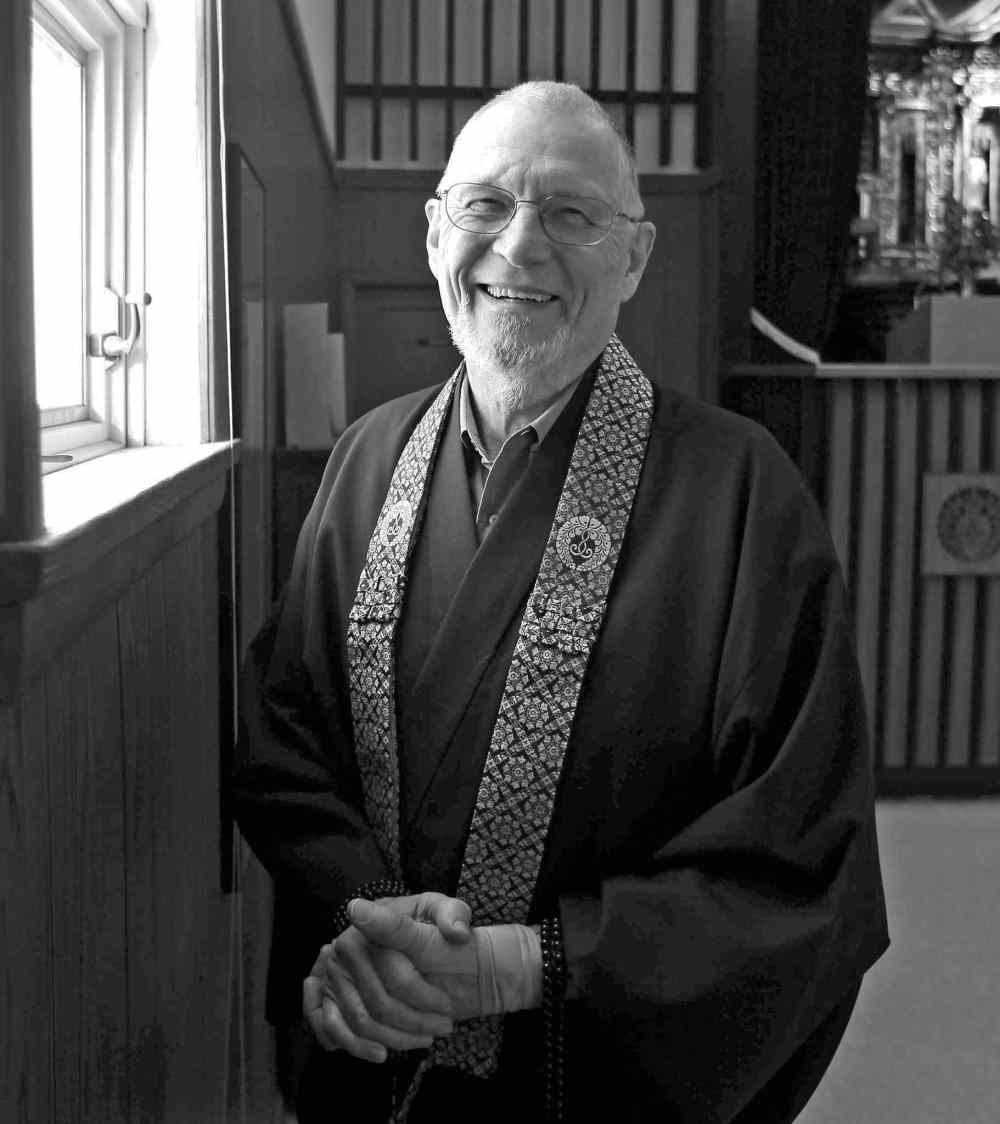
Ulrich officially ended 14 years of preaching and teaching duties at the end of 2013, but admits he hasn’t quite adapted to the rhythm of the next chapter of his life.
“I don’t think I’ll ever stop (working) but it will be in a different key signature,” says the Nebraska native, who plans to write a book and visit other Winnipeg Buddhist groups now that he’s freed from regular responsibilities at the temple.
Born into a German-Metis family, the 74-year-old Ulrich originally trained as a Methodist minister before going on to become a teacher. Still affirming the Christian principle of love, he turned to a broader expression of faith, exploring his aboriginal heritage as well as studying Buddhism for many years, and eventually became ordained as a Buddhist priest in the Jodo Shinshu tradition.
“I had these spiritual experiences that didn’t jive with what they were teaching” at the seminary, explains Ulrich, father of four adult children, including a daughter who is a United Church minister in Edmonton.
“I struggled within Christianity but I couldn’t find a Christian stream that would embrace Buddhism. I found a Buddhist stream that would embrace Christianity.”
That intersection of faiths has intrigued him ever since, and he’s proud of his work with his congregation — called sangha in Sanskrit — as well as his efforts in the community to create a better understanding of Buddhism beyond the stereotypes of chanting saffron robe clad monks.
“I think the core of my work in Winnipeg was interfaith as well as helping this church transfer from being an ethnic (Japanese) church to a Canadian church,” says Ulrich, who is the first non-Japanese sensei at the temple, founded more than six decades ago by Japanese-Canadians interned in the Second World War.
Ulrich has been successful on both counts, expanding the profile of the temple in the community, and attracting newcomers interested in exploring Buddhism, says board member Harvey Kaita, whose grandparents were among the founders of the temple in 1946.
“He has single-handedly made the Manitoba Buddhist Temple get known out there, so now we have more non-Japanese attending than Japanese,” says Kaita.
Last summer, the temple hired Sensei Michael Hayashi, a third generation Canadian of Japanese descent, to replace Ulrich.
That intersection of cultures has led to more mixed marriages, and more accommodation of other faith traditions, says Ulrich, who believes people can develop skills to live as interfaith families.
“We don’t need to convert them. They don’t need to become Buddhist and Buddhists don’t need to become Christians.”
Ulrich’s community work includes participating in the Interfaith Roundtable, the Manitoba Multifaith Council, and hosting school groups and other visitors at the modestly appointed temple, located just west of the Health Sciences Centre at 39 Tecumseh St. He’s also led healing ceremonies between Buddhists and Ahmadiyya Muslims, and taught meditation to residential school survivors.

For two seasons Ulrich also explained the tenets and practices of Buddhism to viewers of Joy TV, now the religious broadcaster Hope TV.
The temple plans to honour Ulrich’s work with a nine-course dinner on Saturday, Feb. 22
“Everything he believes and values really resonates with us,” says Kaita of Ulrich’s work.
“There was a strong connection there.”
brenda@suderman.com
The Free Press is committed to covering faith in Manitoba through our Religion in the News project. This reporting continues because readers like you step forward to fund it.
Donate now to support our reporting on religion.
Your donation is eligible for a charitable tax receipt.
BECOME A FAITH JOURNALISM SUPPORTER
Brenda Suderman has been a columnist in the Saturday paper since 2000, first writing about family entertainment, and about faith and religion since 2006.
Our newsroom depends on a growing audience of readers to power our journalism. If you are not a paid reader, please consider becoming a subscriber.
Our newsroom depends on its audience of readers to power our journalism. Thank you for your support.
The Free Press is committed to covering faith in Manitoba through our Religion in the News project. This reporting continues because readers like you step forward to fund it.
Donate now to support our reporting on religion.
Your donation is eligible for a charitable tax receipt.
BECOME A FAITH JOURNALISM SUPPORTER
Brenda Suderman has been a columnist in the Saturday paper since 2000, first writing about family entertainment, and about faith and religion since 2006.
Our newsroom depends on a growing audience of readers to power our journalism. If you are not a paid reader, please consider becoming a subscriber.
Our newsroom depends on its audience of readers to power our journalism. Thank you for your support.
Advertisement Advertise With Us
Advertisement Advertise With Us
History
Updated on Sunday, January 12, 2014 6:23 PM CST: Added photo, edited headline
The Free Press acknowledges the financial support it receives from members of the city’s faith community, which makes our coverage of religion possible.