Election date clashes with Jewish holy day
Despite lobbying, no change planned for time of federal vote

Advertisement
Read this article for free:
or
Already have an account? Log in here »
To continue reading, please subscribe:

Digital Subscription
One year of digital access for only $205*
- Enjoy unlimited reading on winnipegfreepress.com
- Read the E-Edition, our digital replica newspaper
- Access News Break, our award-winning app
- Play interactive puzzles
*First annual payment billed as $205.00 + GST for one year. This annual subscription will automatically renew at $233.00 + GST every 52 weeks (10% off the regular annual price of $259.35). Offer available to new and qualified returning subscribers only. Cancel any time.
To continue reading, please subscribe:
Add Free Press access to your Brandon Sun subscription for only an additional
$1 for the first 4 weeks*
- Enjoy unlimited reading on winnipegfreepress.com
- Read the E-Edition, our digital replica newspaper
- Access News Break, our award-winning app
- Play interactive puzzles
*Your next Brandon Sun subscription payment will increase by $1.00 and you will be charged $17.95 plus GST for four weeks. After four weeks, your payment will increase to $24.95 plus GST every four weeks.
Read unlimited articles for free today:
or
Already have an account? Log in here »
Hey there, time traveller!
This article was published 29/07/2019 (2621 days ago), so information in it may no longer be current.
Some members of Winnipeg’s Jewish community are expressing hope the government will change the date of the federal vote so it doesn’t conflict with a holy day.
Canadians are set to go to the polls Oct. 21, which falls on Shemini Atzeret, a holiday when Orthodox Jews and some other observant Jews don’t work, drive, use electricity or do other tasks, such as voting.
Despite lobbying from Jewish groups, the government decided against changing the date.
This week, Federal Court Justice Ann Marie McDonald ordered Elections Canada to review its decision, saying there was insufficient evidence it had balanced the charter rights of affected voters against the objectives of the election law.
Elections Canada was told to respond to the court order by Aug. 1.
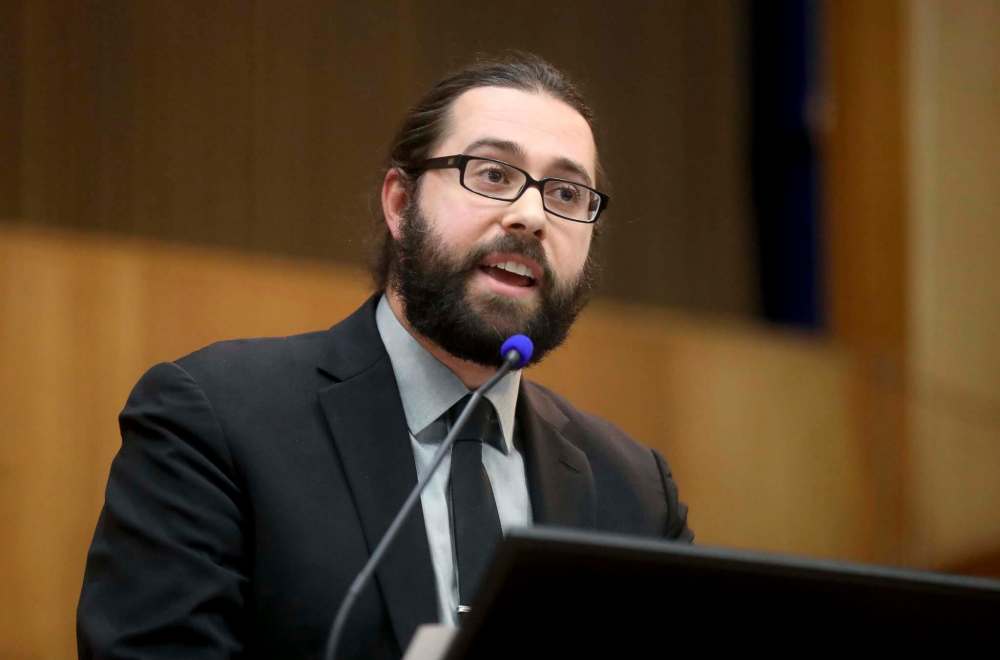
Michael Eskin, a professor at the University of Manitoba, who describes himself as an observant Jew, said the election date is “definitely a problem,” because it would also affect Orthodox and observant Jews who work for Elections Canada.
An election on Oct. 21 “will definitely affect me personally,” said Rabbi Shmuly Altein of Chabad-Lubavitch of Winnipeg’s Jewish learning centre.
“I would not be able to vote on that day.
“Anyone who observes holy days in a traditional manner would be affected.”
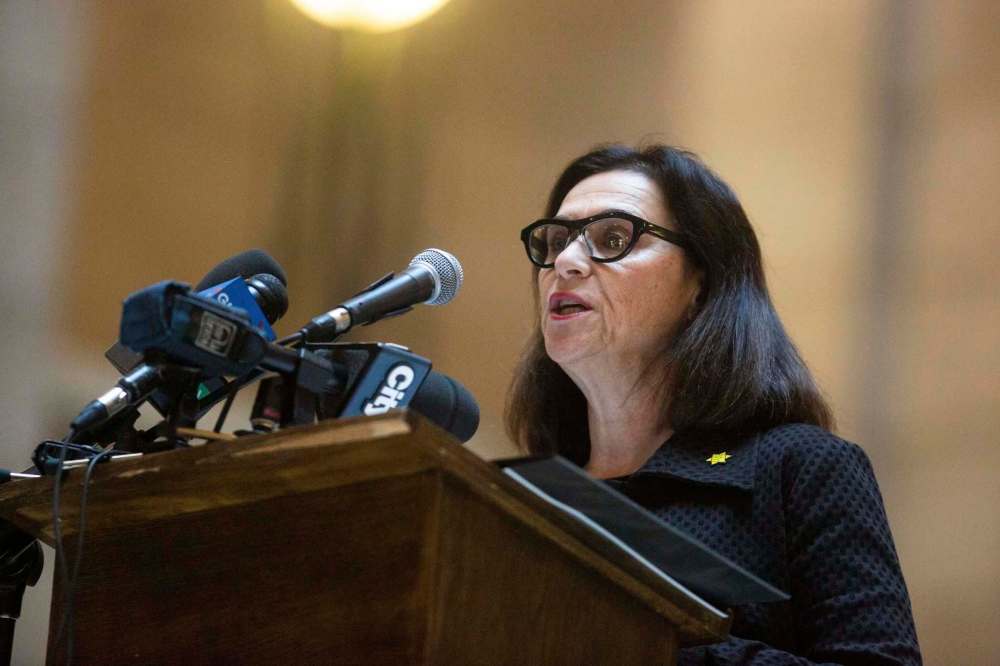
Laurel Malkin, president of the Jewish Federation of Winnipeg, said this would be “a significant problem for some people” in the city.
The federation offices will be closed that day, she said, as will other Jewish organizations.
For many non-observant Jews, it won’t be a problem, she said. But there may also be some who won’t vote “out of respect for the holy day.”
Rabbi Matthew Leibl of Shaarey Zedek said while many in his synagogue might have no qualms about voting on Oct. 21, they may see it as “inconsiderate and insensitive” to hold the election on a holy day.
Shemini Atzeret is one of only a few on the Jewish religious calendar when Yizkor, the prayer for the dead, is recited.
“It’s not just about whether some people can’t work or vote that day,” Leibl said.
“It’s a significant day for a whole group of people.”
None of those interviewed thought there was any malice in the selection of that date.
“It was just an oversight, not knowing,” said Rabbi Yosef Benarroch of the Orthodox Adas Yeshurun Herzlia synagogue.
However, “the government would never consider holding an election on Christmas or Good Friday,” Malkin said, adding changing the date of the election would benefit all religions in Canada as holy days such as Ramadan and Dewali could also be taken into consideration when setting election dates.
“We don’t want anyone to feel their religion isn’t important in Canada, that their holy days don’t matter,” Malkin said.
Advance polling is a problem for some Jews this election because the dates are during Sukkot, a weeklong Jewish religious festival that ends with Shemini Atzeret.

Some of the advance polling dates also fall on the Sabbath.
The week of Sukkot for Jews is like the week before Christmas.
It’s a busy time of preparing for the holy day, along with hosting friends and family. “Sukkot is a busy time,” Malkin said.
For Leibl, it all adds up to a “teachable moment” for Canadians about the importance of religion to millions of people in this country: “Let’s find a different day. Let’s move it.”
faith@freepress.mb.ca
The Free Press is committed to covering faith in Manitoba through our Religion in the News project. This reporting continues because readers like you step forward to fund it.
Donate now to support our reporting on religion.
Your donation is eligible for a charitable tax receipt.
BECOME A FAITH JOURNALISM SUPPORTER
Our newsroom depends on a growing audience of readers to power our journalism. If you are not a paid reader, please consider becoming a subscriber.
Our newsroom depends on its audience of readers to power our journalism. Thank you for your support.
The Free Press is committed to covering faith in Manitoba through our Religion in the News project. This reporting continues because readers like you step forward to fund it.
Donate now to support our reporting on religion.
Your donation is eligible for a charitable tax receipt.
BECOME A FAITH JOURNALISM SUPPORTER
Our newsroom depends on a growing audience of readers to power our journalism. If you are not a paid reader, please consider becoming a subscriber.
Our newsroom depends on its audience of readers to power our journalism. Thank you for your support.
Advertisement Advertise With Us
Advertisement Advertise With Us
History
Updated on Monday, July 29, 2019 3:31 PM CDT: An article in Monday's Free Press suggested that Elections Canada plays a role in setting or changing the date of the federal election. In fact, the Canada Elections Act states that a general election be held the third Monday of October in the fourth calendar year following election day for the previous general election. The article wrongly said that Elections Canada decided against changing the date of this year's vote so it doesn't conflict with a Jewish holy day. In fact, it was the chief electoral officer who decided not to recommend changing the date of this year's vote.
The Free Press acknowledges the financial support it receives from members of the city’s faith community, which makes our coverage of religion possible.