Frustration fuels exodus from advisory body
Members say federal ombudsperson has no power to probe mining companies

Advertisement
Read this article for free:
or
Already have an account? Log in here »
To continue reading, please subscribe:

Digital Subscription
One year of digital access for only $205*
- Enjoy unlimited reading on winnipegfreepress.com
- Read the E-Edition, our digital replica newspaper
- Access News Break, our award-winning app
- Play interactive puzzles
*First annual payment billed as $205.00 + GST for one year. This annual subscription will automatically renew at $233.00 + GST every 52 weeks (10% off the regular annual price of $259.35). Offer available to new and qualified returning subscribers only. Cancel any time.
To continue reading, please subscribe:
Add Free Press access to your Brandon Sun subscription for only an additional
$1 for the first 4 weeks*
- Enjoy unlimited reading on winnipegfreepress.com
- Read the E-Edition, our digital replica newspaper
- Access News Break, our award-winning app
- Play interactive puzzles
*Your next Brandon Sun subscription payment will increase by $1.00 and you will be charged $17.95 plus GST for four weeks. After four weeks, your payment will increase to $24.95 plus GST every four weeks.
Read unlimited articles for free today:
or
Already have an account? Log in here »
Hey there, time traveller!
This article was published 12/09/2019 (2568 days ago), so information in it may no longer be current.
When Evelyne Beaudoin visits developing countries, she often hears people complain about human rights violations and environmental degradation caused by mining companies from Canada.
“They ask us to tell our government about how Canadian mining companies are acting in their countries,” said Beaudoin, a member of the Saint Viateur parish in Otterburne.
For that reason, she signed a petition urging the government to investigate how those companies operate in Central America, Asia and Africa. All told, more than 500,000 Canadians signed the petition created by the Canadian Catholic Organization for Development and Peace, the official international development arm of the Catholic Church in Canada.
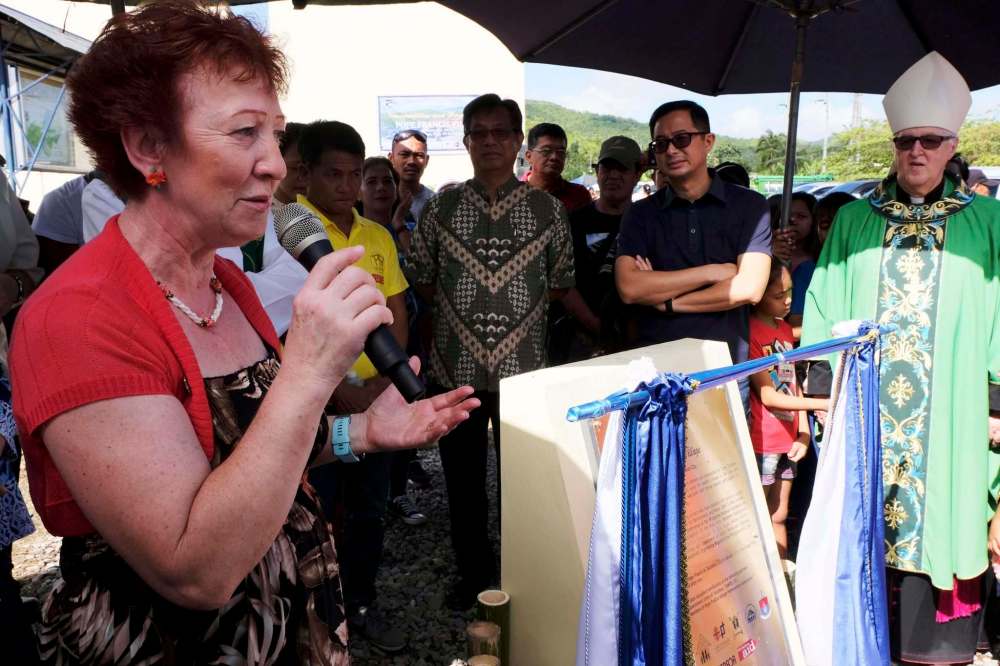
In early 2018, Beaudoin, who is also president of Development and Peace, was “ecstatic” when the Liberal government created the ombudsperson for responsible enterprise to oversee Canadian mining, oil and gas operations around the world. It also created the multi-stakeholder advisory body on responsible business conduct, inviting Development and Peace and 13 other civil society groups (such as World Vision, MiningWatch, Amnesty International, Inter Pares and the Canadian Labour Congress) to join it.
But Beaudoin’s hopes were dashed this year, when it became clear the ombudsperson would only have an advisory role, with few investigative powers.
“We expected a stronger mandate,” she said.
This summer, all the civil society groups resigned from the advisory board — a decision supported by Beaudoin.
“That isn’t the direction we hoped the committee would go,” she said. “By resigning, we are registering our disappointment and making a statement.”
In announcing the mass resignation, the groups were critical of government for appointing “a largely toothless” special adviser to assist International Trade Diversification Minister Jim Carr. They also criticized Carr’s office for delays in a legal review of the ombudsperson’s investigatory powers.
Development and Peace advocacy and research officer Elana Wright, who represented the organization on the advisory body, said “the powers of ombudsman have been watered down… the promises they made were not fulfilled.”
“There is no power to independently investigate claims against mining companies, to hold them accountable,” she said.
The organization, she added, is “no further ahead than when we started the campaign” to address complaints against Canadian mining companies more than 10 years ago.
Longtime Development and Peace supporter Louis Laurencelle, a member of the Saints-Martyrs-Canadiens parish in Winnipeg, also supports the decision to resign. Like Beaudoin, the 86-year-old was happy when the Liberal government created the new body. But he said he’s “frustrated” and “let down” by its lack of power.
“I can only hope that someone will stand up for the appointment of a suitably empowered ombudsperson,” he said.
For Janelle Delorme, who works for Development and Peace in Manitoba, this is an important issue: about 75 per cent of the world’s mining companies are registered in Canada.
She also supports the decision by Development and Peace to quit the advisory group, saying there “will be much discussion locally about what to do next.”

This includes the possibility of “local actions,” she said, adding she’s “really proud” of local Catholics who made a “long-term commitment” to this issue.
“We’re not going to stop,” she said. “We will keep going until this is resolved. We will keep fighting the good fight to get justice for people affected by Canadian mining companies.”
In a statement, Carr’s office said it was grateful for the service of the organizations in “helping to lay the groundwork for the Canadian ombudsperson on responsible enterprise — the first position of its kind in the world.”
The resignations, it continued, were “regrettable,” but the government “will continue to actively engage with Canadians on responsible business conduct issues, building on what we have accomplished to date.”
faith@freepress.mb.ca
The Free Press is committed to covering faith in Manitoba through our Religion in the News project. This reporting continues because readers like you step forward to fund it.
Donate now to support our reporting on religion.
Your donation is eligible for a charitable tax receipt.
BECOME A FAITH JOURNALISM SUPPORTER
Our newsroom depends on a growing audience of readers to power our journalism. If you are not a paid reader, please consider becoming a subscriber.
Our newsroom depends on its audience of readers to power our journalism. Thank you for your support.
The Free Press is committed to covering faith in Manitoba through our Religion in the News project. This reporting continues because readers like you step forward to fund it.
Donate now to support our reporting on religion.
Your donation is eligible for a charitable tax receipt.
BECOME A FAITH JOURNALISM SUPPORTER
Our newsroom depends on a growing audience of readers to power our journalism. If you are not a paid reader, please consider becoming a subscriber.
Our newsroom depends on its audience of readers to power our journalism. Thank you for your support.
Advertisement Advertise With Us
Advertisement Advertise With Us
The Free Press acknowledges the financial support it receives from members of the city’s faith community, which makes our coverage of religion possible.