New federal legislation deemed benefit to aid groups, developing world partners

Advertisement
Read this article for free:
or
Already have an account? Log in here »
To continue reading, please subscribe:

Digital Subscription
One year of digital access for only $205*
- Enjoy unlimited reading on winnipegfreepress.com
- Read the E-Edition, our digital replica newspaper
- Access News Break, our award-winning app
- Play interactive puzzles
*First annual payment billed as $205.00 + GST for one year. This annual subscription will automatically renew at $233.00 + GST every 52 weeks (10% off the regular annual price of $259.35). Offer available to new and qualified returning subscribers only. Cancel any time.
To continue reading, please subscribe:
Add Free Press access to your Brandon Sun subscription for only an additional
$1 for the first 4 weeks*
- Enjoy unlimited reading on winnipegfreepress.com
- Read the E-Edition, our digital replica newspaper
- Access News Break, our award-winning app
- Play interactive puzzles
*Your next Brandon Sun subscription payment will increase by $1.00 and you will be charged $17.95 plus GST for four weeks. After four weeks, your payment will increase to $24.95 plus GST every four weeks.
Read unlimited articles for free today:
or
Already have an account? Log in here »
Hey there, time traveller!
This article was published 22/04/2022 (1609 days ago), so information in it may no longer be current.
INTERNATIONAL relief and development organizations based in Winnipeg are celebrating a proposed change to the Income Tax Act in the recent federal budget.
Announced April 7 by Finance Minister Chrystia Freeland, it will no longer require Canadian aid groups to show they have complete direction and control over the funds they give to partners in the developing world.
The amendment is intended to implement the spirit of Bill S-216 (Effective and Accountable Charities Act), which is currently being considered by Parliament.
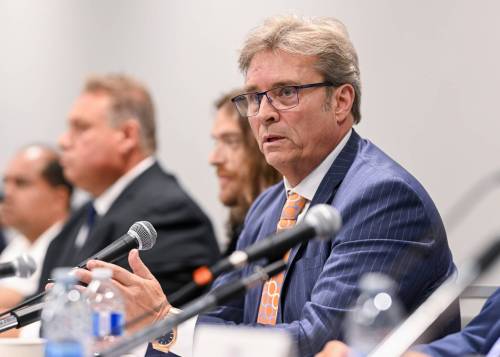
“The change has positive implications for us and our members, and for partners we work with internationally,” said Andy Harrington, executive director of Canadian Foodgrains Bank.
The current requirement to show direction and control over funding and programs is a “restrictive impediment” to good programming and relations with overseas partners, he said.
“It creates an administrative burden to try and show that funded activities by international partners are in fact Canadian owned, and the reporting and agreements required are onerous and expensive.”
It is also highly paternalistic and colonial for partners in the developing world “to have their activities controlled from Canada,” Harrington added.
Under the current legislation, Canadian aid groups not only have to show they control and direct money and programs, “but over every decision the partner makes.”
Harrington cited the example of an African organization that refused to enter into a funding agreement with a Canadian aid group over the requirement.
“They said they had fought to end colonization in their country, and now the aid group wanted to bring it back in through finances,” he said.
When the new legislation takes effect, the Foodgrains Bank will still have detailed agreements with partners for reporting about use of funds, he said.
The change “puts to an end the idea that we know better from a desk in Canada what is happening or needed on the ground in the developing world,” Harrington said, adding it also brings Canada into line most other developed countries.
For Bruce Guenther, disaster response director at Mennonite Central Committee, the change is also welcome: “The current legislation is not in keeping with the spirit of mutual accountability that MCC believes in.”
The change will better reflect “our relationships with our partners. They are the actors, we are the supporters,” he said, adding it will also relieve them from “onerous reporting and administrative burdens.”
It will give local partners “more flexibility if they need to change something. Under the current act, they can’t do that without our approval. They can be more flexible and nimble,” Guenther said.
MCC will still have “very clear expectations,” when it comes to reporting about the use of donated funds, he noted.
Bruce MacDonald, president and CEO of Imagine Canada, an umbrella group for Canadian charities, said the move will allow charities to be “more respectful and create true and authentic partnerships, not parent-child relationships.”
It will also have implications for organizations that want to support Indigenous groups in Canada that are not registered charities.
“In the world of the Truth and Reconciliation Commission, this needed to be changed,” MacDonald said. “For Indigenous groups, it feels quite colonial for charities that want to support them to have to say they have to own the program and Indigenous people have to do what they say.”
He hopes the change will be enacted quickly, perhaps as early as next month.
“Through the budget, the government is signalling it intends to do this. But it’s too early to declare victory. We need to keep up momentum. We see the finish line in sight, but we can’t give up.”
faith@freepress.mb.ca
The Free Press is committed to covering faith in Manitoba through our Religion in the News project. This reporting continues because readers like you step forward to fund it.
Donate now to support our reporting on religion.
Your donation is eligible for a charitable tax receipt.
BECOME A FAITH JOURNALISM SUPPORTER
Our newsroom depends on a growing audience of readers to power our journalism. If you are not a paid reader, please consider becoming a subscriber.
Our newsroom depends on its audience of readers to power our journalism. Thank you for your support.
The Free Press is committed to covering faith in Manitoba through our Religion in the News project. This reporting continues because readers like you step forward to fund it.
Donate now to support our reporting on religion.
Your donation is eligible for a charitable tax receipt.
BECOME A FAITH JOURNALISM SUPPORTER
Our newsroom depends on a growing audience of readers to power our journalism. If you are not a paid reader, please consider becoming a subscriber.
Our newsroom depends on its audience of readers to power our journalism. Thank you for your support.
Advertisement Advertise With Us
The Free Press acknowledges the financial support it receives from members of the city’s faith community, which makes our coverage of religion possible.