Orlando nightclub shooting has greater impact for LGBT Muslims: activist
Advertisement
Read this article for free:
or
Already have an account? Log in here »
To continue reading, please subscribe:
Digital Subscription
One year of digital access for only $1.44 a week*
- Enjoy unlimited reading on winnipegfreepress.com
- Read the E-Edition, our digital replica newspaper
- Access News Break, our award-winning app
- Play interactive puzzles
*Billed as $5.77 plus GST every four weeks. After 52 weeks, price increases to the regular rate of $19.95 plus GST every four weeks. Offer available to new and qualified returning subscribers only. Cancel any time.
To continue reading, please subscribe:
Add Free Press access to your Brandon Sun subscription for only an additional
$1 for the first 4 weeks*
- Enjoy unlimited reading on winnipegfreepress.com
- Read the E-Edition, our digital replica newspaper
- Access News Break, our award-winning app
- Play interactive puzzles
*Your next Brandon Sun subscription payment will increase by $1.00 and you will be charged $17.95 plus GST for four weeks. After four weeks, your payment will increase to $24.95 plus GST every four weeks.
Read unlimited articles for free today:
or
Already have an account? Log in here »
Hey there, time traveller!
This article was published 15/06/2016 (3776 days ago), so information in it may no longer be current.
TORONTO – As authorities investigate the carnage unleashed by an American-born Muslim in a mass shooting at a gay nightclub in Orlando, the horror of the attack is being felt particularly keenly by LGBT Muslims.
For some who identify with both Islam and the LGBT community, the attack and its aftermath appears to have underscored the confluence of homophobia and Islamophobia.
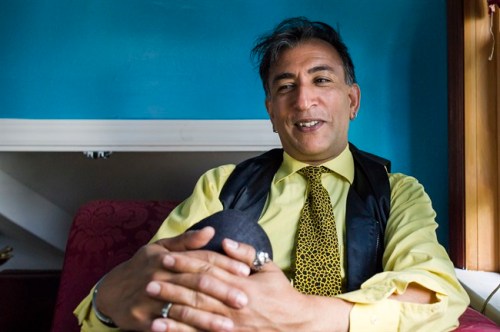
“The fact that this was perpetrated by someone with a Muslim name, that Islam is drawn into it and considering the stigmatization and marginalization of Muslims in America, in media and certain political spheres …it leaves LGBTIQ Muslims sometimes in a precarious place,” said El-Farouk Khaki, a gay activist and co-founder of the Toronto Unity Mosque.
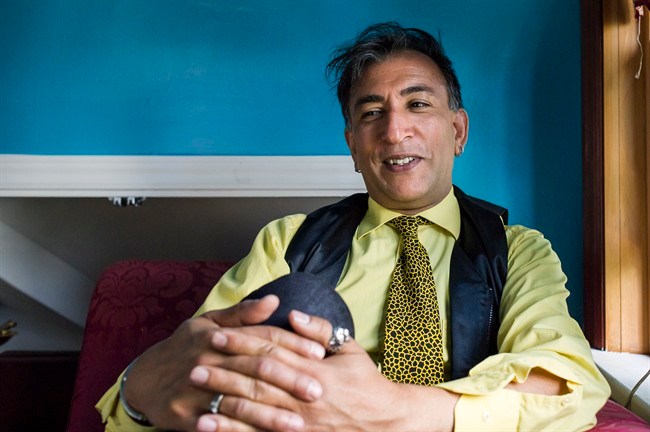
Khaki’s mosque, which welcomes people of all sexualities, plans to hold prayers Friday for the victims of the Orlando nightclub shooting, but the location of the service is not posted publicly to ensure the “physical and spiritual safety” of the congregation, he said.
Anyone wishing to attend can email the mosque ahead of time or go along with a member of the congregation, Khaki said.
“We know that a lot of people are not very friendly to us and so we need to be aware of that.”
A motive has yet to be established in the Florida attack by Omar Mateen, a 29-year-old son of Afghan immigrants who was also said to have been a regular at the club where he opened fire.
Forty-nine people died in the shooting that took place early Sunday, and dozens more were wounded.
As the victims were mourned in the U.S., Canada and around the world, Khaki said he also noticed a negative backlash in some quarters.
“I’ve seen a real outpouring of solidarity and love from the larger LGBTIQ community, but I’ve also seen the opposite,” he said. “It’s very hateful towards Muslims.”
Such a tragedy, Khaki said, highlights some of the difficulties faced by LGBT Muslims.

“There’s this notion that Islam is a monolith and Muslims are a monolith and there’s no such thing as a LGBTIQ Muslim. So sometimes we are made invisible,” he said. “We’re invisible in the larger LGBT community, we’re invisible in the Muslim community.”
For Rasheed, a Syrian refugee who recently came to Canada after being threatened due to his sexuality, the Orlando attack sparked fear of further persecution.
“I felt very bad and I was really afraid at the beginning,” said the Toronto resident who asked to be identified only by his first name fearing for the safety of his family back in Syria. “I was afraid of people, how they would react. Some ignorant people will just generalize and think all Muslims are like this.”
Rasheed attended a vigil for the victims of the shooting with Lebanese friends who are also part of the LGBT community. He said the show of support he witnessed, particularly the recitation of certain prayers from the Qur’an for victims of the shooting, made him feel better.
“It was just to show how everybody is sympathizing with what’s happening.”
The Free Press acknowledges the financial support it receives from members of the city’s faith community, which makes our coverage of religion possible.