Tam asks faith leaders to remain ‘vigilant’, promote vaccine acceptance

Advertisement
Read this article for free:
or
Already have an account? Log in here »
To continue reading, please subscribe:
Digital Subscription
One year of digital access for only $1.44 a week*
- Enjoy unlimited reading on winnipegfreepress.com
- Read the E-Edition, our digital replica newspaper
- Access News Break, our award-winning app
- Play interactive puzzles
*Billed as $5.77 plus GST every four weeks. After 52 weeks, price increases to the regular rate of $19.95 plus GST every four weeks. Offer available to new and qualified returning subscribers only. Cancel any time.
To continue reading, please subscribe:
Add Free Press access to your Brandon Sun subscription for only an additional
$1 for the first 4 weeks*
- Enjoy unlimited reading on winnipegfreepress.com
- Read the E-Edition, our digital replica newspaper
- Access News Break, our award-winning app
- Play interactive puzzles
*Your next Brandon Sun subscription payment will increase by $1.00 and you will be charged $17.95 plus GST for four weeks. After four weeks, your payment will increase to $24.95 plus GST every four weeks.
Read unlimited articles for free today:
or
Already have an account? Log in here »
Hey there, time traveller!
This article was published 22/01/2021 (2100 days ago), so information in it may no longer be current.
Canadian faith leaders have an important role to play in promoting COVID-19 vaccines, including helping their members overcome vaccine hesitancy.
That was the message Dr. Theresa Tam, Canada’s chief public health officer, delivered to more than 1,300 participants of an online information event Wednesday.
The event was arranged by the Canadian Council of Churches, Canadian Interfaith Conversation and Canadian Multifaith Federation, at the request of the Privy Council and Public Health Agency of Canada.
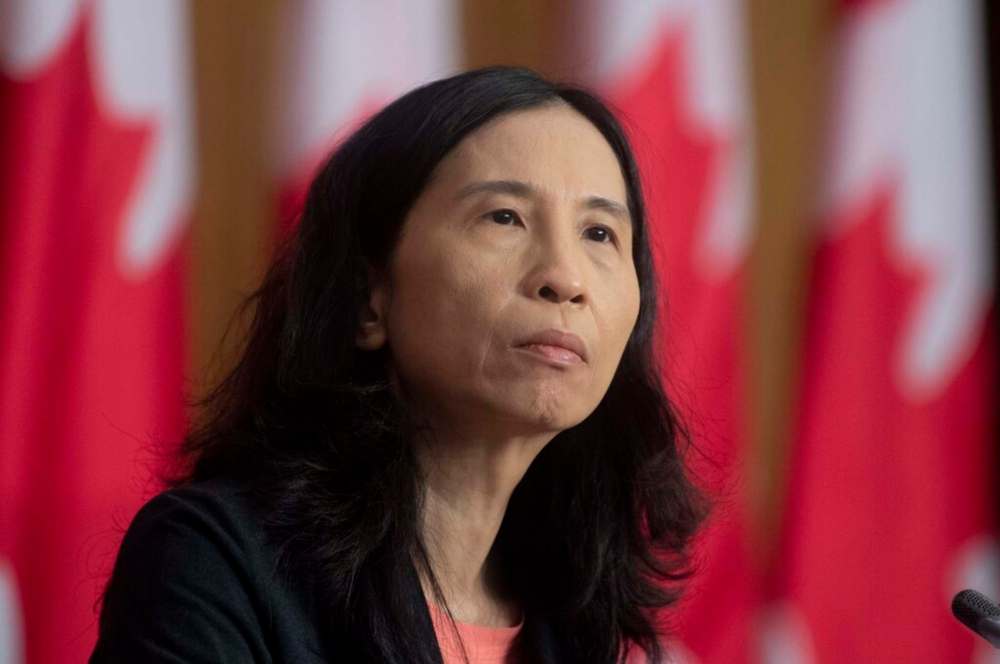
In her remarks, Tam said combatting the novel coronavirus is a “whole of government, whole of society effort.”
As “trusted voices” in their communities, faith leaders are “instrumental” in that effort, since they “know the hearts and minds of their members” and are often “called on for guidance.”
Faith groups can help battle the virus by sharing credible information about vaccines with their members, she said, including dispelling fears about their safety.
They can also help by staying “vigilant” and encouraging congregations to maintain safe practices (social distancing, hand hygiene and mask wearing).
By doing this, it will not only help prevent the spread of virus, it will also give vaccines a “bit of a runway” to get going, she added.
Tam said faith groups also have an important role to play by supporting members who are struggling due to the pandemic, especially those who are elderly, vulnerable or dealing with mental health issues.
“Maintaining social, and emotional and spiritual closeness is more important than ever,” she said. “Your leadership is vital for supporting and building resilience in your communities as we move through this pandemic and beyond.”
Noting some communication materials about vaccines might need to be translated or adapted for different faith and cultural groups, Tam said the federal government is open to providing financial support in such efforts.
She also said Ottawa is open to working with faith groups to use their facilities as vaccination sites.
However, she added, it’s not practical now, since the “first two vaccines are tricky to handle… maybe in the future as more vaccines become available.”
As to whether clergy might be put on a priority list for getting the vaccine, Tam said it might be possible, if they are involved in supporting people in long-term care homes, homeless shelters or other services to marginal and vulnerable people.
She also assured faith leaders no animal products or fetal cells were used in the production of the two current vaccines.
When asked when religious groups might see a return to in-person worship services, Tam noted the decision is up to provincial public health authorities.

Her own view is “right now is definitely not the time,” with the pandemic surging in some parts of the country.
“It’s really important to follow local public health advice,” Tam said, adding: “The best thing to do is to reduce the number of contacts.”
All pandemics come to an end, she said, “and this one will as well.”
In remarks at the conclusion of the event, Ian Shugart, Clerk of the Privy Council, noted faith groups can contribute to dealing with the pandemic by “inspiring people to action on behalf of others” while showing “none of us is self-sufficient.”
faith@freepress.mb.ca
The Free Press is committed to covering faith in Manitoba through our Religion in the News project. This reporting continues because readers like you step forward to fund it.
Donate now to support our reporting on religion.
Your donation is eligible for a charitable tax receipt.
BECOME A FAITH JOURNALISM SUPPORTER
Our newsroom depends on a growing audience of readers to power our journalism. If you are not a paid reader, please consider becoming a subscriber.
Our newsroom depends on its audience of readers to power our journalism. Thank you for your support.
The Free Press is committed to covering faith in Manitoba through our Religion in the News project. This reporting continues because readers like you step forward to fund it.
Donate now to support our reporting on religion.
Your donation is eligible for a charitable tax receipt.
BECOME A FAITH JOURNALISM SUPPORTER
Our newsroom depends on a growing audience of readers to power our journalism. If you are not a paid reader, please consider becoming a subscriber.
Our newsroom depends on its audience of readers to power our journalism. Thank you for your support.
Advertisement Advertise With Us
Advertisement Advertise With Us
The Free Press acknowledges the financial support it receives from members of the city’s faith community, which makes our coverage of religion possible.