

Ukrainian Easter rich with history
Advertisement
Read this article for free:
or
Already have an account? Log in here »
To continue reading, please subscribe:
Digital Subscription
One year of digital access for only $75*
- Enjoy unlimited reading on winnipegfreepress.com
- Read the E-Edition, our digital replica newspaper
- Access News Break, our award-winning app
- Play interactive puzzles
*Billed as $5.77 plus GST every four weeks. After 52 weeks, price increases to the regular rate of $19.95 plus GST every four weeks. Offer available to new and qualified returning subscribers only. Cancel any time.
Monthly Digital Subscription
$4.99/week*
- Enjoy unlimited reading on winnipegfreepress.com
- Read the E-Edition, our digital replica newspaper
- Access News Break, our award-winning app
- Play interactive puzzles
*Billed as $19.95 plus GST every four weeks. Cancel any time.
To continue reading, please subscribe:
Add Free Press access to your Brandon Sun subscription for only an additional
$1 for the first 4 weeks*
- Enjoy unlimited reading on winnipegfreepress.com
- Read the E-Edition, our digital replica newspaper
- Access News Break, our award-winning app
- Play interactive puzzles
*Your next Brandon Sun subscription payment will increase by $1.00 and you will be charged $17.95 plus GST for four weeks. After four weeks, your payment will increase to $24.95 plus GST every four weeks.
Read unlimited articles for free today:
or
Already have an account? Log in here »
Hey there, time traveller!
This article was published 07/04/2018 (2967 days ago), so information in it may no longer be current.
In the most recent national census, the outcome showed that more than a million Canadians identified as Ukrainian or as having some Ukrainian roots. This heritage has enriched and charming customs, symbolisms and ceremonies, many of which have come from pre-Christian times.
Religious ceremonies of Ukrainians of the past were closely connected with the calendar and seasonal activities. One of the most beautiful of all Ukrainian religious celebrations is Easter, reflecting the religious outlook, social structure, the way of life, and beliefs around life and death.
With the introduction of Christianity in AD 988 to Ukraine, the church merged its spring holiday with Easter — the Resurrection of Christ. Many of the ancient rituals became a part of the Easter cycle of celebrations.
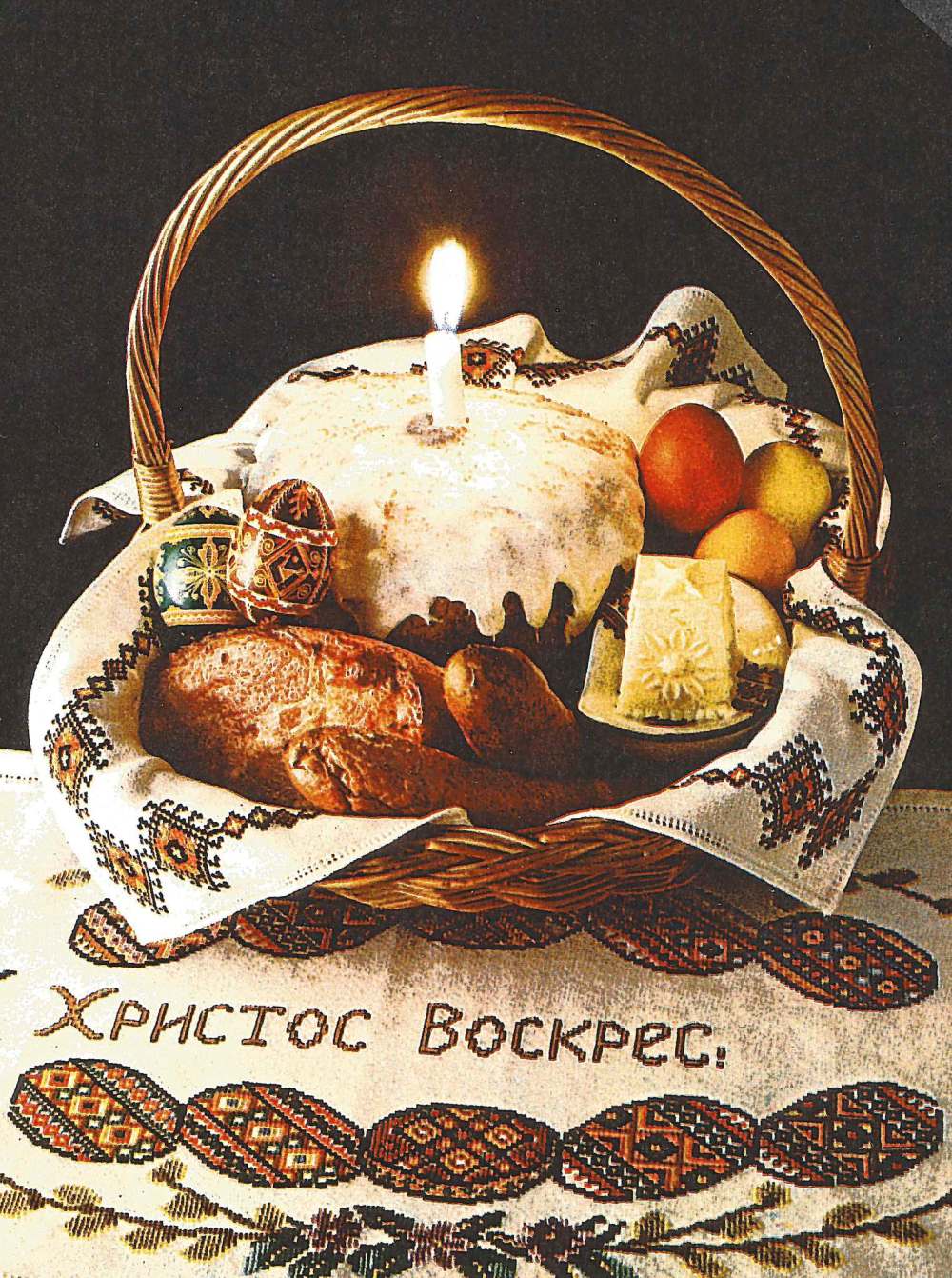
Ukrainian Easter follows the Easter dates set by the Orthodox Church. The Julian calendar, rich and deeply symbolic, differs from the Gregorian calendar used by many western countries. The Orthodox Easter period often occurs later than the Easter period that falls after the time of the March equinox. During ancient times, many Ukrainian customs were connected to nature and to the changing of the seasons.
Orthodox Easter takes place on Sunday, April 8, this year. Orthodox Good Friday was April 6.
Ukrainian Easter, the most glorious and radiant event, commemorates the resurrection of Christ. Easter involves specific religious rites, the traditional baking of “paska” and “babka,” decorating Easter eggs — “pysanky,” (which means to write) — with artistic designs of nature, and the singing of Easter “hahilky” and “vesnianky” songs by young girls on church grounds with the aim of enticing spring and chasing winter away. Also, dances and songs performed by young people attempt to entice and enchant all the good spirits of the reawakened nature so that it will bring good luck and wealth.
Ukrainian Easter observes the Holy Week, beginning with Palm Sunday (Verbna Nedilia), which commemorates the triumphant entry of Christ into Jerusalem and is observed with a special church service at which small twigs of pussy willows are blessed and distributed among the congregation. Because palms are difficult to obtain, pussy willows are used instead.
On Good Friday, the holy shroud, or “plaschanytsia,” is symbolically laid in the church and the faithful express their devotion by approaching the shroud. Then on Saturday, food-laden baskets are arranged in rows for blessing by the clergy. Each Easter basket has in it paska and/or babka, cottage cheese, meats, salt, butter, hard-boiled eggs, horseradish, coloured eggs (krashanky) and pysanky (decorated eggs). A lighted candle is placed in the basket for the blessing. The custom of the preparing and blessing of the Easter basket with its traditional Easter foods is a blending of ancient ways, and as a result, this annual ceremony is rich with beauty, history and is very symbolic.
On Easter Sunday, a special resurrection church service is held, the joyful heralding of a risen Christ in the singing of the traditional hymn Christ is Risen. After the church service, it is customary for people to greet one another with the traditional Easter greeting “Khrystos Voskres” (Christ is Risen), to which the reply is “Voistyno Voskres” (He is risen indeed). People return home to further celebrate the Easter ritual with their family members, anticipating a happy and prosperous year.
Easter in Ukrainian culture is called Velykden — the Great Day, for on that day, Christ resurrected from the dead — a celebration welcomed and long awaited by Ukrainians. Therefore, Ukrainian Easter in Canada is acknowledged as a feast of joy and gladness that unites the entire community in a common celebration.
Canadians of Ukrainian background will continue the observance of Ukrainian Easter with its unique traditions because it is a celebration of life and acknowledgment of Jesus Christ.
Peter J. Manastyrsky is a member of the Ukrainian community of Winnipeg.
The Free Press is committed to covering faith in Manitoba through our Religion in the News project. This reporting continues because readers like you step forward to fund it.
Donate now to support our reporting on religion.
Your donation is eligible for a charitable tax receipt.
BECOME A FAITH JOURNALISM SUPPORTER
The Free Press acknowledges the financial support it receives from members of the city’s faith community, which makes our coverage of religion possible.