Food poisoning remains persistent problem, US report finds
Advertisement
Read this article for free:
or
Already have an account? Log in here »
To continue reading, please subscribe:

Digital Subscription
One year of digital access for only $205*
- Enjoy unlimited reading on winnipegfreepress.com
- Read the E-Edition, our digital replica newspaper
- Access News Break, our award-winning app
- Play interactive puzzles
*First annual payment billed as $205.00 + GST for one year. This annual subscription will automatically renew at $233.00 + GST every 52 weeks (10% off the regular annual price of $259.35). Offer available to new and qualified returning subscribers only. Cancel any time.
To continue reading, please subscribe:
Add Free Press access to your Brandon Sun subscription for only an additional
$1 for the first 4 weeks*
- Enjoy unlimited reading on winnipegfreepress.com
- Read the E-Edition, our digital replica newspaper
- Access News Break, our award-winning app
- Play interactive puzzles
*Your next Brandon Sun subscription payment will increase by $1.00 and you will be charged $17.95 plus GST for four weeks. After four weeks, your payment will increase to $24.95 plus GST every four weeks.
Read unlimited articles for free today:
or
Already have an account? Log in here »
Hey there, time traveller!
This article was published 25/04/2019 (2653 days ago), so information in it may no longer be current.
NEW YORK – As recent illnesses tied to raw turkey, ground beef, cut melon and romaine lettuce suggest, U.S. food poisoning cases don’t appear to be going away anytime soon.
The Centers for Disease Control and Prevention said in a report Thursday that the frequency of several types of food poisoning infections climbed last year, but that the increases could be the result of new diagnostic tools that help identify more cases.
Overall, the agency believes food poisoning rates have remained largely unchanged.
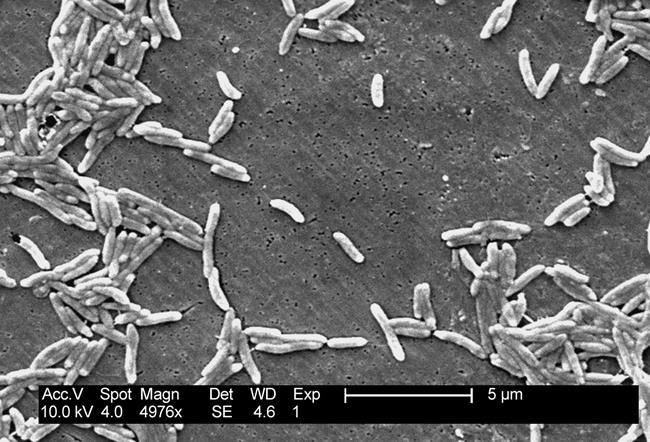
Rob Tauxe, director of the agency’s foodborne illness division, said the figures show more needs to be done to make food safer. He noted the two most common causes of infection have been longtime problems.
One of the two, salmonella, can come from an array of foods including vegetables, chicken, eggs, beef and pork. The other germ, campylobacter , is commonly tied to chicken. People may not hear as much about it because health officials often can’t group cases into outbreaks. Both bacteria are spread through animal feces.
“For some reason, campylobacter is making people sick with lots of different fingerprints,” Tauxe said.
The report is based on monitoring in 10 states, but is seen as an indicator of national trends. It highlights the difficulty in understanding food poisoning when so many cases go unreported, diagnostic methods are inconsistent, and production practices and eating habits are constantly changing.
With chicken, for instance, companies have brought down salmonella rates in raw whole carcasses since the government began publishing test results of individual plants. But the U.S. Department of Agriculture only recently began posting similar data for raw chicken parts like breasts and legs, which Americans have gravitated toward over the years.
Last year, the agency said 22 per cent of production plants did not meet its standard for limiting salmonella in chicken parts. The USDA said in a statement that it’s working to improve its approach to fighting bacteria, including with the publication of such data.
Despite such efforts, salmonella and campylobacter are allowed in raw poultry sold in supermarkets, noted Tony Corbo of Food and Water Watch, an advocacy group that supports stricter food safety regulations. It’s why health experts advise people to properly handle and cook poultry.
“There is very little the USDA can do besides posting the report card on salmonella,” he said.
The National Chicken Council says the industry has been working to bring down contamination rates, including through germ-killing solutions sprayed on raw chicken during processing, improved sanitation and increased use of vaccines. But the group says the bacteria are endemic in chickens and that eliminating them is difficult.
The CDC report also notes produce is a major source of food poisoning, citing recent E. coli outbreaks tied to romaine lettuce. It said outbreaks tied to produce also contributed to a big jump in infections from a parasite called cyclospora .
The Food and Drug Administration, which oversees fruits and vegetables, said in a statement that a recently developed test is helping it detect the parasite in produce. The agency is also implementing new regulations for produce, though food safety experts note the inherent risk with fruits and vegetables that are grown in open fields and eaten raw.

The CDC said is still working to confirm how much increases in food poisoning cases can be chalked up to new diagnostic methods. It noted some results of a newer, faster test could be false positives.
___
Follow Candice Choi on Twitter: @candicechoi
___
The Associated Press Health and Science Department receives support from the Howard Hughes Medical Institute’s Department of Science Education. The AP is solely responsible for all content.