Giving up booze was great, but it wrecked our social lives
Advertisement
Read this article for free:
or
Already have an account? Log in here »
To continue reading, please subscribe:

Digital Subscription
One year of digital access for only $205*
- Enjoy unlimited reading on winnipegfreepress.com
- Read the E-Edition, our digital replica newspaper
- Access News Break, our award-winning app
- Play interactive puzzles
*First annual payment billed as $205.00 + GST for one year. This annual subscription will automatically renew at $233.00 + GST every 52 weeks (10% off the regular annual price of $259.35). Offer available to new and qualified returning subscribers only. Cancel any time.
To continue reading, please subscribe:
Add Free Press access to your Brandon Sun subscription for only an additional
$1 for the first 4 weeks*
- Enjoy unlimited reading on winnipegfreepress.com
- Read the E-Edition, our digital replica newspaper
- Access News Break, our award-winning app
- Play interactive puzzles
*Your next Brandon Sun subscription payment will increase by $1.00 and you will be charged $17.95 plus GST for four weeks. After four weeks, your payment will increase to $24.95 plus GST every four weeks.
Read unlimited articles for free today:
or
Already have an account? Log in here »
Hey there, time traveller!
This article was published 15/02/2019 (2774 days ago), so information in it may no longer be current.
One cold November night, my husband and I arranged to get together with a couple we adore.
The plan was to meet at their house for appetizers and drinks. Betsy would be there when we arrived; Mark was due home at 7 p.m., when we would walk to a restaurant down the street.
We rang their bell at 6. As usual, Betsy had put out a generous spread. There were olives and sweet pickles, biscuits and crackers, three kinds of cheese, including a creamy caraway, and these spicy North Dakota pretzels the entire Midwest has embraced.
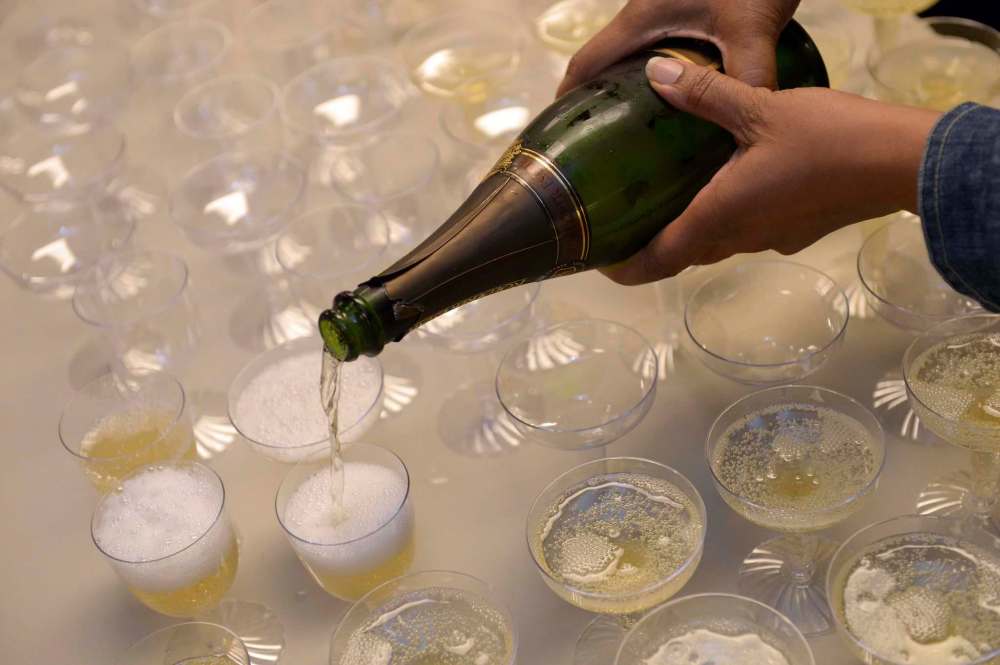
And there was an array of wine: a sauvignon blanc from New Zealand, a Malbec and a peach-coloured rosé.
John pulled out a bottle each of club soda and grapefruit juice, and Betsy’s face fell. “Oh, are you guys still not drinking?” she asked.
Despite my husband’s cheer, I was on her side. Our experiment of nearly three months with abstinence had improved our health, our sleep, our moods and our marriage. But socially? It had made us one big, collective drag.
We quit because of me. At 51, I was suffering from a mean and constant perimenopause. Insomnia, depression, fatigue, heartburn, body aches, skin problems, itching.
I had tried everything: hormones, herbs, soy, magnesium, acupuncture. Then a one-week trial of not drinking confirmed what I had feared. Without alcohol, everything got better.
Indigestion? Gone. Sleep? Vastly improved. Skin? Amazingly clear and better hydrated. Mood? Stable and light.
I stopped drinking in August. My husband gave it up two weeks later.
I worried he would get resentful. But it didn’t happen. Instead, he lost 18 pounds, stopped snoring, began studying a foreign language and reduced both his reflux and blood-pressure drugs.
We are not purists. John often has a single drink at business functions because it’s easier than explaining. I had a glass of champagne at a friend’s bachelorette party. We each drank one perfect glass of pinot noir on our anniversary. But we are not tempted to fall back into old patterns, because giving up daily drinking has improved nearly every area of our lives, and the days we don’t drink just feel so good.
So what’s the story? Blissful as we may be in our 97 per cent sobriety, who cares? Well, our friends do. Because we are now terrible guests.
Let’s go back to the night of that dinner. We ate a bit and chatted for an hour about work and kids and parents. Around 7:05, Betsy checked her phone.
“Oh, shoot, turns out one of us got the time wrong,” she said. “I guess Mark won’t be home until 8.”
She went to the kitchen to pour herself another glass of wine, and John and I shot each other alarmed looks. The house was cool — the way we used to keep ours. Without the flush of alcohol, we were freezing. We also were starving, but knew from experience that our capacity to eat had shrunk. One more helping of cheese and olives would make us useless by dinnertime.
Alcohol has many benefits, most of them social. It opens blood vessels and warms you. It makes you feel hale and well. It can also cause people to ignore fullness; alcohol amps up and expands how food tastes.
These things make for brilliant interpersonal encounters. People who drink in moderation tend to be voluble, relaxed, literally sanguine and engaged. The negative effects — the insomnia, stomach irritation, dehydration and plummeting blood sugar — occur long after the party is over.
When Betsy returned, she took one look at us, our wan faces and stony resolve. “I’m really sorry about this, guys,” she said, looking miserable. “I don’t know what happened. I must have read his calendar wrong…”
At any time before this in the multi-year history of our friendship with Betsy and Mark, we would have shrugged off the delay and held out our glasses. She was not responsible for the fact that John and I had changed.
I wish I could say we rallied, that I asked for cups of hot tea with honey and entertained Betsy and my husband with some amusing anecdote. Instead, I sat shivering and picking at a cracker until Mark walked in. Then we grabbed our coats and walked through sleet to the restaurant, where blessedly we were served within 15 minutes. With the first few bites of real food, I felt life return.
Then John and I went home and rehashed the no-alcohol decision. Should the world have to deal with us sober?
“Remember that dinner where two guys trying gluten-free diets talked about it for like an hour?” I asked. “I had to stop you from jamming baguettes down both of their throats.”
If Mark and Betsy were our only drinking friends, we would drink with them, once or twice a month, and the rest of the time we would live our clean, club soda life.
But we are surrounded by wonderful people who drink often and hard. My career is in advertising, so I have cultivated folks who get their juices running with a Bloody Mary at 10 a.m. John is from a family that buys whiskey by the handle. If we drank with all our friends and relations who do, we would quickly be back to old habits.

So the answer, we decided, is that the responsibility lies with us. We have to be flexible, good-natured and better prepared. One fix is to have people over to our place instead of going to theirs: we can make sure there’s alcohol on hand but also plenty of non-alcoholic options for us, hot and cold.
We also started talking to friends more about why we weren’t drinking. After three months, I finally started saying: I was so depressed before and now I’m not. I am able to sleep for the first time in years. This is not a moral decision; it is a purely medical one.
I am not recommending that everyone stop drinking, or saying abstinence is a panacea for menopause. We’re still a little awkward at parties. And we’re prone to go to bed at 10 p.m.
It is simply a reminder — mostly for myself — that friends are not responsible for accommodating your lifestyle decisions. Their understanding is nice. But ideally, you make your personal choices, carry them out with confidence and try not to disrupt the small pleasures of the people around you. When everyone is sitting around the table, it doesn’t matter what’s inside the glass in your hand.
— Washington Post