Grandparents can teach kids what technology can’t
Advertisement
Read this article for free:
or
Already have an account? Log in here »
To continue reading, please subscribe:

Digital Subscription
One year of digital access for only $205*
- Enjoy unlimited reading on winnipegfreepress.com
- Read the E-Edition, our digital replica newspaper
- Access News Break, our award-winning app
- Play interactive puzzles
*First annual payment billed as $205.00 + GST for one year. This annual subscription will automatically renew at $233.00 + GST every 52 weeks (10% off the regular annual price of $259.35). Offer available to new and qualified returning subscribers only. Cancel any time.
To continue reading, please subscribe:
Add Free Press access to your Brandon Sun subscription for only an additional
$1 for the first 4 weeks*
- Enjoy unlimited reading on winnipegfreepress.com
- Read the E-Edition, our digital replica newspaper
- Access News Break, our award-winning app
- Play interactive puzzles
*Your next Brandon Sun subscription payment will increase by $1.00 and you will be charged $17.95 plus GST for four weeks. After four weeks, your payment will increase to $24.95 plus GST every four weeks.
Read unlimited articles for free today:
or
Already have an account? Log in here »
Hey there, time traveller!
This article was published 30/06/2018 (2942 days ago), so information in it may no longer be current.
Learning can come from books. And then there’s the internet, phone apps, podcasts, this, and that, and the other thing. But all those genuinely wonderful ways to increase one’s knowledge are pretty much second nature to today’s teenagers.
To learn in a new way, teens may want to try embracing a few old ways.
Their grandparents (and other folks of their generation) remember what life was like before Google and YouTube. And most know how to cook without a microwave, manage a budget and drive a car with a manual transmission. (If your teens can learn those last three things, they’ll be in better shape than most 30-year-olds.)
While helping teens master standardized tests over the past two decades, I’ve seen how they increasingly rely on technology to learn. It’s time to switch things up. Here are five valuable skills for college — and for life — that teens can learn by spending some quality time with their elders.
• Storytelling: Sooner or later, your high schooler will need to write an essay. An essay is a story, and a teen’s grandparents, or grandparents of one of their friends, will have many of them. Encourage your teen to talk to them, learn about your family and learn how to tell a story. Teens should pay attention to the start of the story, what details are included, what reactions they feel, and whether the storyteller offered any facts or strong opinions during the telling. Those same skills can be used when writing an essay on a standardized test or a class final.
• Formality: We live in a casual world, and it’s getting more and more laid back by the day. There are still plenty of folks who once lived in a time of decorum when women wore hats and gloves when out and people communicated by writing letters. Encourage your teen to ask their grandparents to share letters they’ve written and received, and to ask what practices were standard. For instance, when writing an old-fashioned letter, salutations were important, especially in professional settings. One addressed a doctor, professor or prospective employer, “Dear Dr. Winward,” rather than “Hey Jennifer.” Teens should use these respectful salutations when asking for a letter of recommendation, when thanking someone for an interview, or when communicating with a professor, teacher or adviser.
• The personal touch: Technology can have an isolating effect. Encourage teens to learn about how people interacted before smartphones. They can ask their grandparents about how they stayed in touch with friends. Grandparents will probably describe greeting people with smiles and eye contact and planning get-togethers.
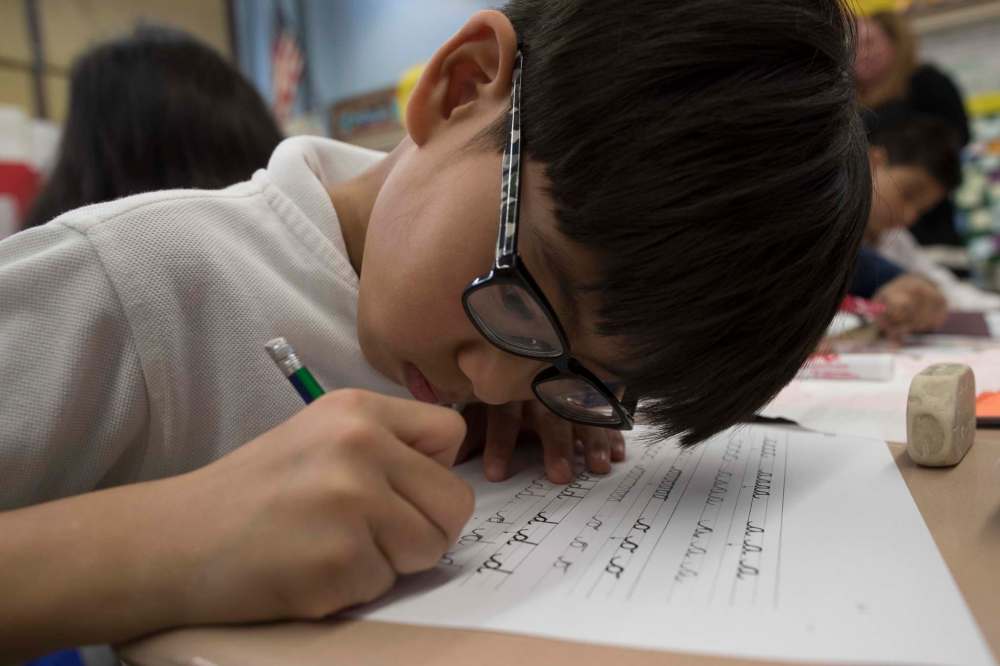
• Good penmanship: Writing by hand — and ensuring it is legible — takes concentration, practice and patience. Those are all important skills to hone. Plus, research indicates writing in cursive is still an important skill. When writing in cursive, students activate different parts of their brains, ones not typically developed through basic reading and writing, and they refine their fine motor skills.
Despite the rumours of cursive’s imminent demise, this skill gives students an advantage in reading and spelling, perhaps due to the feedback from writing words as a whole instead of as individual letters through texting or typing.
• Preserving a family history: Consider all the knowledge grandparents have to impart: their personal histories, their tastes in music, their thoughts on the world events they witnessed. Have your teen speak to them, record the conversations and make it personal. How did they perceive life-changing elections, wars and accomplishments that young people today can only read about? What was it like to see a person walk on the moon for the first time? Where were they when they heard former U.S. president John F. Kennedy had been shot? What was it like to fly in an airplane for the first time?
They can chat about whatever comes to mind. Maybe have your teen record a video or a series of audio recordings, or perhaps even start his or her own podcast. Your teen’s future self — and maybe even future generations — will thank you.
In short, technology is a wonderful thing, no doubt, and it can absolutely help prepare teens for college. But sometimes, the best teacher is somebody who’s already been there.
These are little things, but taken together, grandparents may get students out of their comfort zones and excited to see the world in a new-for-you kind of way.
And, in the process, teens might also find kindness, comfort and excellent cookies.
Winward is an instructor at the University of California, San Diego, an 18-year veteran of high school tutoring, and the founder and lead instructor of Winward Academy. She earned her PhD specializing in adolescent brain development and adolescent learning.
— Washington Post