

Delving into Delta Marsh
Manitoba landmark gets its due in new book, ongoing restoration efforts
Advertisement
Read this article for free:
or
Already have an account? Log in here »
To continue reading, please subscribe:
Monthly Digital Subscription
$1 per week for 24 weeks*
- Enjoy unlimited reading on winnipegfreepress.com
- Read the E-Edition, our digital replica newspaper
- Access News Break, our award-winning app
- Play interactive puzzles
*Billed as $4.00 plus GST every four weeks. After 24 weeks, price increases to the regular rate of $19.95 plus GST every four weeks. Offer available to new and qualified returning subscribers only. Cancel any time.
Monthly Digital Subscription
$4.99/week*
- Enjoy unlimited reading on winnipegfreepress.com
- Read the E-Edition, our digital replica newspaper
- Access News Break, our award-winning app
- Play interactive puzzles
*Billed as $19.95 plus GST every four weeks. Cancel any time.
To continue reading, please subscribe:
Add Free Press access to your Brandon Sun subscription for only an additional
$1 for the first 4 weeks*
*Your next subscription payment will increase by $1.00 and you will be charged $16.99 plus GST for four weeks. After four weeks, your payment will increase to $23.99 plus GST every four weeks.
Read unlimited articles for free today:
or
Already have an account? Log in here »
Hey there, time traveller!
This article was published 16/01/2016 (3741 days ago), so information in it may no longer be current.
Delta Marsh, on the south shore of Lake Manitoba, has attracted people for millennia, notes University of Manitoba biology professor Gordon Goldsborough, who has spent much of his career studying the marsh’s ecosystem.
It was one of Manitoba’s earliest cottage areas, a popular destination for generations of waterfowl hunters and home to two important research stations (both of which are now closed).
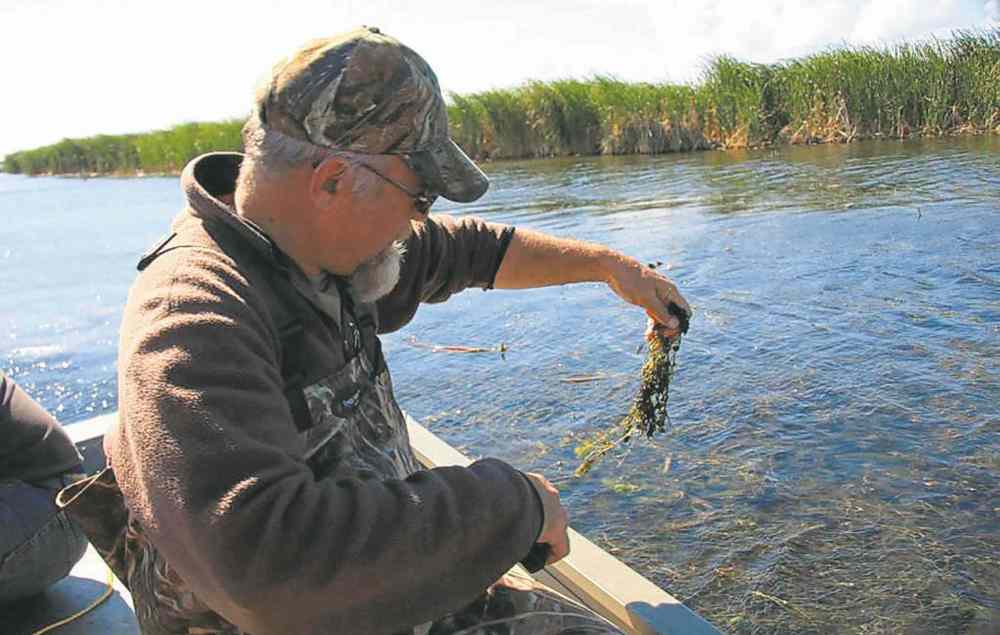
“It’s been thoroughly degraded over the years,” Goldsborough observes in the abundantly illustrated book Delta: A Prairie Marsh and Its People (Delta Marsh History Initiative 2015). The book is co-authored by Goldsborough and several others.
He spoke to the Winnipeg Free Press in late December about the book, and the attempts he and others are making to return Delta Marsh to some semblance of its past, pristine condition.
FP: Why did you decide to write this book now, and how long did it take to write?
GG: We began the research that ultimately led to the book in 2001 when I realized there was a lot of interest in the history of the various people who had spent time at Delta Marsh, including cottagers, year-round residents (who commercial fished on Lake Manitoba in the winter) and especially the waterfowl hunters who had frequented the marsh every fall going back over a century. Although it took 14 years to complete the book, we were not actively engaged on it throughout that entire period. In fact, things were at a low ebb around 2010-2011 when the University of Manitoba closed its Delta Marsh Field Station and the catastrophic flooding forced us to cancel our research work in 2011.
Fortunately, things have worked more favourably over the past four years, with the result that we have been able to conclude the book on a much more positive note than would have been possible four years ago. The results of our marsh restoration project are encouraging, and this is how we are able to end the book.
FP: How many years have you been doing research at the marsh?
GG: I first began working at Delta Marsh in 1979 when I took a field course at the university’s field station. This was an epiphany for me, showing me ecological research was a real possibility for me. I subsequently returned in 1981 to begin research that culminated in my doctoral dissertation in 1985. After a few years away, I returned in 1989 and began long-term experiments on the impacts of anthropogenic chemicals (fertilizers, pesticides), invasive species (carp and cattails) and altered-lake hydrology as factors degrading the marsh.
That work continues right up to the present with our Restoring the Tradition project being done in collaboration with scientists at Ducks Unlimited Canada, Manitoba Conservation and Water Stewardship, Department of Fisheries and Oceans, and others.
FP: What makes this marsh so special? Or, is it any more special than Oak Hammock Marsh?
GG: Delta Marsh is the second-largest freshwater coastal marsh in North America. (The largest is Netley-Libau Marsh at the south end of Lake Winnipeg.) As such, it is a very large wetland that once supported an abundance of life of various forms, especially plants (cattails, bulrushes, etc.), fur-bearers (muskrats), fish and birds (migratory songbirds, ducks and geese). In recognition of its significance, Delta Marsh is one of two sites in Manitoba designated as “wetlands of international significance” under the Ramsar Convention. The other site is Oak Hammock Marsh.
FP: Did you find out anything new and surprising about the social history of the marsh during your research on the book?
GG: I was surprised by the breadth of people who visited Delta through the years. It is amazing how many people, far and wide, have connections to the place. Among them are members of the British Royal Family, Hollywood stars, artists and numerous prominent business people. Add to this the scientists who worked at the two research stations at Delta through the years, who have spread across the continent, and you have many people with roots at Delta.
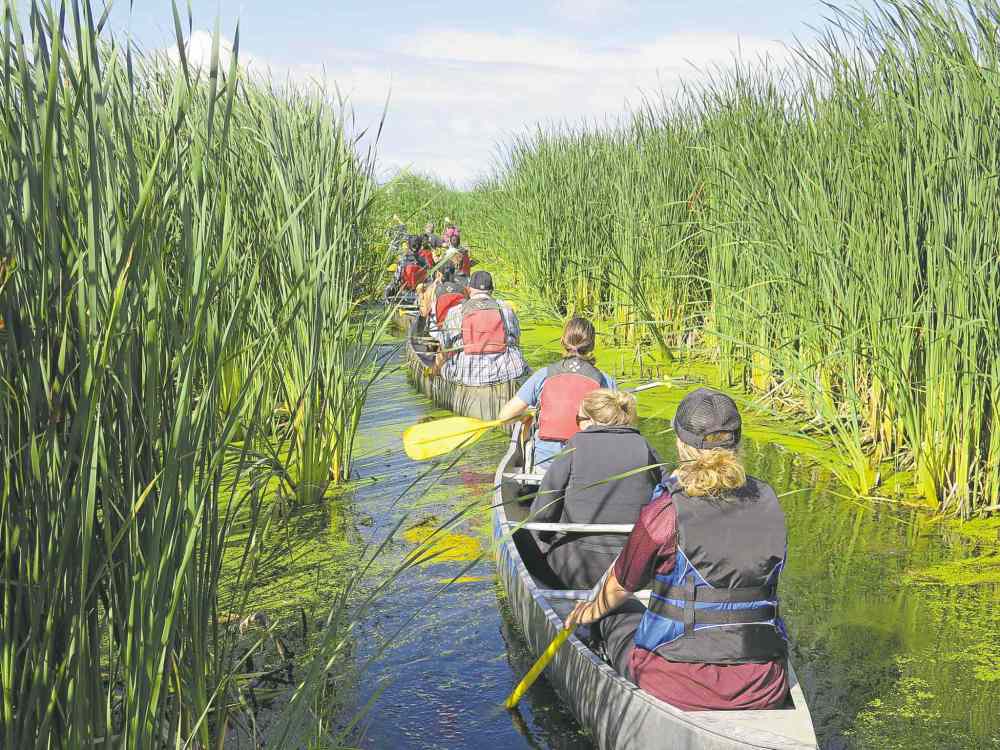
FP: How much scientific research is being done at Delta today?
GG: Lots! In some ways, we are busier now than at any time since the 1980s with our Restoring the Tradition project. We are looking at how the marsh can be restored. Phase 1 has seen the exclusion of carp from the entire marsh, which has led to remarkable improvements in water clarity and regrowth of submersed plants that had previously disappeared from most of the marsh.
FP: What is the condition of Delta Marsh at the present time?
GG: Unfortunately, the prolonged high water levels on Lake Manitoba have caused problems for our carp-exclusion structures, eroding vast amounts of soil from around them. Further repairs this winter will hopefully correct that damage once and for all, and give us the first, fully carp-free marsh in 2016. Only partial carp exclusion has occurred in each of the past three years, but improvement in the marsh has nevertheless been surprising.

FP: What is being done to rehabilitate it to a near-pristine condition?
GG: We spent several million dollars (most of which came from private sources in the United States) to construct seven structures at the connections between Delta Marsh and Lake Manitoba that would exclude carp. Meanwhile, two students are beginning projects this year to examine the second cause of marsh degradation, besides carp: the runoff of chemical contaminants such as phosphorus-based fertilizers and sewage from the surrounding agricultural land and residential developments.
FP: What are your major concerns about the long-term future of Delta Marsh?
GG: I am hopeful the improvements we’ve seen to date will continue, and the marsh will be much healthier than it has been in decades.