Bank of Canada identifies climate change as important economic weak spot
Advertisement
Read this article for free:
or
Already have an account? Log in here »
To continue reading, please subscribe:

Digital Subscription
One year of digital access for only $205*
- Enjoy unlimited reading on winnipegfreepress.com
- Read the E-Edition, our digital replica newspaper
- Access News Break, our award-winning app
- Play interactive puzzles
*First annual payment billed as $205.00 + GST for one year. This annual subscription will automatically renew at $233.00 + GST every 52 weeks (10% off the regular annual price of $259.35). Offer available to new and qualified returning subscribers only. Cancel any time.
To continue reading, please subscribe:
Add Free Press access to your Brandon Sun subscription for only an additional
$1 for the first 4 weeks*
- Enjoy unlimited reading on winnipegfreepress.com
- Read the E-Edition, our digital replica newspaper
- Access News Break, our award-winning app
- Play interactive puzzles
*Your next Brandon Sun subscription payment will increase by $1.00 and you will be charged $17.95 plus GST for four weeks. After four weeks, your payment will increase to $24.95 plus GST every four weeks.
Read unlimited articles for free today:
or
Already have an account? Log in here »
Hey there, time traveller!
This article was published 16/05/2019 (2688 days ago), so information in it may no longer be current.
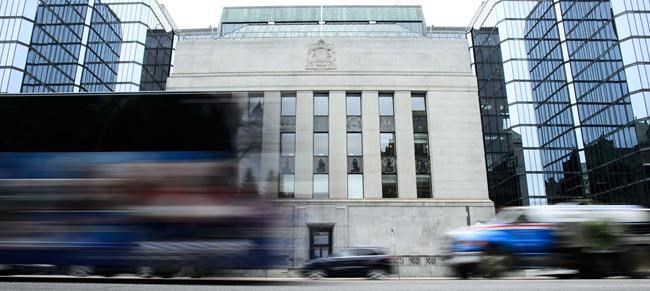
OTTAWA – The Bank of Canada is highlighting its expanding concerns about climate change and, for the first time, is listing it among the top weak spots for the economy and the financial system.
The central bank’s financial system health report Thursday included climate change as an important vulnerability, elevating it to a category alongside its long-running worries about household debt and apprehension about the housing market
The assessment is part of the Bank of Canada’s annual review that explores key weaknesses and risks surrounding financial stability.
“Economic activity and the environment are intertwined,” said the bank, which, like its international peers, is starting to make climate-change factors part of its financial stability research.
“Most experts agree that the global climate is changing and that this has growing implications for the economy. But the range of possible outcomes is large.”
Climate-change risks include the consequences of extreme weather events, such as flooding, hurricanes and severe droughts.
In Canada, the bank said insured damage to property and infrastructure averaged about $1.7 billion per year between 2008 to 2017 — 8.5 times higher than the annual average of $200 million from 1983 to 1992.
Beyond the physical damage, the bank said the shift to a lower-carbon economy will be complicated and could be costly for some.
The transition will likely lead to complicated structural adjustments for carbon-intensive sectors, such as oil and gas, and could leave insurance companies, banks and asset managers more exposed, the report said. In some cases, the bank said fossil fuel reserves could be left in the ground, which could drain the value of important assets.
The bank said the transformation to a lower-carbon economy also will likely provide a boost to sectors like green technology and alternative energy.
Both physical and transition risks are likely to have “broad impacts on the economy,” the report said.
“Climate change is of interest to central banks because of central bank mandates and how climate change can affect economic performance on the one hand and how it can affect financial stability on the other hand,” Bank of Canada governor Stephen Poloz told reporters Thursday.
Last month, a letter co-authored by Bank of England governor Mark Carney and Banque de France governor Francois Villeroy de Galhau urged central bankers and decision-makers in the financial community to act on climate-related risks with concrete steps to preserve the stability of the global system.
“We need collective leadership and action across countries and we need to be ambitious,” said the letter, published in the British newspaper the Guardian.
“Climate change is a global problem, which requires global solutions, in which the whole financial sector has a crucial role to play.”
In addition to climate change, the Bank of Canada’s report also underlined the emerging vulnerability of rising corporate debt levels in the non-financial sector — a growing concern seen in other advanced economies. Some of the borrowing is of lower quality and the situation needs to be monitored closely, the bank said.
Last year, non-financial corporate debt relative to income was at 315 per cent, which the bank said was “well above its historical average.”
The bank said vulnerabilities linked to high household debt and the once-hot housing market have “declined modestly but remain significant.”
Both have been persistent weak spots in recent years and the improvements are due to a slowdown in credit growth since 2017 that coincided with stricter mortgage-lending policies and past interest-rate hikes.

The share of Canadians falling behind their debt payments remains “low and relatively steady,” the bank said. It noted, however, that since 2015 — after the oil-price slump — it’s seen a “small but steady increase” in the number of households in Alberta and Saskatchewan that have fallen behind by 60 days or more on at least one loan payment.
Housing prices in key markets of Toronto and Vancouver have cooled, but imbalances in real-estate markets are still an important vulnerability, the bank said.
Overall, the bank said Canada’s financial system is resilient, but the risk has edged up since its last report in June 2018, due in part to factors such as slower economic growth and uncertainty around global trade.
The most-important threats to the financial system are a severe Canada-wide recession, a big house-price correction and a sharp re-pricing of risk in markets, the bank said.
Follow @AndyBlatchford on Twitter