Tipping point? Experts say the Paris agreement changed the climate on climate

Advertisement

Advertise with us

Five years after it was passed, the Paris agreement may finally be changing the climate on climate change.

Read this article for free:


or

Already have an account? Log in here »

To continue reading, please subscribe:

Subscribe and receive a limited-edition Free Press branded hat or tote.

Digital Subscription

One year of digital access for only $205*

  • Enjoy unlimited reading on winnipegfreepress.com
  • Read the E-Edition, our digital replica newspaper
  • Access News Break, our award-winning app
  • Play interactive puzzles

*First annual payment billed as $205.00 + GST for one year. This annual subscription will automatically renew at $233.00 + GST every 52 weeks (10% off the regular annual price of $259.35). Offer available to new and qualified returning subscribers only. Cancel any time.

To continue reading, please subscribe:

Add Free Press access to your Brandon Sun subscription for only an additional

$1 for the first 4 weeks*

  • Enjoy unlimited reading on winnipegfreepress.com
  • Read the E-Edition, our digital replica newspaper
  • Access News Break, our award-winning app
  • Play interactive puzzles
Start now

*Your next Brandon Sun subscription payment will increase by $1.00 and you will be charged $17.95 plus GST for four weeks. After four weeks, your payment will increase to $24.95 plus GST every four weeks.

Hey there, time traveller!
This article was published 11/12/2020 (2109 days ago), so information in it may no longer be current.

Five years after it was passed, the Paris agreement may finally be changing the climate on climate change.

“I’ve always known we’re not going to act as soon as we could have,” said Mark Jaccard, a widely consulted energy economist at Simon Fraser University.

“I also know that when we do start to act, it’ll be very fast. It’ll be one of those tipping points and it could be that we’re at one right now.”
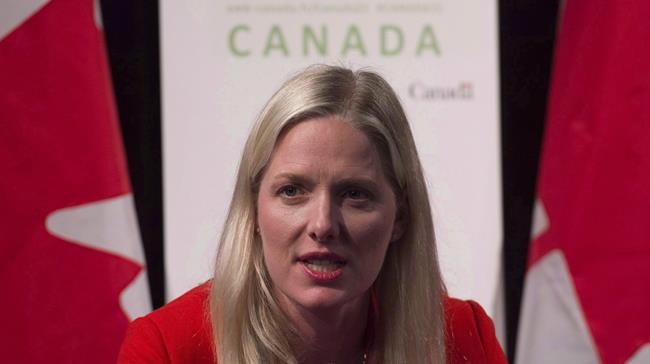
Canadian Minister of Environment and Climate Change Catherine McKenna speaks during a news conference in Paris on Nov. 29, 2015. Five years after it was passed, the Paris Agreement may finally be changing the climate on climate change. THE CANADIAN PRESS/Adrian Wyld

On Dec. 12, 2015, 196 countries met in Paris and put their signatures on a legally binding treaty to do what it took to limit global warming to below two degrees Celsius and to create carbon-neutral economies by 2050.

Progress on those promises has been spotty.

The United Nations annual emissions gap report released this week points out that greenhouse gas emissions have continued to grow and reached record levels in 2019. Even with a seven per cent decline in emissions expected this year because of the COVID-19 pandemic, atmospheric concentrations are expected to rise.

The Liberal government has committed Canada to being carbon neutral by 2050. But it has released no plan for the three to four per cent annual cuts that it would take to get there. Canada has never met any of its previous climate goals and is one of five G20 countries behind on its Paris commitments.

And yet …

“We have a much stronger climate movement that we did,” said Keith Stewart of Greenpeace. “A lot of the big forces in the world are starting to line up behind the transition.”

More and more financial institutions — including, just this week, the $225-billion New York state pension fund — are divesting from fossil fuels or decarbonizing. The UN says 126 countries, including China, have either adopted binding net-zero goals or are considering them.

The cost of renewable energy is plummeting — 90 per cent for solar power, says an Oxford University publication. Some countries — again, including China — are putting end dates on the sale of gas-powered vehicles.

“The effort is picking up speed,” Jaccard said.

Without Paris, Canada wouldn’t have achieved what it has, federal Environment Minister Jonathan Wilkinson told an online webinar Thursday.

“Canadians were really tired of inaction,” he said. “The pan-Canadian framework was something that came out of the Paris agreement.”

The federal Liberals have implemented a carbon tax, signed agreements to reduce methane releases, promised a clean-fuel standard to cut vehicle emissions, announced $1.5 billion in funding for electric buses and charging stations, and helped phase out coal-generated power.

“The Trudeau government is the only federal government Canada’s had that is implementing the pricing and regulations that actually reduce emissions,” Jaccard said.

Wilkinson promises even more.

“We know that more ambition will be required.”

More is needed than just a new set of targets, Stewart said. Canadians who depend on the fossil fuel industry need help with the transition.

“There’s a whole bunch of people who are going to be hurt badly if we don’t do this properly,” he said. “The rest of the country is going to be supporting Alberta, Saskatchewan and Newfoundland.”

Jaccard said some way may be needed to prevent countries that aren’t limiting emissions from having a trade advantage. Tariffs that penalize products from high-carbon jurisdictions are being discussed both at home and abroad, he said.

“How do you get any kind of collective action when there are easy rewards for cheating? You have to have penalty mechanisms.”

Paris made a real difference and progress is out there, said Jaccard.

“I react strongly to people who say it’s too late. The evidence doesn’t support it.

“It’s harder, which means we’ve taken longer to act on it, but I always knew we would act.”

This report by The Canadian Press was first published Dec. 11, 2020.

Report Error Submit a Tip

More Stories

Klein has burned bridges with PM, Gillingham says

Joyanne Pursaga 3 minute read Preview

Klein has burned bridges with PM, Gillingham says

Joyanne Pursaga 3 minute read Friday, Sep. 18, 2026

One mayoral candidate accused another of writing a column so critical it could compromise his ability to work with the federal government.

Read
Friday, Sep. 18, 2026

Steinbach Credit Union member warns others after scammer steals $10K

Scott Billeck 5 minute read Preview

Steinbach Credit Union member warns others after scammer steals $10K

Scott Billeck 5 minute read Friday, Sep. 18, 2026

A Winnipeg single mother whose bank account was drained of nearly $10,000 says Steinbach Credit Union needs to warn its members about what she believes is a broader security problem.

The woman, who is not being named to protect her identity, said a scammer gained access to her account earlier this week after calling SCU’s contact centre, claiming to be her and successfully completing the credit union’s authentication process.

She said she knows of at least six others who have experienced similar incidents in which callers impersonate SCU account holders and pass the authentication checks.

The woman discovered something was wrong when her minor son asked why money had been transferred out of an account they jointly hold.

Read
Friday, Sep. 18, 2026

Today’s horoscope

Georgia Nicols 4 minute read Preview

Today’s horoscope

Georgia Nicols 4 minute read 2:00 AM CDT

MOON ALERT: There are no restrictions to shopping or important decisions today. The moon is in Capricorn.

ARIES (March 21-April 19)

Be aware that people notice you more than usual. In fact, some people will even know personal details about your private life. Consider this in case you have to do some damage control. This is a relaxed day and a chatty one.

TAURUS (April 20-May 20)

Read
2:00 AM CDT

Not good bet to shoulder gambling issue alone

Maureen Scurfield 5 minute read Yesterday at 2:01 AM CDT

DEAR MISS LONELYHEARTS: We’re living a lie over at our house, but it’s holding the family together.

I know my husband is deeply into gambling. If it weren’t for my steady job I don’t know where the family would be! I insist on paying all of our bills. I also funnel some major cash off to my sister, in case my husband tries to tap into my accounts somehow when I’m out of the house.

He doesn’t know my passwords, since I keep changing them, but he sometimes shows up behind me when I’m online, like he’s dying to ask something.

I say, “What are you looking at? Stop looking over my shoulder!” Then he makes a lame joke and goes away.

Family account spiced with magic realism, geopolitical intrigue and a ghost story

Reviewed by Zilla Jones 4 minute read Preview

Family account spiced with magic realism, geopolitical intrigue and a ghost story

Reviewed by Zilla Jones 4 minute read Yesterday at 2:01 AM CDT

Tom Lin’s second novel Babylon, South Dakota moves beyond a historical account of an immigrant family’s struggle, delightfully blending and bending genres.

Lin is a Chinese-born novelist whose family emigrated to the U.S. when he was four years old. His debut novel, The Thousand Crimes of Ming Tsu, won the 2022 Andrew Carnegie Medal for Excellence in Fiction, making him the youngest ever recipient of that award. He earned a PhD in English from the University of California Davis and is currently an assistant professor of English and creative writing at the University of Iowa.

Babylon, South Dakota takes place in an unspecified time period that can be understood to be during the Mao era — likely the 1950s or ’60s. A young Chinese couple, the Hsuis, immigrate to the rural community that gives the book its title. They take the names Saul and Mei and settle on a 160-acre homestead left to them by a distant relative.

Saul’s dream is to breed and sell chrysanthemums from seeds he brought from China, while Mei wants to raise livestock. They speak no English, know nothing of life in the United States, are unprepared for the harshness of winter and the isolation of the farm and bring nothing with them except some gold, which Mei hides around the house for emergencies. Their only link to the outside world is a discarded and marginally functioning TV set, which Saul rescues and rigs up.

Read
Yesterday at 2:01 AM CDT

Near-future U.S. the setting for surreal dual-world storyline

Reviewed by Morley Walker 4 minute read Preview

Near-future U.S. the setting for surreal dual-world storyline

Reviewed by Morley Walker 4 minute read Yesterday at 2:01 AM CDT

It’s not every day you encounter a seriously intended literary novel that attempts to dramatize a mind-bending physics theory like quantum entanglement.

But then the B.C.-born-and-raised Emily St. John Mandel is not your everyday Canadian literary writer.

In her late 40s, she has lived in the U.S. for her entire writing career. She is best known for her 2014 dystopian novel Station Eleven, about a Shakespearean acting troupe navigating a pandemic-ravaged America.

Her new outing, her seventh, Exit Party, shares DNA with detective and sci-fi genres more than with conventional literary fiction.

Read
Yesterday at 2:01 AM CDT