Five things to know about carbon pricing and the Supreme Court ruling
Advertisement
Read this article for free:
or
Already have an account? Log in here »
To continue reading, please subscribe:

Digital Subscription
One year of digital access for only $205*
- Enjoy unlimited reading on winnipegfreepress.com
- Read the E-Edition, our digital replica newspaper
- Access News Break, our award-winning app
- Play interactive puzzles
*First annual payment billed as $205.00 + GST for one year. This annual subscription will automatically renew at $233.00 + GST every 52 weeks (10% off the regular annual price of $259.35). Offer available to new and qualified returning subscribers only. Cancel any time.
To continue reading, please subscribe:
Add Free Press access to your Brandon Sun subscription for only an additional
$1 for the first 4 weeks*
- Enjoy unlimited reading on winnipegfreepress.com
- Read the E-Edition, our digital replica newspaper
- Access News Break, our award-winning app
- Play interactive puzzles
*Your next Brandon Sun subscription payment will increase by $1.00 and you will be charged $17.95 plus GST for four weeks. After four weeks, your payment will increase to $24.95 plus GST every four weeks.
Read unlimited articles for free today:
or
Already have an account? Log in here »
Hey there, time traveller!
This article was published 25/03/2021 (2004 days ago), so information in it may no longer be current.
OTTAWA – The Supreme Court of Canada issued a 6-3 decision upholding the federal carbon price legislation Thursday.
Here are five things to know about the decision and the carbon price.
1. What was the Supreme Court case about and what did the court say?
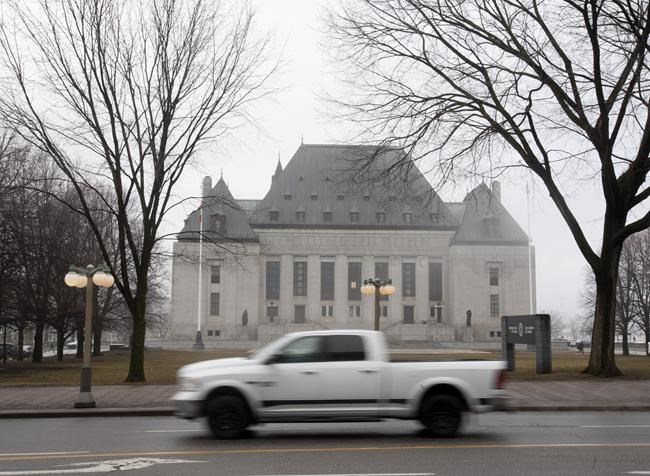
Ottawa developed the Greenhouse Gas Pollution Pricing Act in 2018, to set a minimum price for emissions across the country. Provinces and territories can adopt the federal system, or put forward their own version as long as it meets the federal standard.
Alberta, Ontario and Saskatchewan challenged the law in court saying it infringed on provincial jurisdiction. Appeals courts in Ontario and Saskatchewan upheld the law in 2019, and in 2020 the Alberta Court of Appeal struck it down.
The Supreme Court of Canada majority decision Thursday said because climate change is a massive threat to this country and the world, and because the impact of greenhouse gas emissions transcends provincial borders, the carbon price is a matter of national interest and therefore constitutional.
2. What did the dissenting judges say?
It was not a unanimous decision. Justice Suzanne Cote partially dissented, saying while she felt the federal government had a constitutional right to set a minimum price on pollution, the law gives cabinet too much power to change the scope of the standard on its own.
Justice Malcolm Rowe and Justice Russell Brown both dissented in full, saying the entire law was unconstitutional because the power to manage emissions falls entirely within provincial jurisdiction.
3. What happens now?
The federal government continues with its climate action plan, which rests heavily on the carbon price. An analysis a few years ago estimated the carbon price at $50 a tonne, would eliminate about 90 million tonnes of emissions, or 40 per cent of the cuts Canada needs to make to get to its current Paris climate agreement targets.
Provinces that have the federal system can now decide if they want to keep it or implement their own version. All the affected provinces said they respected the court’s decision even though they disagreed with it. Saskatchewan immediately moved to work on its own system, while Alberta and Ontario haven’t yet said what they plan to do.
Manitoba, the only other province currently under the federal carbon price system, is continuing its own challenge of the law in federal court. There is no date set yet for that case.
4. What is the carbon price currently?
The national standard for the carbon price is based on how many emissions a specific fuel emits when burned. The price is now $30 per tonne of emissions, but that is rising to $40 on April 1. As of next week, it will add 8.8 cents to every litre of gasoline, or about $3.50 to fill a 40-litre tank, and about $15 on a monthly natural gas bill.
It will rise to $50 a tonne in April 2022, and then by $15 a year until it reaches $170 a tonne in 2030.
British Columbia, New Brunswick, Nova Scotia, Prince Edward Island and Newfoundland and Labrador all have a carbon levy that meets the minimum price and works a little differently depending on the province.
Quebec has a cap-and-trade system where emitters can buy and sell credits based on their emissions over or under a set cap.
Alberta, Saskatchewan, Manitoba and Ontario all pay the federal carbon levy.
A separate federal system for big industrial emitters, where the price applies on a portion of what is emitted rather than on the purchase of fuels, applies in full only in Manitoba and P.E.I. Every other province has their own version. Saskatchewan has the federal system applied only on electricity generators and pipelines, but plans to bring those under the provincial system now as well.
5. How does the carbon price work?
The idea of a carbon price is to make it more expensive to pollute, therefore providing an incentive to find ways to produce fewer emissions, be it as an individual or a company.
Canada returns 90 per cent of the revenues from the federal carbon price to individual families in the affected provinces through income tax rebates. The other 10 per cent goes to grants to smaller businesses, schools, hospitals and municipalities for reducing their carbon footprint.
Most individuals will get a bigger rebate than they pay in carbon tax, but heavier emitters will not. Despite the rebate, intended to keep the carbon price from raising the overall cost of living, there is still an incentive to cut your emissions because if you burn less fuel you will still save more money. The less fuel you buy, the less you pay, and you still get the tax rebate regardless.
Choosing public transit rather than driving a car to work, installing a better furnace or more energy efficient windows or buying a more efficient car, would all be things that would allow an individual to buy less gasoline, natural gas or home heating oil and, therefore, pay less carbon tax and produce fewer emissions.
This report by The Canadian Press was first published March 25, 2021.
Related Articles
Province expects Federal Court to back 'better' carbon-tax plan, climate minister says

Advertisement Advertise With Us
Advertisement Advertise With Us