‘Irreversible’: No easy fix for water fouled by gas driller
Advertisement
Read this article for free:
or
Already have an account? Log in here »
To continue reading, please subscribe:

Digital Subscription
One year of digital access for only $205*
- Enjoy unlimited reading on winnipegfreepress.com
- Read the E-Edition, our digital replica newspaper
- Access News Break, our award-winning app
- Play interactive puzzles
*First annual payment billed as $205.00 + GST for one year. This annual subscription will automatically renew at $233.00 + GST every 52 weeks (10% off the regular annual price of $259.35). Offer available to new and qualified returning subscribers only. Cancel any time.
To continue reading, please subscribe:
Add Free Press access to your Brandon Sun subscription for only an additional
$1 for the first 4 weeks*
- Enjoy unlimited reading on winnipegfreepress.com
- Read the E-Edition, our digital replica newspaper
- Access News Break, our award-winning app
- Play interactive puzzles
*Your next Brandon Sun subscription payment will increase by $1.00 and you will be charged $17.95 plus GST for four weeks. After four weeks, your payment will increase to $24.95 plus GST every four weeks.
Read unlimited articles for free today:
or
Already have an account? Log in here »
Hey there, time traveller!
This article was published 18/02/2022 (1688 days ago), so information in it may no longer be current.
DIMOCK, Pa. (AP) — Meeting with a man whose well water has been polluted for years, officials in the Pennsylvania attorney general’s office asked him whether he’d consider accepting a treatment system from the gas driller charged with fouling his aquifer.
Not a chance, Ray Kemble told them.
“Are you going to drink and bathe in it?” Kemble asked the prosecutor and her colleague, a special agent, according to a recording of the conversation obtained by The Associated Press. “Are you two going to come here and live in this house on that system for a month and use that water?”
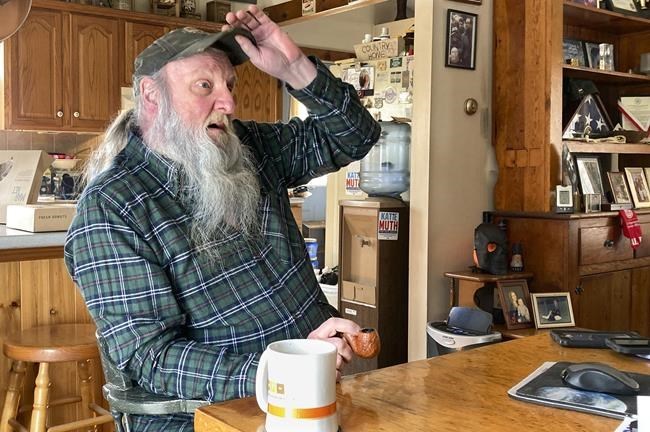
The officials demurred.
One of the best-known pollution cases ever to emerge from the U.S. drilling and fracking boom has entered a difficult new phase as prosecutors pursue criminal charges against the state’s most prolific gas driller — and push for a settlement they say could yield more significant benefits for homeowners than a conviction.
But the option prosecutors recently discussed has put them at odds with some residents who reject individual water treatment systems as inadequate and unworkable. These residents want to be hooked up to public water — itself a controversial idea in their rural community, one that state environmental officials talked up more than a decade ago but ultimately abandoned under legal threat from the driller and local officials.
The residents’ opposition to treatment systems illustrates the delicacy of the attorney general’s task in Dimock, a place synonymous with the fracking debate, where acrimony and distrust are the default after nearly 14 years of bad water and broken promises to fix it.
It was an exploding water well that first aroused public attention in the previously anonymous patchwork of homes and farms about 150 miles (240 kilometers) north of Philadelphia. Around that time, residents began reporting their well water was making them sick with symptoms including vomiting, dizziness and rashes.
Anti-drilling celebrities and documentary filmmakers descended, holding Dimock up as an example of natural gas industry malfeasance in the nation’s No. 2 gas-producing state. Industry backers, meanwhile, touted the economic benefits of cheap gas and accused green groups of greatly exaggerating the threat, even as state regulators concluded that Texas-based Cabot Oil & Gas had fouled Dimock’s groundwater.
The hoopla eventually died down, but Dimock’s water remained polluted. Fresh contamination cases have been reported as recently as December.
The state’s criminal case against the driller dates to 2020, when Attorney General Josh Shapiro — a Democrat now running for governor — charged Cabot with violating the law by allowing methane from the company’s faulty gas wells to escape into drinking-water aquifers in Dimock and nearby communities.
Shapiro’s spokesperson, Jacklin Rhoads, declined to answer questions about the “existence or substance of any discussions” with the company regarding a settlement.
But she said the state’s criminal environmental laws offer “limited tools” for holding polluters accountable. The penalty for a conviction under the state’s Clean Streams Law is a maximum $50,000 fine for each violation.
“While a settlement has the potential to deliver more for victims than the penalties of a guilty verdict, our goal is to resolve the case — through trial or through settlement — in a way that maximizes the restoration and protection of clean water for residents,” Rhoads said.
A company spokesperson declined to comment, citing the “active legal matter.” The company has long defended its record and denied responsibility for the contamination of Dimock’s groundwater.
It’s not clear if treatment systems remain under consideration, given the pushback from residents, but Kemble has his reasons for being skeptical.
In 2010, after discarding their plan to connect residents to public water, state environmental officials entered into a settlement with the company. Cabot offered to install individual water filtration systems, as well as a monetary award equal to twice the tax value of each resident’s home.
The agreement, struck without residents’ input or consent, infuriated those who had made it clear they did not trust Cabot with their water. But many residents took the money — and the treatment systems.
Some worked well, others were prone to breaking down, and all required costly upkeep, according to Joe Nally, who installed and maintained dozens of the systems for Cabot and other drilling companies.
“It was absolutely a maintenance issue with them,” said Nally, who left the industry years ago.
The system Cabot installed at Tim and Deb Maye’s house now sits, disused, in a shed outside their home.
Handwritten logs show hundreds of visits by contractors over the years as the elaborate setup of tanks, filters and control panels broke down, leaked and failed to remove bacteria.
Eventually, the DEP allowed Cabot to hand financial responsibility for repairs and maintenance to the Mayes. The couple said they never agreed to that. The system never worked right, they said.
The Mayes now use their untreated well water for bathing and flushing toilets, and bottled water for everything else.
“This was supposed to be our forever home,” said Deb Maye, who had moved with her family to Dimock to escape the bustle of the Philadelphia suburbs. “And the DEP and the gas company ruined it.”
Until Feb. 11, when he left state employment, Scott Perry was a DEP deputy secretary and longtime head of the agency’s oil and gas division. He acknowledged in a late January interview that treatment systems “did not work perfectly right out of the gate.” But he said they “absolutely do work,” adding some residents are satisfied.
“All of the homeowners were provided with two times the value of their home so that they could attend to their drinking water needs in the matter they best see fit. And several of them have chosen to not maintain their systems, and that’s unfortunate,” Perry said.
He said the water line his agency once touted as a permanent fix couldn’t have been built, given the political, logistical and legal realities of the day, and asserted that Dimock’s aquifer is healing even as Coterra remains banned from drilling in a part of the township.
“We will not allow the oil and gas industry to leave a legacy of polluted groundwater,” he said.