Canada’s oilsands look into use of nuclear power as ‘net zero changes everything’
Advertisement
Read this article for free:
or
Already have an account? Log in here »
To continue reading, please subscribe:

Digital Subscription
One year of digital access for only $205*
- Enjoy unlimited reading on winnipegfreepress.com
- Read the E-Edition, our digital replica newspaper
- Access News Break, our award-winning app
- Play interactive puzzles
*First annual payment billed as $205.00 + GST for one year. This annual subscription will automatically renew at $233.00 + GST every 52 weeks (10% off the regular annual price of $259.35). Offer available to new and qualified returning subscribers only. Cancel any time.
To continue reading, please subscribe:
Add Free Press access to your Brandon Sun subscription for only an additional
$1 for the first 4 weeks*
- Enjoy unlimited reading on winnipegfreepress.com
- Read the E-Edition, our digital replica newspaper
- Access News Break, our award-winning app
- Play interactive puzzles
*Your next Brandon Sun subscription payment will increase by $1.00 and you will be charged $17.95 plus GST for four weeks. After four weeks, your payment will increase to $24.95 plus GST every four weeks.
Read unlimited articles for free today:
or
Already have an account? Log in here »
Hey there, time traveller!
This article was published 17/07/2022 (1539 days ago), so information in it may no longer be current.
CALGARY – The pressing global need to slash emissions in the face of a growing climate crisis is driving renewed interest in nuclear power — and few places more sothan in Canada’s oilsands.
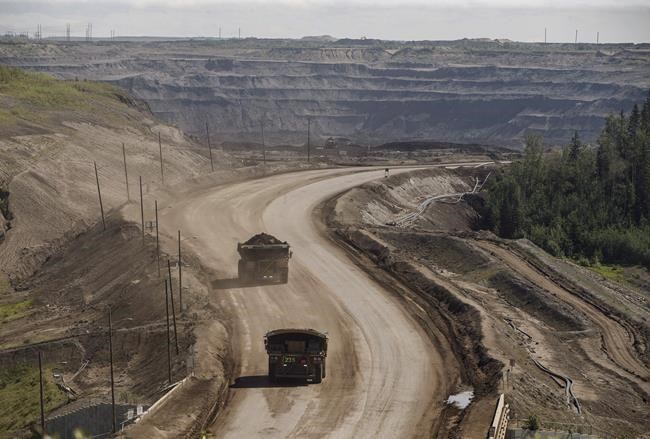
While the idea of using nuclear power to replace the fossil fuels burned in oilsands production has been bandied about for years, some experts say the reality could be just a decade or so away. On paper, at least, there is more potential to deploy small modular reactor (SMR) technology in the oilsands region of Alberta than anywhere else in the country.
“Without a doubt the oilsands is the biggest market for small modular reactors in Canada,” said John Gorman, president and chief executive of the Canadian Nuclear Association. “It’s something that some companies are very actively looking at.”
Small modular reactors are a type of nuclear design that is far smaller than a traditional nuclear reactor. Generating between 10 and 300 MW of energy, SMRs are fully scalable and are designed to be built economically in factory conditions, rather than on site like a large-scale conventional reactor.
While SMRs are not yet commercially available, the technology is getting close. The International Atomic Energy Agency estimates that nearly 100 SMRs could be operating around the world by 2030. In Canada, four provinces — New Brunswick, Ontario, Saskatchewan and Alberta — have agreed to collaborate on the advancement of SMRs as a clean energy option, and Canadian researchers are working on new materials and designs that could make SMRs practical in a large range of new uses.
Proponents say SMRs could potentially be used not only to provide clean electricity to smaller electricity grids, like those in rural areas, but also to provide heat for natural resource industries. In the oilsands, operators use massive amounts of high-temperature heat to produce the steam needed to extract bitumen from sand — and they get that heat by burning natural gas.
In total, the oil and gas industry is responsible for 30 per cent of Canada’s natural gas consumption, which means confronting the industry’s fossil fuel usage will be key if Canada is to meet its climate commitments.
The oilsands industry itself — through an organization called Pathways Alliance, which is made up of Canadian Natural Resources Ltd., Cenovus Energy Inc., ConocoPhillips Canada, Imperial Oil Ltd., MEG Energy Corp. and Suncor Energy Inc. — has committed to reducing greenhouse gas emissions from oilsands production by 22 million tonnes annually by 2030, and reaching a goal of net-zero emissions by 2050.
To help get there, the Pathways Alliance has proposed a major carbon capture and storage transportation line that would capture CO2 from oilsands facilities and transport it to a storage facility near Cold Lake, Alta. That project alone could deliver about 10 million tonnes of emissions reductions per year and could be up and running by the end of the decade.
But Pathways has also formed a committee to formally explore nuclear as an alternative to natural gas in oilsands production.
“Absolutely, we are looking at SMRs as a low or no-emission source of the high temperature heat we need,” said Martha Hall Findlay, chief climate officer for Suncor Energy Inc. “But it has to be economically viable. It has to make sense.”
Findlay said the industry will need clarity around what level of government financial support, if any, will be available for SMRs. There are also questions around the regulatory process, given the energy sector’s frustrating experience in recent years getting large-scale projects approved.
“It’s Canada — it takes a really long time to build anything,” she said. “But if we want to see implementation by 2030, or into the early 2030s, we have to be doing this stuff now. We have to be looking at it now.”
Dan Wicklum, president and CEO of non-profit advisory group The Transition Accelerator and the former CEO of the Canadian Oilsands Innovation Alliance, said the energy industry has formally evaluated the nuclear opportunity in the past and discarded it, largely because of cost.
But he said the industry’s new target of net-zero emissions “changes everything.”

“We can no longer just do the things we were going to do to reduce emissions. Optionality has fallen off the table for us,” Wicklum said. “In an emissions elimination paradigm, there’s no question that nuclear is being taken very seriously.”
However, Wicklum added that for any large-scale emissions reductions projects to get off the ground, governments and industry will have to come to an agreement about whose responsibility it is to pay for them.
“Industry is looking to the federal government to say, ‘make it worth our while’, he said. “They want more taxpayer dollars. They’ve essentially said there’s not enough public support right now for them to act. And because of that, I think, the feasibility of SMRs — as well as carbon capture and storage, and so on — is completely in question.”
This report by The Canadian Press was first published July 17, 2022.
Companies in this story: (TSX:TKTK)
Related Articles
Climate aid, war fallout feature at Berlin climate talks
Advertisement Advertise With Us
Advertisement Advertise With Us