EXPLAINER: Carbon ‘offsets’ for World Cup in Qatar
Advertisement
Read this article for free:
or
Already have an account? Log in here »
To continue reading, please subscribe:

Digital Subscription
One year of digital access for only $205*
- Enjoy unlimited reading on winnipegfreepress.com
- Read the E-Edition, our digital replica newspaper
- Access News Break, our award-winning app
- Play interactive puzzles
*First annual payment billed as $205.00 + GST for one year. This annual subscription will automatically renew at $233.00 + GST every 52 weeks (10% off the regular annual price of $259.35). Offer available to new and qualified returning subscribers only. Cancel any time.
To continue reading, please subscribe:
Add Free Press access to your Brandon Sun subscription for only an additional
$1 for the first 4 weeks*
- Enjoy unlimited reading on winnipegfreepress.com
- Read the E-Edition, our digital replica newspaper
- Access News Break, our award-winning app
- Play interactive puzzles
*Your next Brandon Sun subscription payment will increase by $1.00 and you will be charged $17.95 plus GST for four weeks. After four weeks, your payment will increase to $24.95 plus GST every four weeks.
Read unlimited articles for free today:
or
Already have an account? Log in here »
Hey there, time traveller!
This article was published 07/11/2022 (1398 days ago), so information in it may no longer be current.
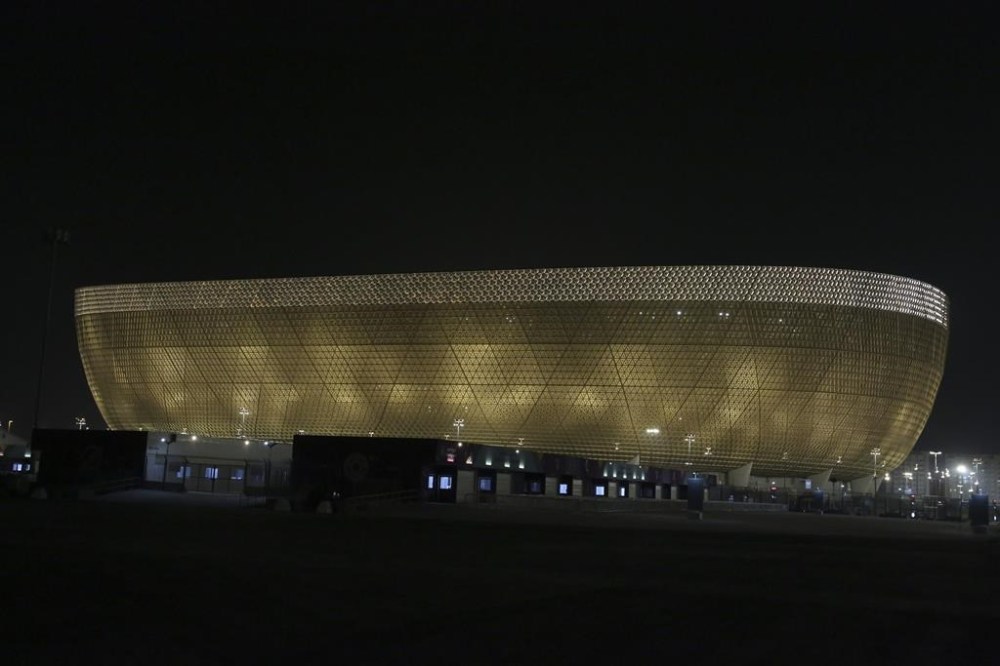
WASHINGTON (AP) — Qatar has said the upcoming soccer World Cup will be the first to be ‘carbon-neutral.’ In theory, that means the monthlong tournament hosted by the small Gulf Arab nation will have a trivial effect on the climate. It’s a bold claim for a country that spent the past 12 years building seven new stadiums, hotels, high-rises and roads for the event.
Key to Qatar’s plan are carbon offsets intended to cancel out the greenhouse gases emitted before and during the tournament.
A look at how carbon credit arrangements work.
WHAT ARE CARBON OFFSETS?
Companies, governments and individuals buy offsets, or allowances, to reduce their carbon footprints. The basic idea behind the multibillion-dollar market is that emissions from polluting human activities can be counteracted elsewhere, using farming practices that store carbon, planting trees, or by preventing the escape of climate-changing gases from equipment.
Allowances, credits and offsets all refer to the same thing. One offset corresponds to one metric ton of carbon dioxide that is avoided, removed or absorbed.
Offsets have rapidly grown in popularity with governments using them to reach climate goals, companies incorporating them into ‘net-zero’ plans, and individuals buying them to cancel out climate pollution from air travel.
There are two kinds of offset markets: voluntary and mandatory, or compliance. Individuals and companies purchase credits on the voluntary market while governments use compliance or cap-and-trade schemes to set legally binding limits on carbon emissions for industries like oil, transportation, electricity and landfills. Companies or other entities have a choice: They can pollute less, or they can spend money and buy credits in compliance markets — such as the European Union Emissions Trading System — to stay below emissions caps.
For this year’s World Cup, Qatar has pledged to voluntarily buy credits to offset all the emissions from the games.
WHO ISSUES THEM?
In the voluntary market, various registries issue credits based on criteria verified by third-parties who are supposed to be rigorous and neutral. But experts say the market remains largely unregulated.
Mandatory cap-and-trade schemes work a little differently. Governments usually tell industries what the limit on their emissions will be. They often give away a certain number of allowances to the companies for free, authorizing them to pollute, and auction off the rest, or they may auction off all of them, forcing the companies to pay for every ton of carbon dioxide they release. Often the price per credit is quite low. If a company manages to come in under its pollution limit, it can make money by generating its own credits. Cap and trade is a free market solution to pollution because companies decide the most efficient places to invest in cleaner equipment.
HOW DO OFFSETS WORK?
Think of them as certificates that entities buy and sell to counteract pollution in one place by reducing, absorbing, capturing or destroying emissions in another.
For a credit to be viable, it must offer a benefit to the environment that wouldn’t happen otherwise, a concept known as ‘additionality.’
For example, if a company buys offsets that fund reforestation, the credits are valid only if the trees would not have been put in the ground otherwise. If the trees would have been planted anyway, the offsets are meaningless.
WHAT ARE SOME ISSUES WITH OFFSETS?

Ensuring that offsets are additional is often complicated. While proponents view offsets as an important tool to reach short to-medium term emissions-reduction goals, critics say they frequently promise more than they deliver.
Some experts believe offsets allow companies and to a lesser degree, individuals, to keep polluting and not change their behavior while appearing to satisfy climate targets.
“You cannot pay other people to reduce emissions and have everybody take that strategy and get to global emissions that are close to zero,” said Danny Cullenward, a California-based energy economist and lawyer who studies carbon emissions.
___
Follow Suman Naishadham on Twitter: @SumanNaishadham
Related Articles
Ratcliffe has no interest in buying Man United or Liverpool










Advertisement Advertise With Us
Advertisement Advertise With Us