Canada commits $420 million for Great Lakes environmental work during Biden visit

Advertisement

Advertise with us

OTTAWA - The federal government has committed $420 million in funding over 10 years to preserve and restore waters of the Great Lakes.

Read this article for free:


or

Already have an account? Log in here »

To continue reading, please subscribe:

Subscribe and receive a limited-edition Free Press branded hat or tote.

Digital Subscription

One year of digital access for only $205*

  • Enjoy unlimited reading on winnipegfreepress.com
  • Read the E-Edition, our digital replica newspaper
  • Access News Break, our award-winning app
  • Play interactive puzzles

*First annual payment billed as $205.00 + GST for one year. This annual subscription will automatically renew at $233.00 + GST every 52 weeks (10% off the regular annual price of $259.35). Offer available to new and qualified returning subscribers only. Cancel any time.

To continue reading, please subscribe:

Add Free Press access to your Brandon Sun subscription for only an additional

$1 for the first 4 weeks*

  • Enjoy unlimited reading on winnipegfreepress.com
  • Read the E-Edition, our digital replica newspaper
  • Access News Break, our award-winning app
  • Play interactive puzzles
Start now

*Your next Brandon Sun subscription payment will increase by $1.00 and you will be charged $17.95 plus GST for four weeks. After four weeks, your payment will increase to $24.95 plus GST every four weeks.

Hey there, time traveller!
This article was published 24/03/2023 (1242 days ago), so information in it may no longer be current.

OTTAWA – The federal government has committed $420 million in funding over 10 years to preserve and restore waters of the Great Lakes.

Prime Minister Justin Trudeau made the announcement Friday during the visit of United States President Joe Biden, who earmarked $1 billion over five years to improve those freshwater ecosystems in 2021.

“Our ongoing co-operation on issues such as trade, security and the environment reflects a strong commitment making life better for people on both sides of our shared border,” Trudeau said in a release.
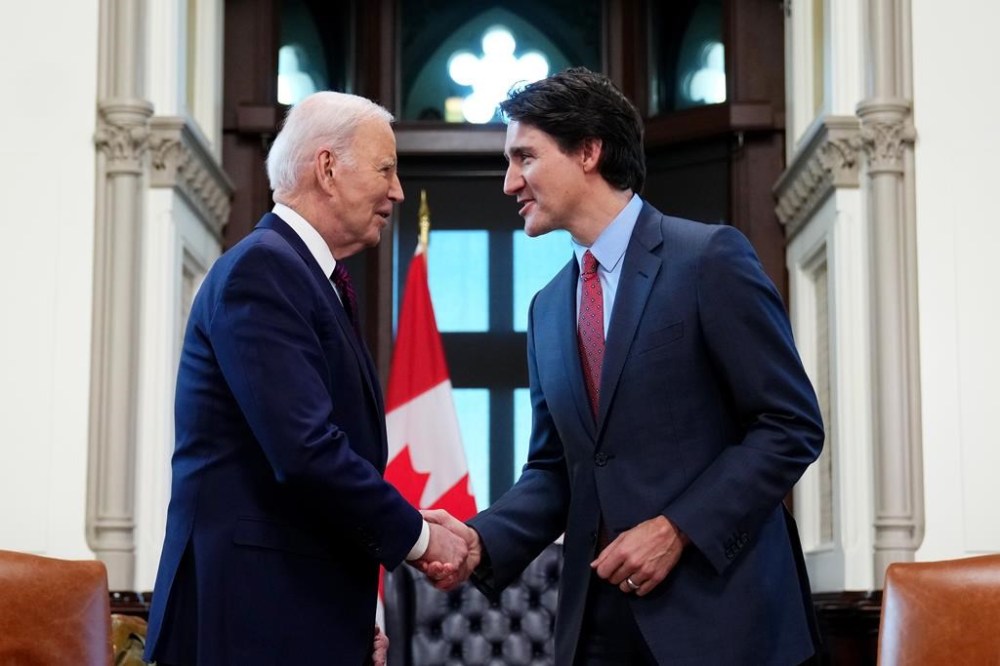
Prime Minister Justin Trudeau and U.S. President Joe Biden take part in a meeting on Parliament Hill, in Ottawa, Friday, March 24, 2023. THE CANADIAN PRESS/Sean Kilpatrick

The money is to be focused on cleaning up a series of pollution hot spots. Three in Lake Superior and four in Lake Ontario are in Canadian waters, while another four are in waters shared by both countries. With three sites already remediated, it’s part of the Canadian government’s plan to clean up 12 of the 14 worst sites in the lakes by 2030.

Funding will also go to efforts to stop harmful algae blooms generated by agricultural run-off, as well as preventing harmful chemicals from entering those waters, which represent 20 per cent of world’s surface freshwater and provide drinking water for 40 million people.

The government’s goal is to reduce phosphorus going into Lake Erie from Canadian sources by more than 200 tonnes within 15 years.

Environmental groups on both sides of the border welcomed the announcement, but called it a down payment on what needs to be spent.

“It’s a good first step,” said Andrea Dube of Freshwater Future.

She said environmentalists have called for Canada to match the American funding.

“We’re getting half of that, which is still significant. But in terms of what’s at stake for Canada, it isn’t enough.”

She singled out algae blooms in Lake Erie and emerging toxins, such as perfluorooctane sulfonate, as areas where Canada needs to pay more attention.

Still, Mark Mattson of the group Swim Drink Fish said the funding quintuples Canada’s environmental commitments to the Great Lakes.

“The announcement is really significant,” he said in a release.

The funding was also welcomed south of the border.

“Commitments like these are a critical down payment in ensuring that the Great Lakes are brought back to health and can sustain a way of life for the millions of people who rely on them both in Canada and the United States,” said a release from Joel Brammeier, president of the Alliance for the Great Lakes.

— By Bob Weber in Edmonton

This report by The Canadian Press was first published March 24, 2023.

Report Error Submit a Tip

More Stories

Lasting legacy or pining for a pipe dream?

Laura Cameron 5 minute read 2:00 AM CDT

The federal government is investing in major infrastructure, promising to expedite “projects of national interest” and pitching them to private investors at a summit in September.

The Manitoba government has its sights set on a pipeline and LNG export terminal at Churchill. Instead, Manitoba should be putting forward feasible, future-facing infrastructure proposals that would leave a positive lasting legacy of energy affordability, independence and security for Manitobans.

A pipeline and LNG terminal at Churchill are not viable for several reasons — the technical challenges of building a pipeline over thawing permafrost; the prohibitive cost of ice-breaking tankers to move LNG through the Arctic; and a forecasted global oversupply of LNG and uncertain long-term export markets.

Given these challenges, a private company coming out of the woodwork to invest seems exceptionally unlikely. Private proponents are also not interested in building oil pipelines to the west, and Prime Minister Mark Carney has now made clear his priority to work with Premier Danielle Smith on a West Coast pipeline, which would cost upwards of $35 billion (on top of the over $34 billion in public funds already spent on the Trans Mountain pipeline). It would seem this pours more cold water on the idea of a third publicly funded pipeline to Hudson Bay.

Impaired driving victim honoured

Morgan Modjeski 5 minute read Preview

Impaired driving victim honoured

Morgan Modjeski 5 minute read Saturday, Aug. 15, 2026

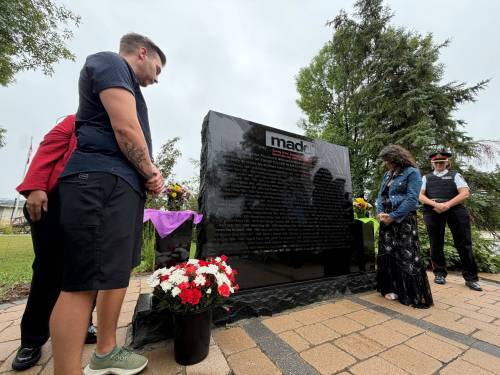
Ten years after he was killed in a collision involving an impaired driver in 2016, Robbie Anderson’s name has been added to MADD Canada’s Manitoba Memorial honouring those killed in drunk and drug-impaired-related crashes.

His older brother Chris Anderson, was one of two dozen people who gathered at the Glen Eden Funeral Home and Cemetery in West St. Paul Saturday to remember their loved ones, 86 victims whose names are etched into the granite monument near the heart of the graveyard.

“It’s heavy,” said Anderson when asked what it was like to be part of the ceremony and see his brother’s name added. “It’s been something I’ve been thinking about for a while.”

Grateful for MADD’s work and its efforts to honour Robbie, who was 27 when he died, Anderson said his brother, represented the “absolute best of us.”

Read
Saturday, Aug. 15, 2026

Could renewed interest in strategically critical rare earth elements finally make sub-sector profitable?

Joel Schlesinger 6 minute read Preview

Could renewed interest in strategically critical rare earth elements finally make sub-sector profitable?

Joel Schlesinger 6 minute read Saturday, Aug. 15, 2026

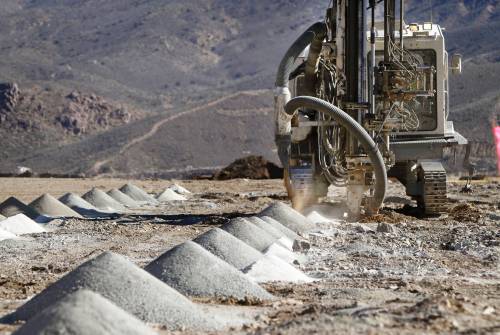
Rare earth elements are among the most critical of mined resources for modern economies.

They’re essential in manufacturing specialized magnets used in a host of technologies from wind turbines and electric vehicles to hard drives, smartphones, television screens, and fibre optics. Most notably, however, rare earth minerals are increasingly vital to the defence industry.

These 17 elements — closely related chemically and usually found all together in mineral deposits — have indeed been growing in geopolitical importance as the United States, Canada and other Western nations recognize their dependence on production from China.

It is the world’s largest producer and processor of rare earths, including the most in-demand elements neodymium and praseodymium used to manufacture very light and powerful magnets for an array of technologies, including the most advanced weapons of modern warfare.

Read
Saturday, Aug. 15, 2026

Where paths cross

Carina Blumgrund 5 minute read 2:00 AM CDT

Every so often, an ordinary moment turns out to be about something else entirely.

I watched two women meet outside a grocery store recently. Neither seemed to know the other. One had dropped a bag, oranges rolling across the wet pavement, and the other bent down without a word to help gather them. It took maybe 40 seconds. They exchanged a few sentences I couldn’t hear, laughed once, and went their separate ways. I don’t think either of them thought about it again.

I did, though. I kept thinking about how neither woman had planned to meet the other that morning. Their separate mornings happened to touch for less than a minute, and then continued on, changed by some small amount neither could probably name.

For a long time, when I thought about what brings people together, bridges were the image that came to mind. Bridges connect two known sides. They’re built on purpose, toward a destination already identified. I still believe in that kind of work. Deliberate bridges, built with intention toward a place meant to be reached, matter enormously.

Best to fess up about grandkid-sitting fatigue

Maureen Scurfield 5 minute read 2:00 AM CDT

DEAR MISS LONELYHEARTS: We love our grandchildren, but now we’re sick of them. The two sets of parents — our adult children — have been parking their kids out here on the farm with us while they take back-to-back road trips to see their friends. We’ve had enough.

Grandma and I want them to come back and get the “brats” (just joking, they’re nice kids) so we can relax.

You have to be so careful with city kids around the farm who don’t know when they’re going to make a mistake and get hoofed by an animal or run over by a farm implement.

How do we tell our kids the party is over early, and they really need to come back before grandma and I give out?

Hometown hero hits CEBL championship clinching shot

Taylor Allen 4 minute read Preview

Hometown hero hits CEBL championship clinching shot

Taylor Allen 4 minute read Yesterday at 6:34 PM CDT

Chapter 1 of Winnipeg Sea Bears basketball was capped by hometown hero Chad Posthumus.

It was May 27, 2023, and the late, great centre out of River East Collegiate had a put-back basket off a Teddy Allen miss to give the Sea Bears a 90-85 victory over the Vancouver Bandits in Winnipeg’s inaugural game, in front of what was then a record crowd of 7,303.

So, on Saturday, it was rather poetic that Simon Hildebrandt — another Winnipegger and a player Posthumus used to mentor — was the one to put an exclamation mark on the franchise’s latest and greatest chapter.

Hildebrandt drilled a wide-open three in Target Score Time to crown the Sea Bears as the 2026 CEBL champions.

Read
Yesterday at 6:34 PM CDT