Judge cancels Montana gas plant permit over climate impacts
Advertisement
Read this article for free:
or
Already have an account? Log in here »
To continue reading, please subscribe:

Digital Subscription
One year of digital access for only $205*
- Enjoy unlimited reading on winnipegfreepress.com
- Read the E-Edition, our digital replica newspaper
- Access News Break, our award-winning app
- Play interactive puzzles
*First annual payment billed as $205.00 + GST for one year. This annual subscription will automatically renew at $233.00 + GST every 52 weeks (10% off the regular annual price of $259.35). Offer available to new and qualified returning subscribers only. Cancel any time.
To continue reading, please subscribe:
Add Free Press access to your Brandon Sun subscription for only an additional
$1 for the first 4 weeks*
- Enjoy unlimited reading on winnipegfreepress.com
- Read the E-Edition, our digital replica newspaper
- Access News Break, our award-winning app
- Play interactive puzzles
*Your next Brandon Sun subscription payment will increase by $1.00 and you will be charged $17.95 plus GST for four weeks. After four weeks, your payment will increase to $24.95 plus GST every four weeks.
Read unlimited articles for free today:
or
Already have an account? Log in here »
Hey there, time traveller!
This article was published 07/04/2023 (1287 days ago), so information in it may no longer be current.
BILLINGS, Mont. (AP) — A judge canceled the air quality permit for a natural gas power plant that’s under construction along the Yellowstone River in Montana citing worries over climate change.
State District Judge Michael Moses ruled Thursday that Montana officials failed to adequately consider the 23 million tons of planet-warming greenhouse gases that the project would emit over several decades.
Many utilities across the U.S. have replaced coal power with less polluting natural gas plants in recent years. But the industry remains under pressure to abandon fossil fuels altogether as climate change worsens.
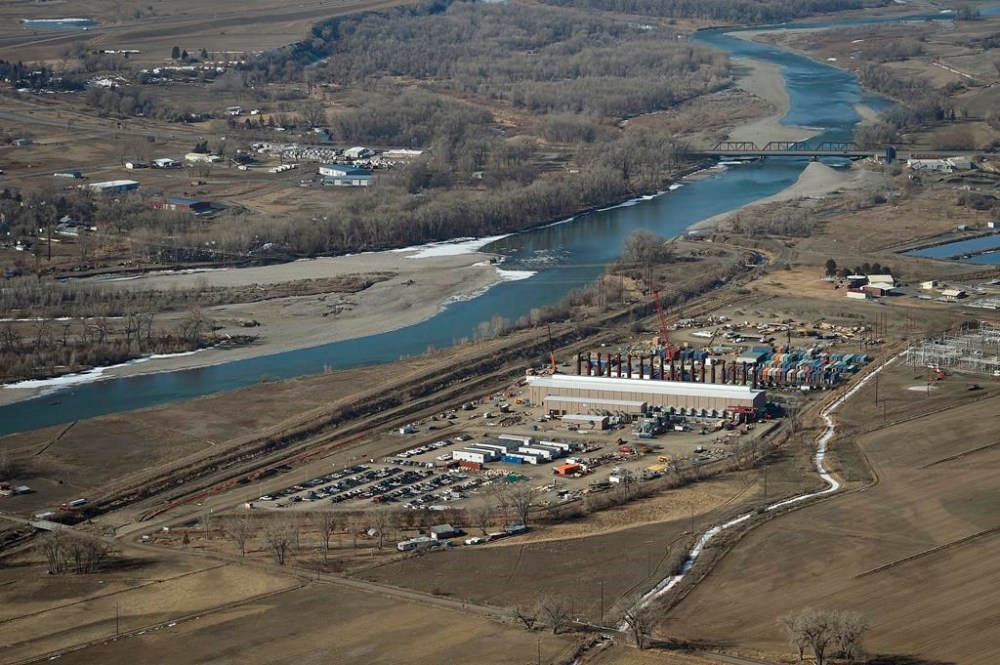
The $250 million plant is being built by Sioux Falls, South Dakota-based NorthWestern Energy and would operate for at least 30 years. The company will appeal the order, a spokesperson said in a statement Friday, saying that the ruling could jeopardize reliable power service.
Montana officials had argued they had no authority to regulate greenhouse gas emissions. They also said that because climate change is a global phenomenon, state law prevented them from looking at its impacts.
But Moses said officials from the Montana Department of Environmental Quality had misinterpreted the law. He ordered them to conduct further environmental review and said they must gauge the climate change impacts within Montana in relation to the project. Major flooding on the Yellowstone last year wiped out bridges and triggered widespread evacuations following extreme rains, which scientists say are becoming more frequent as the climate changes.
“The emissions and impacts of the (gas plant) are potentially significant,” Moses wrote. “Defendants do not dispute this.”
The judge also faulted officials for not considering how lights from the project could impact surrounding property owners. It’s on the outskirts of the town of Laurel across the river from a residential neighborhood.
The plant would produce up to 175 megawatts of electricity. Its air permit was challenged in a 2021 lawsuit from the Montana Environmental Information Center and Sierra Club.
The Department of Environmental Quality was reviewing Moses’ order and agency officials had no immediate comment, spokesperson Moira Davin said.
A NorthWestern Energy representative did not say if the ruling would halt construction. The company says the plant would ensure enough electricity is available at times of high demand, such as on hot days or cold nights.

“Our air permit was reviewed and approved by the DEQ using standards that have been in effect for many years,” Vice President John Hines said in a NorthWestern’s statement. “We will work with the DEQ to determine the path forward.”
The ruling comes as the Montana Legislature weighs bills that would make it more difficult for organizations and individuals to sue state agencies over environmental decisions.
The state Senate passed a bill requiring anyone who wants to challenge an agency environmental review to have commented during the review process. They’d also have to pay for some of the agency’s court costs. The bill would also bar nonprofit organizations from using tax deductible donations to pay for lawsuits against state agencies.
__
Hanson reported from Helena, Mont.