German town bids farewell to nuclear, eyes hydrogen future
Advertisement
Read this article for free:
or
Already have an account? Log in here »
To continue reading, please subscribe:

Digital Subscription
One year of digital access for only $205*
- Enjoy unlimited reading on winnipegfreepress.com
- Read the E-Edition, our digital replica newspaper
- Access News Break, our award-winning app
- Play interactive puzzles
*First annual payment billed as $205.00 + GST for one year. This annual subscription will automatically renew at $233.00 + GST every 52 weeks (10% off the regular annual price of $259.35). Offer available to new and qualified returning subscribers only. Cancel any time.
To continue reading, please subscribe:
Add Free Press access to your Brandon Sun subscription for only an additional
$1 for the first 4 weeks*
- Enjoy unlimited reading on winnipegfreepress.com
- Read the E-Edition, our digital replica newspaper
- Access News Break, our award-winning app
- Play interactive puzzles
*Your next Brandon Sun subscription payment will increase by $1.00 and you will be charged $17.95 plus GST for four weeks. After four weeks, your payment will increase to $24.95 plus GST every four weeks.
Read unlimited articles for free today:
or
Already have an account? Log in here »
Hey there, time traveller!
This article was published 14/04/2023 (1266 days ago), so information in it may no longer be current.
LINGEN, Germany (AP) — For 35 years, the Emsland nuclear power plant in northwestern Germany has reliably provided millions of homes with electricity and many with well-paid jobs in what was once an agricultural backwater.
Now, it and the country’s two other remaining nuclear plants are being shut down. Germany long ago decided to phase out both fossil fuels and nuclear power over concerns that neither is a sustainable source of energy.
The final countdown Saturday — delayed for several months over feared energy shortages because of the Ukraine war — is seen with relief by Germans who have campaigned against nuclear power.
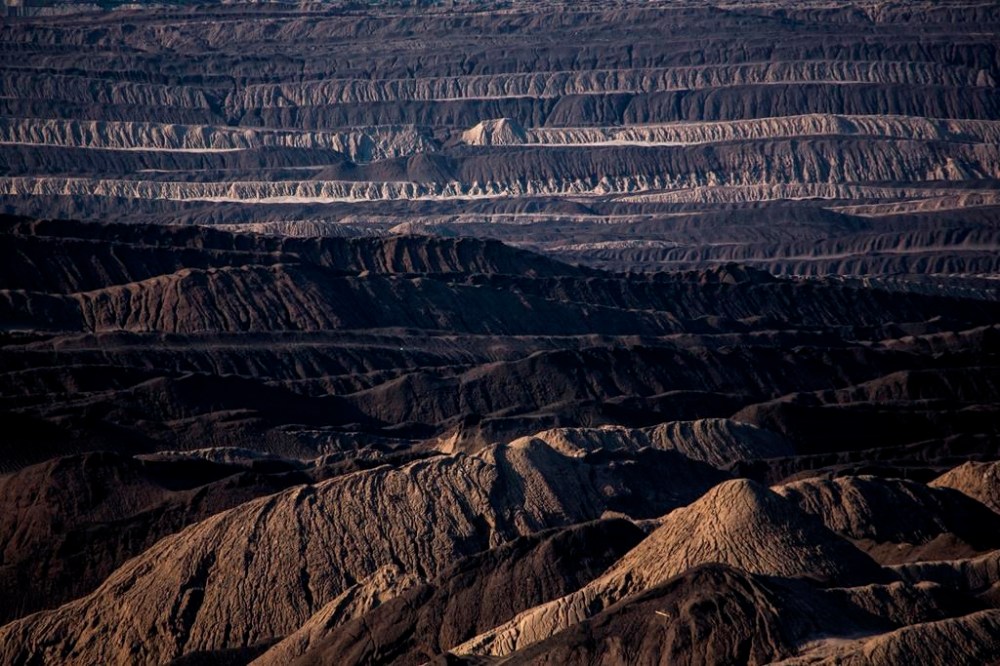
Yet with energy prices stubbornly high and climate change a growing concern, some in the country and abroad are branding the move reckless. As Germany closes nuclear stations, other governments in Europe have announced plans to build new ones or have backtracked on commitments to shut down existing plants.
“The Emsland nuclear power plant has indeed contributed significantly to the economic development of this region,” says Albert Stegemann, a dairy farmer and lawmaker for the opposition Christian Democrats who represents the nearby town of Lingen and surrounding areas in the federal parliament.
Unlike some of his conservative colleagues, Stegemann isn’t worried the lights will go out in Germany when the three reactors — Emsland, Neckarwestheim II and Isar II — are switched off for good. The closure of three other plants in late 2021 reduced nuclear’s share of electricity produced in Germany to about 5% but didn’t result in any blackouts.
The 47-year-old is also realistic about the lack of support the technology has among German voters, though he insists the vast majority of people in Lingen supported the plant.
“In the long term, nuclear power is certainly not the technology of the future. But at this time it would have been good to be able to rely on it,” he said.
Against the backdrop of the Russian attack on Ukraine and the challenges of climate change “it would have been wise to think about (delaying the shutdown) another one, two or three years,” Stegemann said.
“Politicians need to adjust to changed circumstances,” he added. “And I accuse the government of not doing that at all.”
Similar concerns have been raised in other quarters.
“Right now, existing nuclear plants are a critical source of carbon-free baseload energy,” said Peter Fox-Penner, previously a senior official at the U.S. Department of Energy and now with the Boston University Institute for Sustainable Energy. “Energy efficiency, wind, and solar energy will soon become dominant sources, but in the meantime, it is wisest to continue to run existing nuclear,” as long as safety is the priority, he said.
The government of German Chancellor Olaf Scholz has made clear, however, that a further extension isn’t in the cards.
“Nuclear power remains a risky technology, and in the end, the risks can’t be controlled even in a high-tech country like Germany,” Environment Minister Steffi Lemke said at a news conference ahead of the shutdown.
She cited the disaster at Japan’s Fukushima atomic power plant in 2011, when a tsunami knocked out the power supply leading to a catastrophic meltdown, evoking memories of the 1986 disaster at Chernobyl that remains a pivotal event for Germany’s anti-nuclear movement.
While Lemke’s environmentalist Green party is most closely linked to that movement, it was former Chancellor Angela Merkel — then leader of Stegemann’s Christian Democrats — who pulled the plug on atomic energy in Germany following Fukushima. The decision led to a greater reliance on fossil fuels that has kept Germany’s greenhouse gas emissions stubbornly high compared to neighbors such as atom-friendly France.
At Lingen’s modern town hall, Mayor Dieter Krone said there are mixed feelings about the imminent nuclear shutdown, which will be marked with a small, closed-doors ceremony inside the plant.
“For the staff, it will be a moment of sadness” he said, noting that Emsland has safely produced electricity for Germany and its neighbors for decades. “On the other hand, it’s the start of a new era because we want to get into hydrogen.”
For the past 12 years, Krone and others have worked to convince public and private partners to invest in what they hope will be a key green fuel of the future. The region already produces more renewable energy than it consumes and aims to become a hub for hydrogen production using wind and solar power in the coming years.
“We have the big advantage that all the infrastructure, the networks, are there,” he said.
One of the world’s biggest clean hydrogen production facilities is due to begin operating in Lingen this fall. Some of it will be used to make “green steel,” a vital step if Europe’s biggest economy wants to become carbon neutral by 2045.
“I believe we are going to become the biggest and most significant location in Germany for hydrogen,” Krone said. “As such, I do think we can say this is a kind of blueprint for development.”
Critics have warned that without nuclear power, Germany will have to rely on dirty coal and gas plants for energy during periods of overcast but calm weather — a condition for which Germans have even coined a new term, Dunkelflaute.
The government has dismissed such concerns, arguing that thanks to Europe’s integrated electricity network, Germany can import energy when needed while remaining a net exporter.
Lemke has brushed aside suggestions that Germany’s no-nuclear policy will hamper efforts to cut the country’s emissions.
“The expansion of renewables remains the cheaper and in particular faster path if we want to achieve the climate goals,” she told reporters in Berlin earlier this month, pointing to significant delays and cost overruns in the construction of nuclear power plants elsewhere in Europe.
Meanwhile, the price of installing solar and wind energy has dropped significantly in recent years, a trend that is expected to continue.
Back in Lingen, activist Alexander Vent of the anti-nuclear group AgIEL says the shutdown isn’t the end of the road for their efforts.
“We want to stop and commemorate this day. Of course it’s a reason to celebrate,” he said. “But for us it’s basically a milestone that’s been reached. We now need to look forward because we see there’s still a lot left to do.”
Campaigners like Vent have now shifted their focus to nearby facilities that process nuclear fuel for reactors elsewhere in Europe.
“We need to stop enriching uranium,” he said. “We need to stop producing fuel rods for all the nuclear plants outside Germany.”
___
Follow AP’s coverage of the climate and environment at https://apnews.com/hub/climate-and-environment