NJ charges itself with damaging land it was bound to protect
Advertisement
Read this article for free:
or
Already have an account? Log in here »
To continue reading, please subscribe:

Digital Subscription
One year of digital access for only $205*
- Enjoy unlimited reading on winnipegfreepress.com
- Read the E-Edition, our digital replica newspaper
- Access News Break, our award-winning app
- Play interactive puzzles
*First annual payment billed as $205.00 + GST for one year. This annual subscription will automatically renew at $233.00 + GST every 52 weeks (10% off the regular annual price of $259.35). Offer available to new and qualified returning subscribers only. Cancel any time.
To continue reading, please subscribe:
Add Free Press access to your Brandon Sun subscription for only an additional
$1 for the first 4 weeks*
- Enjoy unlimited reading on winnipegfreepress.com
- Read the E-Edition, our digital replica newspaper
- Access News Break, our award-winning app
- Play interactive puzzles
*Your next Brandon Sun subscription payment will increase by $1.00 and you will be charged $17.95 plus GST for four weeks. After four weeks, your payment will increase to $24.95 plus GST every four weeks.
Read unlimited articles for free today:
or
Already have an account? Log in here »
Hey there, time traveller!
This article was published 14/04/2023 (1259 days ago), so information in it may no longer be current.
New Jersey’s Department of Environmental Protection has charged itself with damaging habitat for threatened and endangered birds that it was supposed to protect.
The work was designed to create habitat for one species of bird, but actually wound up destroying habitat for two others.
The department acknowledged it sent a violation notice and threatened penalties against its own Division of Fish and Wildlife regarding unauthorized work in February and March at the Glassboro Wildlife Management Area in Clayton, Gloucester County.
It was unclear how any penalties might work when the DEP is both the accuser and the accused. It also was not immediately clear whether any money might actually change hands. The department did not respond to questions about potential fines.
The work involved the clearing of vegetation and disturbance of soils on nearly 3 acres of what the state calls “exceptional resource value freshwater wetlands.” Before the work was done, this land was considered suitable habitat for the barred owl, which is listed as a threatened species, and the red-shouldered hawk, an endangered species.
The project also cleared and disturbed an additional 12 acres of land near wetlands known as transition areas, which also are protected.
The DEP refused Friday to discuss how the work happened without authorization.
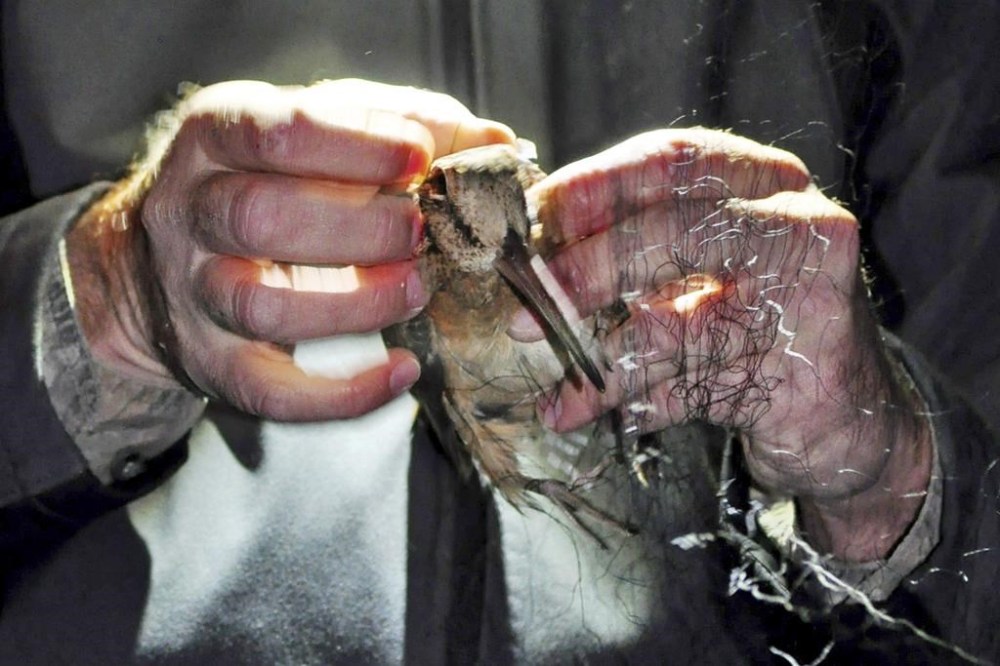
On its website, the department wrote on Feb. 1 that the work sought to create 21 acres of habitat for the American woodcock, a member of the sandpiper family that uses its long, narrow beak to forage for earthworms in damp soil. The project was designed to create “meadow habitat.”
But in doing so, the state destroyed mature oak and pine forests in and near wetlands, and filled in some wetlands, four conservation groups said in a letter to the department in early March complaining about the work. The agency issued the violation notice on April 6.
“The wetland soil and flora that were previously undisturbed have been destroyed, and the mature forest that was already habitat for numerous rare species of plants and birds was clear-cut logged,” the groups wrote. “All trees have been cut, and all stumps bulldozed.”
Tom Gilbert, a leader of the New Jersey Conservation Foundation, said, “This never should have happened. They must also take steps to improve their clearly inadequate internal review process and meaningfully engage the public.”
Jaclyn Rhoads, assistant executive director of the Pinelands Preservation Alliance, commended the state for owning up to its mistake, but said the DEP should provide a list of current projects on its website for public review.

“It is because of the public that we were able to stop further destruction of this landscape,” she said.
Agency spokesman Larry Hajna said the Fish and Wildlife Division’s Bureau of Land Management must implement appropriate soil conservation measures within 10 days and submit a plan within 30 days to restore the site. That must include removal of wood chips placed there.
By the end of April, the DEP intends to issue a notice of penalty assessment.
Fish and Wildlife will propose additional environmentally beneficial measures, which will be subject to a public comment period, Hajna said.
___
Follow Wayne Parry on Twitter at twitter.com/WayneParryAC