Slow start on World Bank reform angers climate-hit countries
Advertisement
Read this article for free:
or
Already have an account? Log in here »
To continue reading, please subscribe:
Digital Subscription
One year of digital access for only $1.44 a week*
- Enjoy unlimited reading on winnipegfreepress.com
- Read the E-Edition, our digital replica newspaper
- Access News Break, our award-winning app
- Play interactive puzzles
*Billed as $5.77 plus GST every four weeks. After 52 weeks, price increases to the regular rate of $19.95 plus GST every four weeks. Offer available to new and qualified returning subscribers only. Cancel any time.
To continue reading, please subscribe:
Add Free Press access to your Brandon Sun subscription for only an additional
$1 for the first 4 weeks*
- Enjoy unlimited reading on winnipegfreepress.com
- Read the E-Edition, our digital replica newspaper
- Access News Break, our award-winning app
- Play interactive puzzles
*Your next Brandon Sun subscription payment will increase by $1.00 and you will be charged $17.95 plus GST for four weeks. After four weeks, your payment will increase to $24.95 plus GST every four weeks.
Read unlimited articles for free today:
or
Already have an account? Log in here »
Hey there, time traveller!
This article was published 17/04/2023 (1283 days ago), so information in it may no longer be current.
WASHINGTON (AP) — The World Bank meetings were supposed to be a first step in a new era of affordable loans for developing nations hard hit by climate change like Prime Minister Mia Mottley’s Barbados, one of many Caribbean islands battered by worsening hurricanes.
But if this was a new era, the World Bank meetings that closed Sunday in Washington left Mottley feeling much like she did in the old one — sidelined by wealthy nations that balked at either providing more money themselves or significantly changing the lending rules for existing funds. And increasingly, beyond angry.
“I get really furious,” Mottley said, when hearing “that people are not ready, or people want to kick the ball down the road.”
She spoke at sessions held by the non-profit Rockefeller Foundation in conjunction with the World Bank meetings, where Mottley and some African leaders detailed the growing human and financial cost of natural disasters that are growing more relentless as the climate warms: a record-breaking tropical storm that sat over southern Africa for days last month, killing hundreds; tens of thousands of deaths from years of failed rains in the Horn of Africa; a formal declaration from Italy this month of a refugee emergency.
“How much more must happen?” Mottley asked. “How many more people must lose their lives?”
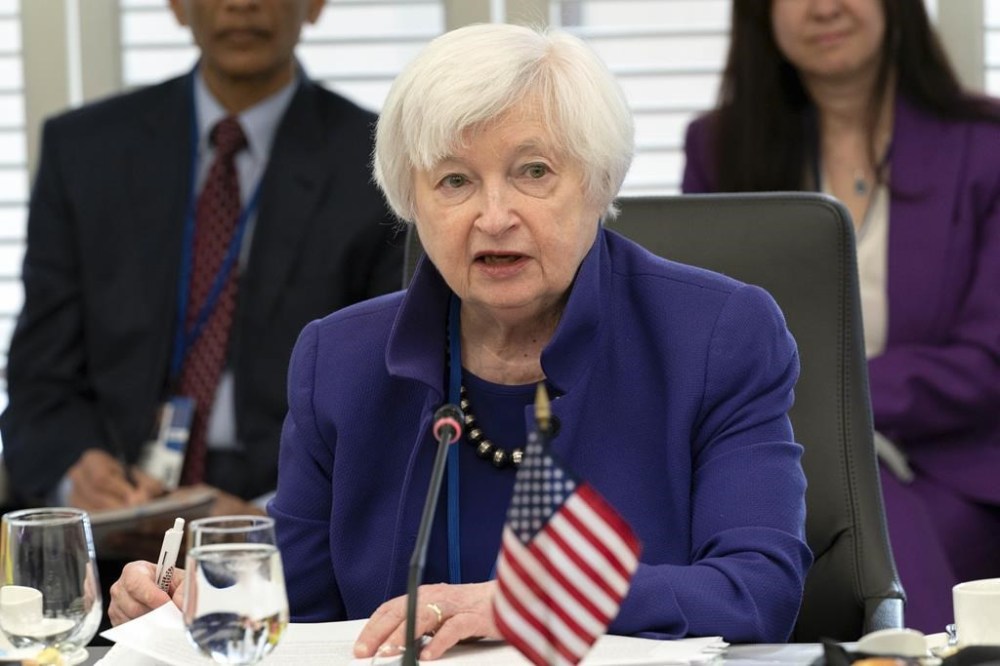
With a World Bank head appointed by former President Donald Trump on his way out, U.S. Treasury Secretary Janet Yellen and others have been pledging a World Bank climate overhaul.
Momentum — and demands — have been growing for the World Bank and other powerful global and regional financial institutions to change their lending practices so that less-wealthy nations can afford to harden themselves against rising seas, worsening storms and other extremes of climate change. Developing nations also need help with the big investments it would take to move their economies away from climate-damaging coal and petroleum.
But so far, the governments with the biggest say, including the U.S., have been reluctant to put more of their own money into lending. As a group, they’ve also shied away from some of the changes in lending rules encouraged by Yellen and some others, fearing any move that could risk the World Bank’s AAA credit rating and make borrowing more expensive.
And looking ahead, advocates of freeing far more climate funding for countries primarily in the southern hemisphere worry no one is putting together the big tough plan that will turn lending-reform talk into action.
Some climate advocates expressed exasperation at one of the sole concrete steps approved by World Bank member countries at last week’s meetings: reducing the bank’s mandated ratio of equity to loans from 20% to 19%. That 1% percent tweak is expected to free about $4 billion a year for more lending.
The figure pales next to the $2.4 trillion that World Bank officials estimate developing nations need, in public and private funds, each year for the next seven to deal with climate change, pandemics and conflicts.
Developing nations complain — accurately — that the United States, Europe, China and other bigger economies have caused most of the climate damage and are leaving poorer nations to deal with the results.
The cost ranges from the Pacific island of Vanuatu struggling to move dozens of villages to higher ground to Pakistan dealing with sustained floods last year that covered a third of the country.
Global inflation and the strong U.S. dollar have increased the debt burden on global and regional development loans in just the past year. Barbados’ interest rates on existing development loans soared, such as with an IMF loan whose rate went from 1.07% to 3.9%, Mottley said. She has spearheaded a World Bank lending-reform agenda, called the Bridgetown Initiative, by developing nations.
The U.S. and other wealthy nations never made good on an old pledge to provide $100 billion a year in climate funding for developing nations by 2020.
U.S. climate envoy John Kerry and other Biden administration officials make clear they see no point in asking a Republican-heavy Congress for that kind of money to give other countries for climate change.
Instead, the administration wanted to see how much money it could free up for developing countries with tweaks like the 1% cut in the equity-to-loan ratio, said Scott Morris, a former deputy assistant treasury secretary for development finance, now at the Center for Global Development research group.
Yellen last week called that move “responsibly stretching the balance sheet.” She promised discussions on “many more” procedural moves in the months to come.
There’s an argument, though, that Republicans in Congress would be more receptive to appropriating money for the World Bank, and that the Biden administration “ought to be willing to make the ask of Congress for this,” Morris said. The administration didn’t seem to anticipate “the degree of backlash” from developing countries against the modest steps so far, he said.
The World Bank and IMF spring meetings were the start of a series of upcoming global gatherings that advocates hope will build momentum toward significant action on emissions cuts and climate finance. They culminate with the annual U.N. climate talks in Dubai in November and December.
But climate is a “crisis that is obviously proving itself hard to adequately describe to people in a way that actually motivates them,” Kerry said at another side event to the World Bank and IMF meetings.
Evoking what international climate bodies say will be increasing flows of climate refugees worldwide, Kerry cited a 2015 refugee crisis in Europe, and the surge of nationalist and far-right political parties that followed.
“And the anger that my colleagues here, particularly Mia Mottley, have described is going to grow if we don’t respond,” Kerry said. “You’ve seen nothing compared to what is going to happen if we don’t respond more rapidly.”