In grim drought, Tunisians ration water in state-ordered ban
Advertisement
Read this article for free:
or
Already have an account? Log in here »
To continue reading, please subscribe:

Digital Subscription
One year of digital access for only $205*
- Enjoy unlimited reading on winnipegfreepress.com
- Read the E-Edition, our digital replica newspaper
- Access News Break, our award-winning app
- Play interactive puzzles
*First annual payment billed as $205.00 + GST for one year. This annual subscription will automatically renew at $233.00 + GST every 52 weeks (10% off the regular annual price of $259.35). Offer available to new and qualified returning subscribers only. Cancel any time.
To continue reading, please subscribe:
Add Free Press access to your Brandon Sun subscription for only an additional
$1 for the first 4 weeks*
- Enjoy unlimited reading on winnipegfreepress.com
- Read the E-Edition, our digital replica newspaper
- Access News Break, our award-winning app
- Play interactive puzzles
*Your next Brandon Sun subscription payment will increase by $1.00 and you will be charged $17.95 plus GST for four weeks. After four weeks, your payment will increase to $24.95 plus GST every four weeks.
Read unlimited articles for free today:
or
Already have an account? Log in here »
Hey there, time traveller!
This article was published 19/04/2023 (1260 days ago), so information in it may no longer be current.
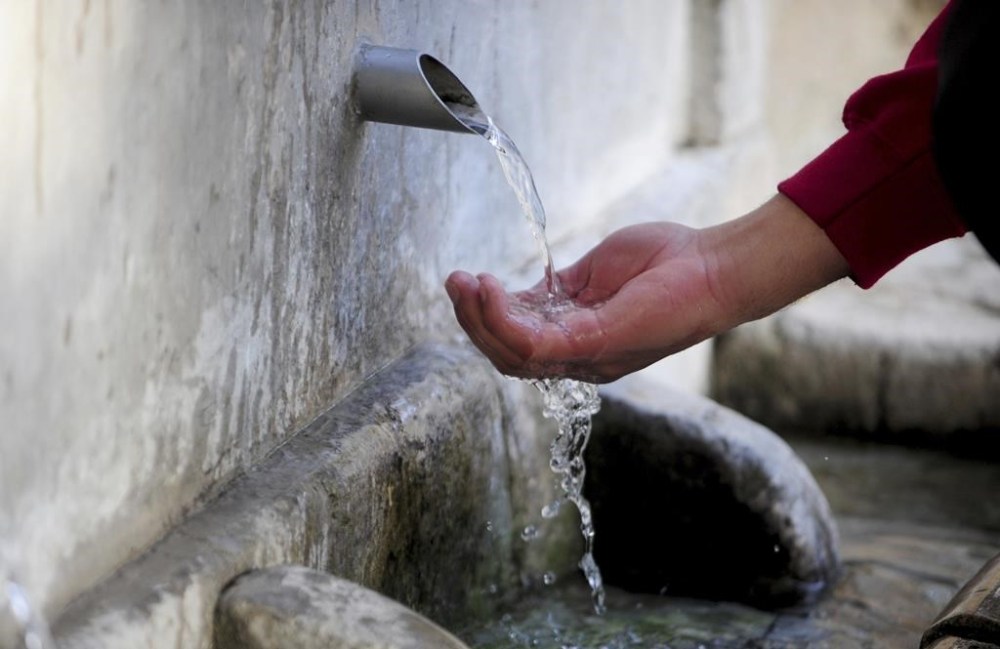
TUNIS, Tunisia (AP) — It’s a feeble drip, drip, drip from the taps every night in Tunisia for six months. Spigots are cut off for seven hours from 9 p.m. to 4 a.m. in a state-ordered water rationing in most regions across the country, including Tunis, the capital city.
Tunisians are on the front lines of a battle against an increasingly severe drought, now in its fifth year in the north African country, with the government issuing a sudden order to its population to ration their water usage from April to September — or risk fines or jail.
Households now need a supply of bottled water to wash, use toilets and prepare meals during late night hours. Authorities have also forbidden the use of potable water for irrigation of farmlands, watering green areas in cities and for cleaning streets and cars.
The order applies to all regions connected to the state-owned water distribution system but does not include rural areas that get their water from wells or other local sources, said agriculture ministry spokesperson Raoudha Dridi.
Water levels at almost all of Tunisia’s 30-plus dams have fallen drastically, some as low as 17% of their storage capacity.
The Sidi Salem dam in northwest Tunisia provides tap water to Tunis and along the Tunisian Sahel, including cities like Sfax, as well as water for irrigation around Tunis. But water stored there is at its lowest level since its construction in 1981, the newspaper La Presse reported, quoting Faycel Khemiri, the No. 2 official for dams and hydraulic works at the Agricultural Ministry.
Human-caused climate change, which is burning up the planet, has made droughts worldwide more likely, with higher-than-average temperatures drying up land and altering rainfall patterns. Drought has also plagued Tunisia in the past, historically devastating farmland and olive groves.
“Currently, we have reached the red line, the danger line in terms of water scarcity,” said Aymen Hmem, a member of an environmental group in the northeastern coastal town of Menzel Temime, which has a large dam on its outskirts.
There’s also concern over a potentially scorching summer in Tunisia — where temperatures can top 40 degrees Celsius (104 degrees Fahrenheit) — ramping up water demand and causing eventual protests over the cuts.
The country is already in the midst of an economic crisis. Talks with the International Monetary Fund for a $1.9 billion loan agreement to help finance the state stalled late last year amid Tunisia’s political tensions.
Tunisia is experiencing its worst crisis in a generation as inflation hovers around 11% and food supplies are increasingly scarce, according to the Organization for Economic Cooperation and Development.
Then came the water rationing order, a baptism by fire for many citizens, which coincided with the Muslim holy month of Ramadan where people gather to break their fasts with large feasts and gatherings and water use is normally intense.
Ramadan is nearly over, but summer and the start of tourist season will turn up the heat. Tourism is a major source of income for Tunisia, with the country of about 12 million people boasting around 850 hotels.
Hotels and hospitals keep reserves of water that they fill during hours when the water is running, to make sure that they have enough during hours when it is not, said Dridi, the ministry spokesperson.
To underline the seriousness of the water problem, the agriculture ministry has resorted to a punitive approach: Those who use tap water to wash their cars or other banned uses risk fines of 60 to 1,000 dinars ($20 to $320) or even prison sentences ranging from six days to nine months in the most serious cases. They can also be struck from the distribution list of the country’s state-owned water company, Sonede, cutting off their supply.
Radhia Essamin, from the Tunisian Water Observatory, said the decision to cut the water supply was not surprising, given the country’s worrisome water shortage. But it should have been handled differently, she said, notably with a campaign so people could prepare themselves ahead of time.
“That is why we consider these measures incomplete. Before taking any measures, the citizen must be … made aware of the importance of water rationing,” she said. “A booklet should have been published (explaining) water consumption, storage, timing and the quantity allowed to be stored.”

Abdelkader Hmissi, who lives outside Tunis, said that although many people were caught by surprise by both the extent of the drought and measures to counter its effects, he was not.
Hmissi said he built a water tank two years ago in anticipation of a prolonged drought, and now shares his supply.
“We found the solution in this tank. And my brothers and neighbors use it, too,” Hmissi said.
___
Elaine Ganley in Paris contributed.