Scientists: Climate change worsened Eastern Africa drought

Advertisement

Advertise with us

MALINDI, Kenya (AP) — The ongoing drought in Eastern Africa has been made worse by human-induced climate change, which also made it much likelier to occur in the first place, an international team of climate scientists concluded.

Read this article for free:


or

Already have an account? Log in here »

To continue reading, please subscribe:

Subscribe and receive a limited-edition Free Press branded hat or tote.

Digital Subscription

One year of digital access for only $205*

  • Enjoy unlimited reading on winnipegfreepress.com
  • Read the E-Edition, our digital replica newspaper
  • Access News Break, our award-winning app
  • Play interactive puzzles

*First annual payment billed as $205.00 + GST for one year. This annual subscription will automatically renew at $233.00 + GST every 52 weeks (10% off the regular annual price of $259.35). Offer available to new and qualified returning subscribers only. Cancel any time.

To continue reading, please subscribe:

Add Free Press access to your Brandon Sun subscription for only an additional

$1 for the first 4 weeks*

  • Enjoy unlimited reading on winnipegfreepress.com
  • Read the E-Edition, our digital replica newspaper
  • Access News Break, our award-winning app
  • Play interactive puzzles
Start now

*Your next Brandon Sun subscription payment will increase by $1.00 and you will be charged $17.95 plus GST for four weeks. After four weeks, your payment will increase to $24.95 plus GST every four weeks.

Hey there, time traveller!
This article was published 27/04/2023 (1237 days ago), so information in it may no longer be current.

MALINDI, Kenya (AP) — The ongoing drought in Eastern Africa has been made worse by human-induced climate change, which also made it much likelier to occur in the first place, an international team of climate scientists concluded.

The report Thursday came from World Weather Attribution, a group that seeks to quickly determine whether certain extreme weather events were influenced by climate change. Nineteen scientists from seven nations assessed how climate change affected rainfall in the region.

“Climate change caused the low rainfall in the region,” Joyce Kimutai, principal meteorologist at the Kenya Meteorological Department said. “Climate change has made the drought exceptional.”
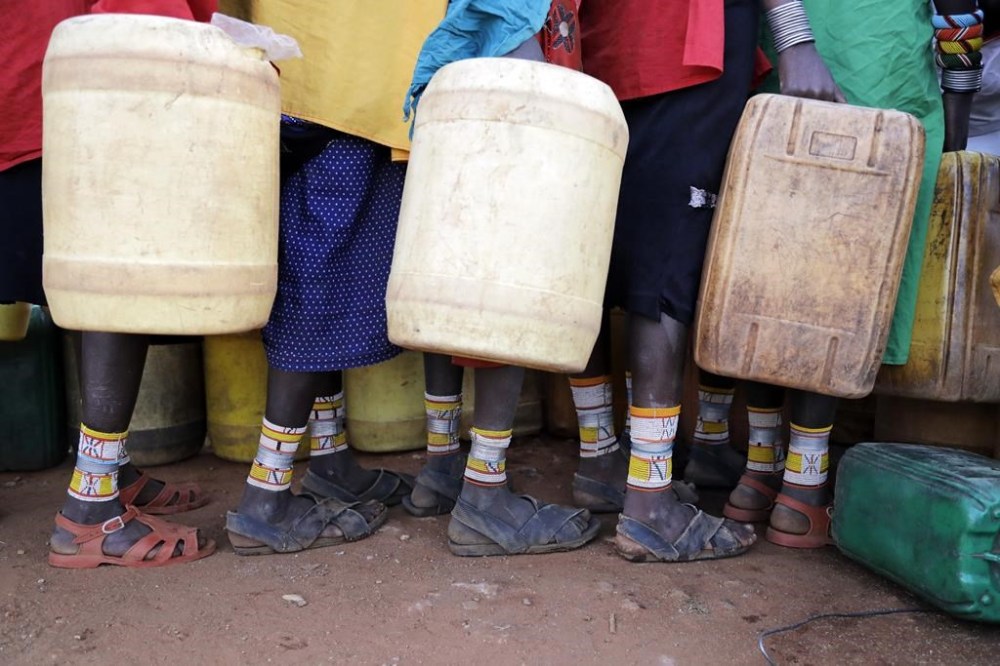
FILE - Samburu women fetch water in Loolkuniyani Primary School, Samburu county, Kenya on Oct. 16, 2022. An international team of climate scientists says the ongoing drought in Eastern Africa has been made worse by human-induced climate change according to a report from World Weather Attribution. (AP Photo/Brian Inganga, File)

The scientists analyzed historical weather data, including changes in the two main rainfall patterns in the region alongside computer model simulations dating back to the 1800s. They found that the long rains season —March through May — was turning drier and the short rains season — typically October through December — was becoming wetter due to climate change. The report also said a “strong increase” in evaporation from soil and plants due to higher temperatures had worsened the drought’s severity.

They called the region’s experience with drought “one of a kind.”

Friederike Otto, senior climate scientist at Imperial College London and the leader of the study, said it underscored how climate change’s effects “strongly depend on how vulnerable we are.”

While climate change has made drought more frequent and extreme in the Horn region, the scientists acknowledged that previous failed rainy seasons, high temperatures, conflict, fragile statehood and poverty are also to blame for the “devastating impacts.”

The United Nations said more than 20 million people in Kenya, Ethiopia, Somalia, Uganda and South Sudan have been affected by the drought, with more than 2.2 million displaced in Somalia and Ethiopia and severe maternal risks to hundreds of thousands of expectant or breastfeeding women.

Rod Beadle, head of relief and humanitarian affairs at Food for the Hungry, said almost 15 million children are exposed to acute malnourishment.

“Despite the recent rains in North Kenya, the pressure from previous failed seasons makes for a dire situation. The flooding has impacted livestock and many pastoralists lost their primary livelihoods. The drought conditions have resulted in severely compacted soil that cannot absorb the water; hence the floods are more severe. The country is also facing severe outbreaks of cholera and other diseases as more refugees arrive,” Beadle said.

Development gains in the countries have been offset by a long history of natural disasters, famine and disease, said Guyo Malicha Roba, a food security expert who heads the Jameel Observatory, which works on food insecurity issues in dryland nations.
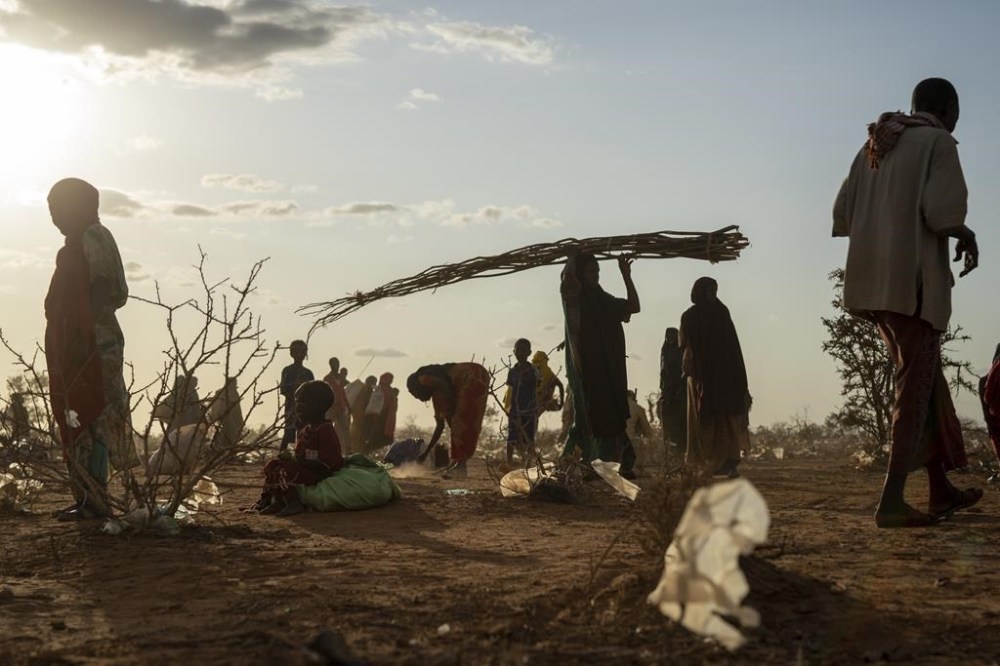
FILE - Somalis who have been displaced due to drought settle at a camp on the outskirts of Dollow, Somalia, Sept. 19, 2022. An international team of climate scientists says the ongoing drought in Eastern Africa has been made worse by human-induced climate change according to a report from World Weather Attribution. (AP Photo/Jerome Delay, File)

Roba said the food situation in the region’s drylands has addressed by raising money and with food distributions from governments and humanitarian partners, but more work needs to be done to use early-warning systems to respond more quickly to “food shocks.”

___

This story has corrected the date of the report’s release to Thursday, not Wednesday.

___

Associated Press climate and environmental coverage receives support from several private foundations. See more about AP’s climate initiative here. The AP is solely responsible for all content.

Report Error Submit a Tip

More Stories

MMF walks away from bid to buy Fort Garry Hotel

Carol Sanders 3 minute read Preview

MMF walks away from bid to buy Fort Garry Hotel

Carol Sanders 3 minute read Yesterday at 3:03 PM CDT

The Manitoba Métis Federation won’t buy the historic Fort Garry Hotel, President David Chartrand said Monday.

Read
Yesterday at 3:03 PM CDT

Don’t deny kids a bedtime bond with Gran

Maureen Scurfield 5 minute read Yesterday at 2:00 AM CDT

DEAR MISS LONELYHEARTS: My mother is coming to visit and our little kids want her to sleep in their bedroom, where there’s a double bed and a single. My husband thinks this idea is ridiculous and says grandma needs her sleep, but I disagree.

I remember sleeping with my grandma — who’s now with the angels — and she told us grandkids (two girls) some wonderful bedtime stories she made up herself. She even put our names into them, making us the stars of the stories.

The best part was getting into our pyjamas with our grandmother, who showed us the magic cord from the little thing that ran from her near-deaf ear down to the secret battery pocket hidden in the bra of her slip. It made her hear us better in the daytime. We thought, “Wow!”

Not surprisingly my own mother has inherited her mom’s fantastic storytelling talent and who knows what else she has to teach the kids when she’s alone with them? I want them to be close.

Puzzles Palace

1 minute read Monday, Jul. 27, 2026

To solve our puzzles, please subscribe with this special offer: |

Today’s horoscope

Georgia Nicols 4 minute read Preview

Today’s horoscope

Georgia Nicols 4 minute read 2:00 AM CDT

MOON ALERT: Avoid shopping or making important decisions after 10 p.m. today. The moon is in Scorpio.

ARIES (March 21-April 19)

Feelings of obsession might grip you when dealing with shared property, banking issues or something to do with taxes or inheritances. Your strong opinions might make it difficult to co-operate with others or agree to anything. Be aware of this.

TAURUS (April 20-May 20)

Read
2:00 AM CDT

Defenceman Morrissey focused on season ahead

Ken Wiebe 8 minute read Preview

Defenceman Morrissey focused on season ahead

Ken Wiebe 8 minute read Yesterday at 12:08 PM CDT

Josh Morrissey insists that a trade request from the franchise goalie doesn’t change his desire to be a lifelong Winnipeg Jet.

The top-pairing defenceman and alternate captain reinforced that view on Monday morning when speaking to a group of reporters prior to the Winnipeg Jets Golf Classic at St. Charles Country Club.

“At the end of the day, I love being here and I love being a Jet. That’s how I’ve always felt,” said Morrissey, who spoke for just over nine minutes on a variety of topics. “That doesn’t change because of somebody else’s decision. Nothing is finalized, so who knows, he could be back. My position doesn’t change.”

Morrissey has two years left on a contract that pays him US$6.25 million and he’s only eligible to sign an extension on July 1, but the future of the franchise pillar will be a topic of discussion as the Jets work to sort through the situation with franchise goaltender Connor Hellebuyck, which remains unresolved.

Read
Yesterday at 12:08 PM CDT

Winnipeg and choosing its future direction

Kate Kehler 5 minute read 2:00 AM CDT

Winnipeg, the capital of ‘Friendly Manitoba’, is becoming far less friendly to anyone who is struggling to survive. The city is also less and less supportive of the not-for-profit sector which struggles to support those struggling to survive.

Municipal politicians have long insisted that social services are provincial responsibilities. However, the city charter makes it clear that mayor and council are “to promote and maintain the health, safety and welfare of the inhabitants.”

Mayor and council are empowered to decide how they do that. Every four years, we citizens get to vote on what we think and feel about those decisions. That’s our democracy, weighted against the disenfranchised though it is.

In 2022, only 37.17 per cent of eligible voters, the lowest percentage since 1989, voted. Recent Probe Research data demonstrates that only one-third of Winnipeggers believe the next mayor and council will make even a minor difference in addressing Winnipeg’s challenges, and another third believe they will make no difference at all.