Florida may study use of radioactive waste in building roads
Advertisement
Read this article for free:
or
Already have an account? Log in here »
To continue reading, please subscribe:

Digital Subscription
One year of digital access for only $205*
- Enjoy unlimited reading on winnipegfreepress.com
- Read the E-Edition, our digital replica newspaper
- Access News Break, our award-winning app
- Play interactive puzzles
*First annual payment billed as $205.00 + GST for one year. This annual subscription will automatically renew at $233.00 + GST every 52 weeks (10% off the regular annual price of $259.35). Offer available to new and qualified returning subscribers only. Cancel any time.
To continue reading, please subscribe:
Add Free Press access to your Brandon Sun subscription for only an additional
$1 for the first 4 weeks*
- Enjoy unlimited reading on winnipegfreepress.com
- Read the E-Edition, our digital replica newspaper
- Access News Break, our award-winning app
- Play interactive puzzles
*Your next Brandon Sun subscription payment will increase by $1.00 and you will be charged $17.95 plus GST for four weeks. After four weeks, your payment will increase to $24.95 plus GST every four weeks.
Read unlimited articles for free today:
or
Already have an account? Log in here »
Hey there, time traveller!
This article was published 08/05/2023 (1243 days ago), so information in it may no longer be current.
TALLAHASSEE, Fla. (AP) — Florida may study whether a radioactive waste byproduct of fertilizer production can be used to help build roads under a bill passed by the Legislature.
The proposal, which awaits a signature from Republican Gov. Ron DeSantis, would task the state with conducting a study about the use of phosphogypsum in road construction aggregate materials.
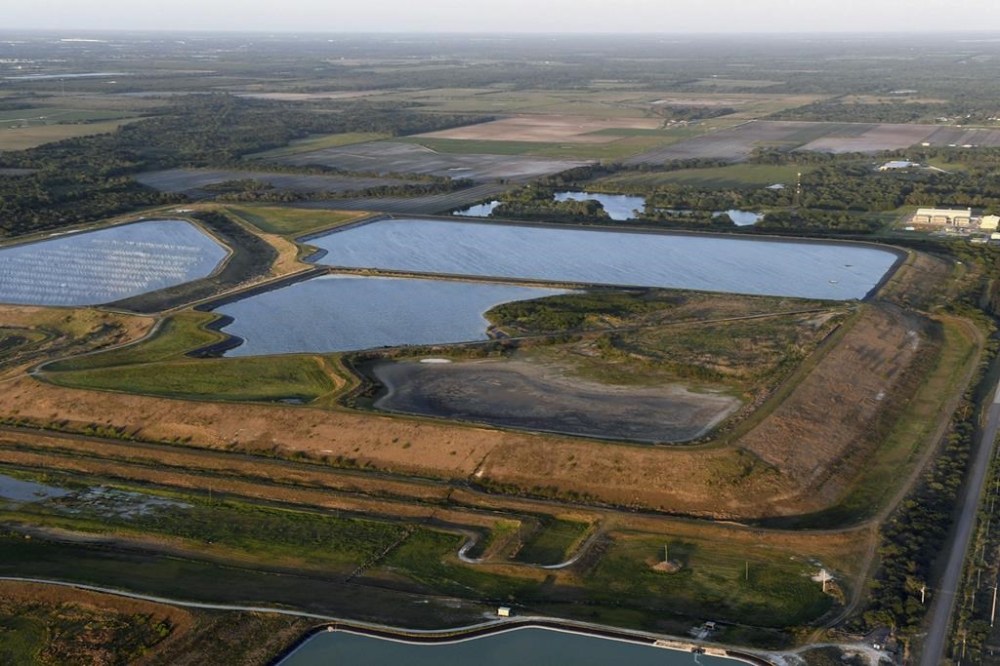
The U.S. Environmental Protection Agency requires that phosphogypsum be placed in ”stacks” that resemble enormous ponds. Florida has 24 such stacks, totaling about 1 billion tons of phosphogypsum, with 30 million new tons generated every year through the phosphate fertilizer mining industry.
The EPA in 2020 approved the use of phosphogypsum in government road construction projects but reversed its decision after Democratic President Joe Biden took office.
Environmental groups have warned about phosphogypsum spilling into waterways and elsewhere during storms. A leak in March 2021 at a stack called Piney Point resulted in the release of an estimated 215 million gallons (814 million liters) of polluted water into Tampa Bay and caused massive fish kills.
The EPA regulates phosphogypsum because the material contains radium-226, a naturally occurring radioactive substance that produces radon gas, which is a hazardous air pollutant.