Connecticut lawmakers vote to allow people to use deadly force as the bear population grows
Advertisement
Read this article for free:
or
Already have an account? Log in here »
To continue reading, please subscribe:

Digital Subscription
One year of digital access for only $205*
- Enjoy unlimited reading on winnipegfreepress.com
- Read the E-Edition, our digital replica newspaper
- Access News Break, our award-winning app
- Play interactive puzzles
*First annual payment billed as $205.00 + GST for one year. This annual subscription will automatically renew at $233.00 + GST every 52 weeks (10% off the regular annual price of $259.35). Offer available to new and qualified returning subscribers only. Cancel any time.
To continue reading, please subscribe:
Add Free Press access to your Brandon Sun subscription for only an additional
$1 for the first 4 weeks*
- Enjoy unlimited reading on winnipegfreepress.com
- Read the E-Edition, our digital replica newspaper
- Access News Break, our award-winning app
- Play interactive puzzles
*Your next Brandon Sun subscription payment will increase by $1.00 and you will be charged $17.95 plus GST for four weeks. After four weeks, your payment will increase to $24.95 plus GST every four weeks.
Read unlimited articles for free today:
or
Already have an account? Log in here »
Hey there, time traveller!
This article was published 02/06/2023 (1218 days ago), so information in it may no longer be current.
Connecticut lawmakers voted Friday to take steps to protect people from the state’s growing bear population. But they stopped far short of a bear hunt and restrictions on people unintentionally feeding the hungry animals.
The legislation, which cleared the House of Representatives on a 115-32 vote after being revamped by the Senate, instead explicitly allows someone to use deadly force to kill a bear in Connecticut if they reasonably believe it’s inflicting or about to inflict great bodily harm to a person, a pet or is entering an occupied building.
“This is just taking away second-guessing to defend what we love,” said Republican Rep. Patrick Callahan, whose northwestern Connecticut district has seen a lot of bear activity in recent years.
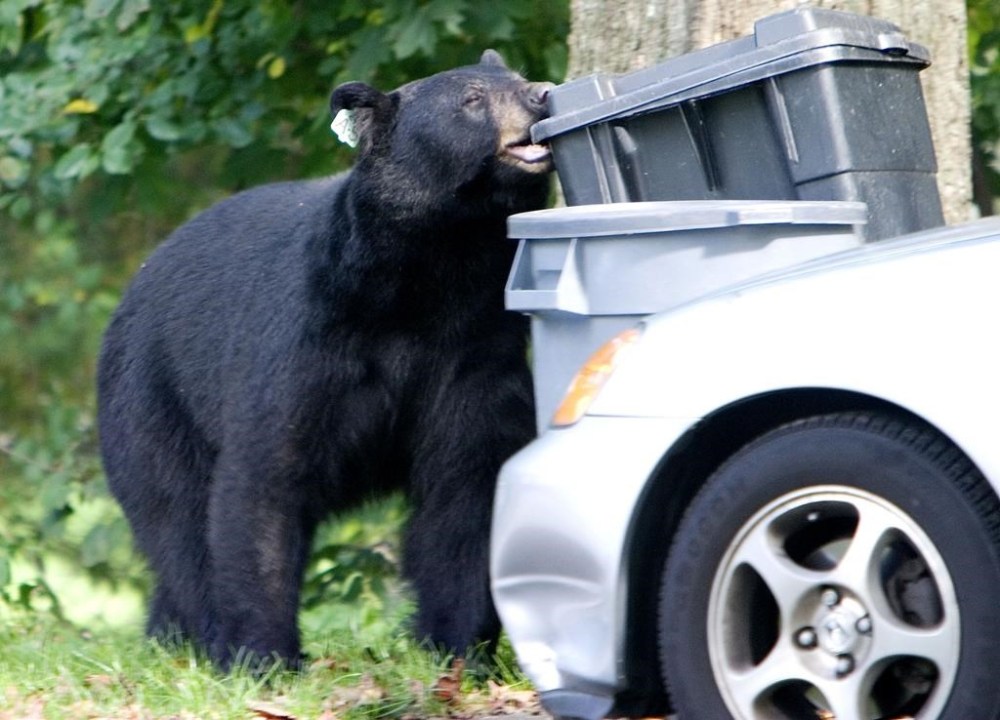
The bill, which now moves to Democratic Gov. Ned Lamont’s desk, has been one of the most emotional issues of this year’s legislative session. It has pitted legislators who want to protect the animals against those whose constituents are afraid to let their children play in their yards.
Reports of bears interacting with humans have become commonplace in Connecticut. Last month, a hungry black bear barged into the garage of a bakery in the suburban community of Avon, scared several employees and helped itself to 60 cupcakes before ambling away. The intrusion was caught on surveillance tape.
A 74-year-old woman suffered bites to her arms and legs in April when she was attacked by a bear while walking her dog in a Hartford suburb, the first such attack this year. There were two attacks last year, including one in October where a 10-year-old boy was mauled in a backyard.
The state Department of Energy and Environmental Protection (DEEP), which estimates there are 1,000 to 1,200 bears in the state, has advocated for a limited bear hunt. That idea, however, has been very controversial and was removed from the bill in March.
According to DEEP, bears entered residential homes 67 times in 2022, eclipsing the previous record of 45 home invasions. The agency said bears entered homes in Connecticut less than 10 times annually just seven years ago.

Under the bill headed to the governor, the state agency can issue nuisance wildlife permits to kill “certain wildlife,” including bears, that threaten or cause damage to agricultural crops, livestock and apiaries — a concept supported by many of the state’s farmers. In order to obtain a permit, the landowner must prove they have made nonlethal attempts, such as electric fencing, to thwart the bears.
Some critics of the bill expressed concern that people might take advantage of these permits, arguing the legislation could be abused.
The bill also prohibits people from intentionally feeding potentially dangerous animals, including bears, on private land, making the violation an infraction. Originally, it included restrictions on unintentionally feeding the bears, such as leaving trash accessible and hanging birdfeeders, but that was stripped in the Senate, to the dismay of some House members.
Democratic Rep. Mary Mushinsky said Connecticut needs a Bear Smart program to teach residents how to safely coexist with bears, like what is in place in other states.
“Remember, we have unfinished business to make our state a Bear Smart state,” she told her colleagues. She and other lawmakers predicted the issue will come up again next year.