Nature Conservancy of Canada releases action plan to protect Prairie grasslands
Advertisement
Read this article for free:
or
Already have an account? Log in here »
To continue reading, please subscribe:

Digital Subscription
One year of digital access for only $205*
- Enjoy unlimited reading on winnipegfreepress.com
- Read the E-Edition, our digital replica newspaper
- Access News Break, our award-winning app
- Play interactive puzzles
*First annual payment billed as $205.00 + GST for one year. This annual subscription will automatically renew at $233.00 + GST every 52 weeks (10% off the regular annual price of $259.35). Offer available to new and qualified returning subscribers only. Cancel any time.
To continue reading, please subscribe:
Add Free Press access to your Brandon Sun subscription for only an additional
$1 for the first 4 weeks*
- Enjoy unlimited reading on winnipegfreepress.com
- Read the E-Edition, our digital replica newspaper
- Access News Break, our award-winning app
- Play interactive puzzles
*Your next Brandon Sun subscription payment will increase by $1.00 and you will be charged $17.95 plus GST for four weeks. After four weeks, your payment will increase to $24.95 plus GST every four weeks.
Read unlimited articles for free today:
or
Already have an account? Log in here »
Hey there, time traveller!
This article was published 05/06/2023 (1215 days ago), so information in it may no longer be current.
CALGARY – The Nature Conservancy of Canada has announced a plan to protect iconic Prairie grasslands, considered one of the most endangered and least protected ecosystems in the country.
The plan aims to raise $500 million by 2030 to conserve more than 5,000 square kilometres — about six times the size of Calgary — in Alberta, Saskatchewan and Manitoba.
“What we’re trying to do is accelerate the rate of conservation in the Prairie Provinces, specifically in the grasslands,” Jeremy Hogan, the non-profit organization’s director of prairie grassland conservation, said in an interview.
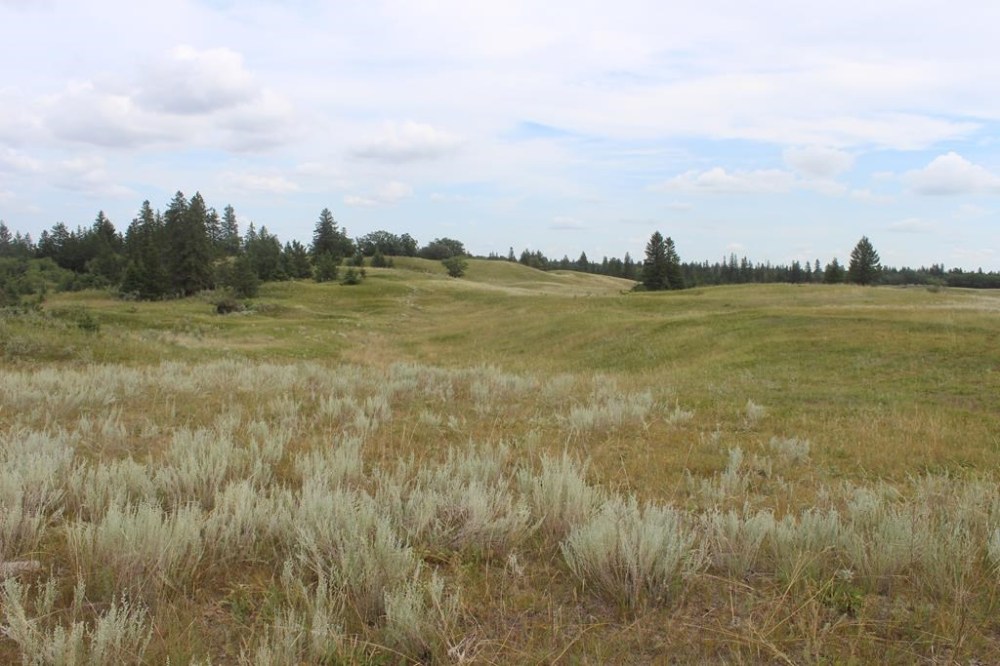
“They are Canada’s most endangered ecosystem. There’s only about 18 per cent left of the Great Plains Prairie grasslands in Canada and we continue to lose about (600 square kilometres) a year.”
Grasslands, he said, are often converted to fields for growing crops or taken over by expanding cities and towns.
But he calls them an “unsung hero” for the environment.
“They provide a lot of what we call ecosystem services,” he said. “So, they provide a lot of benefit to everyday Canadians’ lives, even if you don’t live or work in the grasslands.”
They store and filter water, preventing both floods and droughts. They improve water quality. They keep soil in place, because of extensive root networks, so there’s less erosion along lakes and rivers.
Hogan said grasslands also are important for reducing the effects of climate change.
“The carbon storage in grasslands is incredible and it’s all stored securely underground,” he said. “So, when you get these kinds of fires like the ones that are happening in Alberta right now, carbon stored in the grasslands isn’t threatened by those fires like carbon stored in forests.”
Across Alberta, wildfires have already scorched more than 10,000 square kilometres of forest this year.
Horgan said grasslands can also be an economic benefit for local communities and are essential to food security.
“A lot of the grasslands that are intact today are working ranches,” he said. “So, the grasslands are operated as cattle operations. As long as the cattle are grazed sustainably, it’s actually a mutually beneficial relationship.
“It requires a little bit of disturbance from grazing animals to maintain range health … and then on the flip side of that is a healthy sustainable grazing operation leads to more nutritious forage for cattle. So, it’s actually a win-win for ranchers and the environment.”
Duane Thompson, chairman of the environment committee with the Canadian Cattle Association, said in a statement that farmers and ranchers are proud of their role in managing and protecting the at-risk ecosystems. They are often involved in nature conservancy projects to protect grasslands.
Outside of Waterton Lakes National Park in southern Alberta, a 16.5 square kilometre property known as The Yarrow has been conserved after a $6.9-million fundraising campaign. It features grasslands, wetlands, creeks, mixed forests and includes 27 wildlife species.
The organization now wants to protect grasslands in the Cypress Uplands Natural Area in southwestern Saskatchewan. They rise more than 600 metres, the highest elevation east of the Canadian Rockies, and are home to pronghorn, deer, elk and cougars. The area also has the highest diversity of birds, including burrowing owl, common nighthawk and ferruginous hawk, in that province.
East of Brandon, the nature conservancy has also secured its largest-ever conservation agreement in Manitoba. The 21 Farms project, which is 4.5 square kilometres, boasts mixed-grass prairie, as well as sandhill prairie and sandhill forest, and is home to the Sprague’s pipit and a large Sharp-tail grouse lek.
“That’s one of the cool points about the Prairie grasslands,” said Hogan. “It’s not just this one block of grass. It’s very, very diverse west to east and changes with different topography and soil type.”
The action plan, he said, hopes to raise money to continue protecting those types of areas across all three provinces before they disappear.
“It’s not too late to act, but we’re getting there,” said Hogan. “The fact that there is only 18 per cent left is a very real and dangerous thing to grasslands. Once you reach a certain point, there’s no going back.
“What is left is worth protecting and it’s worth protecting urgently.”
This report by The Canadian Press was first published June 5, 2023.
Related Articles
Massive jump in wildfires over weekend
Advertisement Advertise With Us
Advertisement Advertise With Us