Paris summit aims to shake up the financial system. It will test leaders’ resolve on climate
Advertisement
Read this article for free:
or
Already have an account? Log in here »
To continue reading, please subscribe:

Digital Subscription
One year of digital access for only $205*
- Enjoy unlimited reading on winnipegfreepress.com
- Read the E-Edition, our digital replica newspaper
- Access News Break, our award-winning app
- Play interactive puzzles
*First annual payment billed as $205.00 + GST for one year. This annual subscription will automatically renew at $233.00 + GST every 52 weeks (10% off the regular annual price of $259.35). Offer available to new and qualified returning subscribers only. Cancel any time.
To continue reading, please subscribe:
Add Free Press access to your Brandon Sun subscription for only an additional
$1 for the first 4 weeks*
- Enjoy unlimited reading on winnipegfreepress.com
- Read the E-Edition, our digital replica newspaper
- Access News Break, our award-winning app
- Play interactive puzzles
*Your next Brandon Sun subscription payment will increase by $1.00 and you will be charged $17.95 plus GST for four weeks. After four weeks, your payment will increase to $24.95 plus GST every four weeks.
Read unlimited articles for free today:
or
Already have an account? Log in here »
Hey there, time traveller!
This article was published 21/06/2023 (1182 days ago), so information in it may no longer be current.
WASHINGTON (AP) — Heads of state, finance leaders and activists from around the world will converge in Paris this week to seek ways to overhaul the world’s development banks — like the International Monetary Fund and World Bank — and help them weather a warmer and stormier world.
While restructuring debt and reducing poverty will be part of the summit Thursday and Friday, climate will be the main driver, with representatives from developing nations in Africa, Asia and elsewhere having a prominent seat at the table.
The World Bank and IMF have been criticized for not factoring climate change into lending decisions and being dominated by wealthy countries like the U.S., with the neediest nations most at risk of global warming left out of calling the shots.
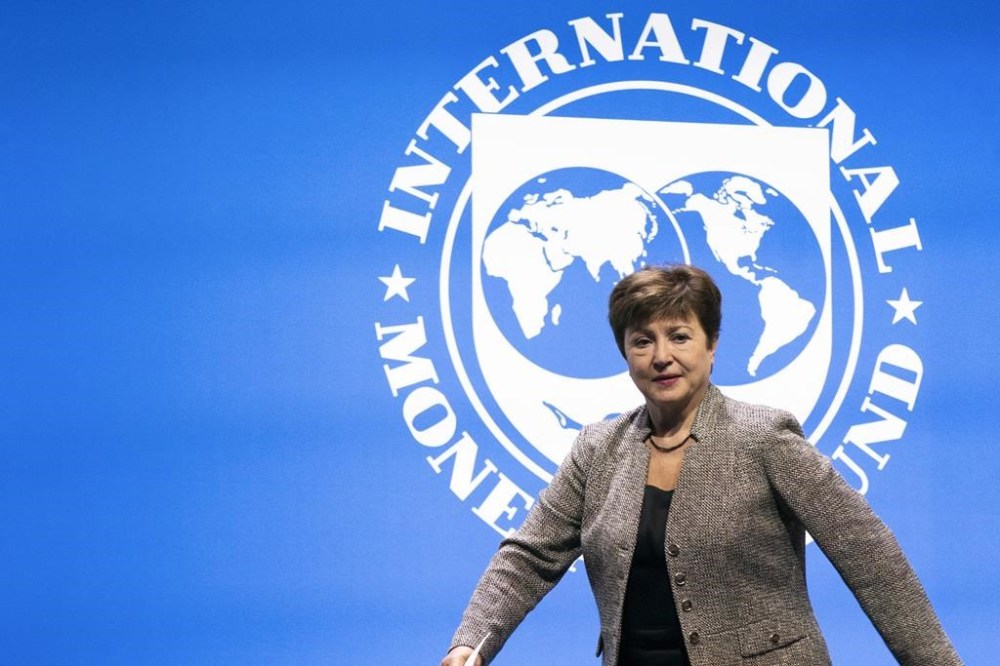
While those are the primary problems to solve, some doubt the splashy summit led by French President Emmanuel Macron will be able to take major strides to correct those challenges.
Still, the Summit for a New Global Financing Pact will draw roughly 50 heads of state and government — from Germany, Brazil, Senegal, Zambia and more — with more than 100 countries represented.
Barbados Prime Minister Mia Mottley will play a major role as a leader of the Bridgetown Initiative, a plan to reform development lending by freeing up money after climate disasters and targeting the higher borrowing costs and debt that developing nations face.
U.S. Treasury Secretary Janet Yellen, Chinese Premier Li Qiang, new World Bank President Ajay Banga, IMF Managing Director Kristalina Georgieva, and climate activists Greta Thunberg and Vanessa Nakate also are set to attend.
Masood Ahmed, president of the Center for Global Development think tank in Washington, isn’t expecting much concrete action from the gathering but a broad agreement that “we’ve got to think much bigger, much bolder. We need to be willing to change.”
It’s been hard, however, to summon the political will to spend taxpayer money to combat climate change, said Ahmed, a former senior official in both the IMF and World Bank.
For example, “in the United States, we don’t have in Congress today the kind of the support that you would want to have for a major global initiative on climate,” he said. “That makes it harder for people to translate what is a sensible strategy, a necessary strategy, a critical set of actions into legislative action that puts money on the table.”
French organizers want to show they can keep fighting poverty and meet the challenges of climate change at the same time, said a top French official said, who was not authorized to be publicly named according to the country’s presidential policy.
Organizers say the summit will end with a summary of commitments, including a roadmap for what to expect from this year’s meeting of the Group of 20 major economies and U.N. climate conference.
But climate advocates say they want to see more meaningful commitments — like new money to help climate-vulnerable nations build sustainable infrastructure or reallocating existing funds to new climate-related projects.
Andrew Nazdin, director of the activist group Glasgow Actions Team, said the development banks “need to expand their lending — and fast — if we’re going to avoid the worst impacts of the climate crisis.”
A U.S. Treasury official told The Associated Press that big new monetary pledges should not be expected from the summit — rather it’s viewed as a chance to push the case for an evolution of the development banks. The official spoke on the condition of anonymity to preview planning for the gathering.
Earlier this year, the World Bank announced that it would increase its lending by $50 billion over the next 10 years to combat extreme poverty and mitigate and adapt to climate change.
The World Bank is trying to bounce back from comments by former President David Malpass seeming to doubt the science that burning fossil fuels causes global warming. He stepped down this year amid criticism and has been replaced by Banga — who is attending his first big international meeting since taking the helm.
The World Bank and IMF did not immediately offer comment.
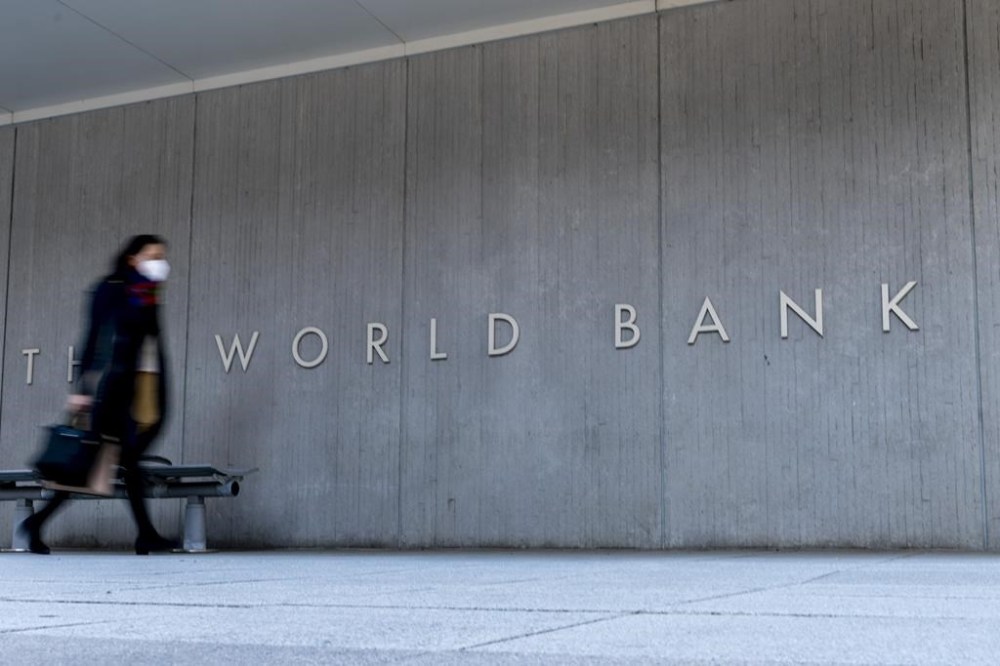
Yellen, for her part, has called for climate to be factored into finance since at least 1997, when she chaired the White House Council of Economic Advisers. She’s been vocal about the need to reform the multilateral banks and bringing lower-income countries into the conversation.
She has described climate change as an “existential crisis” that no one country could fight alone.
“We must also help developing countries transition their economies away from carbon-intensive energy sources and expand access to clean energy,” she said last October.
Justin Mankin, a Dartmouth climate scientist, hopes those at the summit take into account the inequities that climate-vulnerable nations face and avoid reinforcing them.
“I would argue that to pursue development in a world where global warming has already occurred has to take on those inequities,” Mankin said, “and reckon with the fact that developing economies are in a foot race” against richer countries, which have been massive polluters and also hold the purse strings.
Because the global development banks favor larger industrialized nations, the conditions attached to climate aid should not be unnecessarily stringent, he said.
“What sets of conditions these banks impose on countries is one way of knowing whether these inequities can be reinforced,” Mankin said.

More specific reform proposals are likely to come in the next few weeks from a G20 panel created to recommend changes at the IMF, the World Bank and other global development agencies, said Ahmed, the former IMF and World Bank official.
One of the biggest challenges will be bringing together nations with diverging interests and growing geopolitical tensions, including between the U.S. and China.
“The combination of these geopolitical tensions, suspicion of globalization and of institutions, and only a partial recognition that solving these global problems is going to cost taxpayers makes it harder to follow through with actions,” Ahmed said.
___
Associated Press reporters Seth Borenstein in Washington and Sylvie Corbet in Paris contributed.