New Ontario rules aim to ban ‘floating accommodations’ from provincial waterways
Advertisement
Read this article for free:
or
Already have an account? Log in here »
To continue reading, please subscribe:

Digital Subscription
One year of digital access for only $205*
- Enjoy unlimited reading on winnipegfreepress.com
- Read the E-Edition, our digital replica newspaper
- Access News Break, our award-winning app
- Play interactive puzzles
*First annual payment billed as $205.00 + GST for one year. This annual subscription will automatically renew at $233.00 + GST every 52 weeks (10% off the regular annual price of $259.35). Offer available to new and qualified returning subscribers only. Cancel any time.
To continue reading, please subscribe:
Add Free Press access to your Brandon Sun subscription for only an additional
$1 for the first 4 weeks*
- Enjoy unlimited reading on winnipegfreepress.com
- Read the E-Edition, our digital replica newspaper
- Access News Break, our award-winning app
- Play interactive puzzles
*Your next Brandon Sun subscription payment will increase by $1.00 and you will be charged $17.95 plus GST for four weeks. After four weeks, your payment will increase to $24.95 plus GST every four weeks.
Read unlimited articles for free today:
or
Already have an account? Log in here »
Hey there, time traveller!
This article was published 23/06/2023 (1191 days ago), so information in it may no longer be current.
TORONTO – Ontario is aiming to ban so-called floating accommodations from provincial waterways, with new regulations set to take effect July 1.
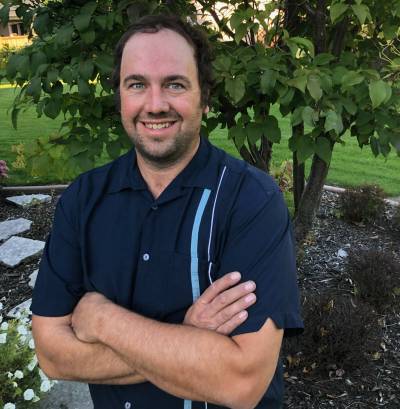
Natural Resources and Forestry Minister Graydon Smith said he has heard a number of concerns about the floating accommodations, such as rafts and barges that have buildings or structures on top intended for people to stay in overnight.
“A lot of people think it’s esthetic, but it’s actually environmental,” he said.
“It’s a home on water, and as a home operates it generates waste, grey water, black water, garbage and there’s a concern that that could end up in the water.”
But Joe Nimens, who builds floating homes in Port Severn, Ont., said he doesn’t see the new rules as preventing him and his customers from using the homes.
“I do not see them changing anything,” he said. “We’re building them as fast as we can and we’ve got people ordering them faster than we can build them.”
Nimens argued his floating homes are better for the environment than a new waterfront cottage.
“We don’t cut any trees down,” he said. “We don’t dig up the land. We don’t destroy the waterfront. We don’t do any of that, and yet our customers get to have all the same enjoyment of the waterway.”
The regulation defines floating accommodation as a floating building that can be used for overnight accommodation and “not primarily designed to be used for navigation.”
But Nimens asserts that his floating homes are designed for navigation and he has registered them with Transport Canada as vessels.
Smith, the natural resources and forestry minister, said Ontario has written to the federal government, asking it to review that designation.
“We haven’t had any response,” he said. “We think it’s a conversation worth having, to create uniformity around the approach and in the concern that what are designated as vessels now are not appropriate for our waterways.”
Mike Burkett, mayor of the Township of Severn, has also called on the federal government to review the vessel designation.
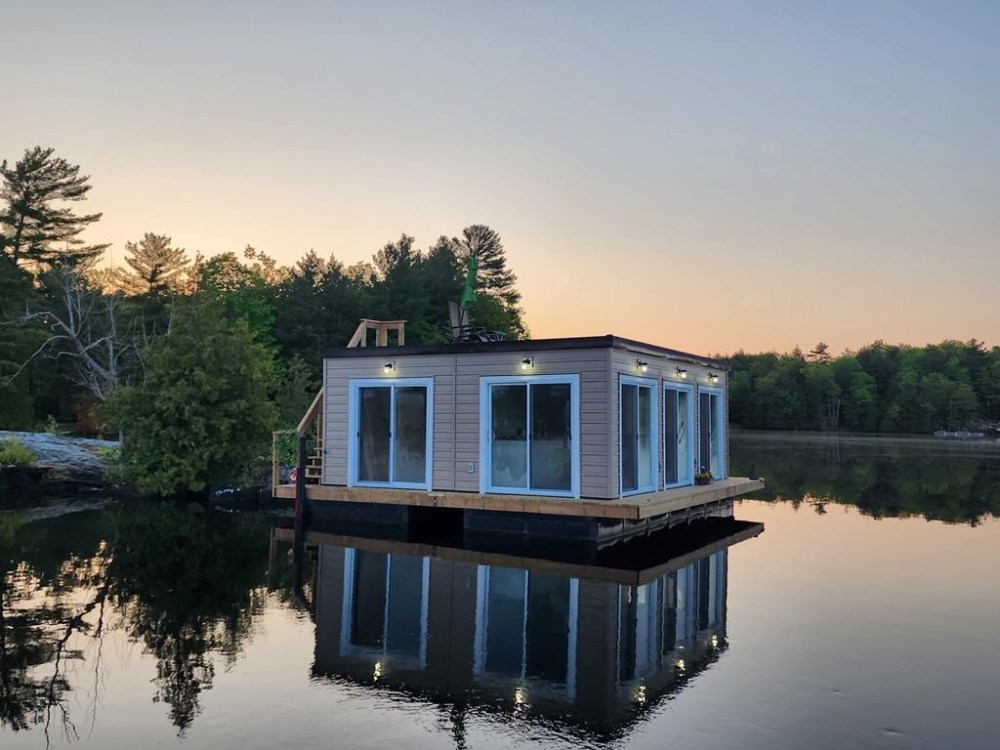
“They are not navigable, these sea cans,” he said. “You could probably put a motor on the back, but as far as trying to navigate it, I’d love to see him do it.”
Burkett said he also wants the federal government to step in and create a similar regulation of its own. With floating accommodations banned on provincial waterways but not federally regulated ones, it creates a patchwork, he said.
The Severn River, for example, has parts that are provincially regulated and parts that are federally regulated, he said.
“You literally would have no idea. You may be thinking you’re in the right, floating down a certain section of river and then it may change to a provincial (section) or it may change to federal, and we have that right in our township,” Burkett said.
A spokesperson for federal Transport Minister Omar Alghabra said the government is “reviewing the regulations to assess any potential federal actions.”
This report by The Canadian Press was first published June 23, 2023.