Amazon Indigenous are leaving rainforest for cities, and finding urban poverty
Advertisement
Read this article for free:
or
Already have an account? Log in here »
To continue reading, please subscribe:

Digital Subscription
One year of digital access for only $205*
- Enjoy unlimited reading on winnipegfreepress.com
- Read the E-Edition, our digital replica newspaper
- Access News Break, our award-winning app
- Play interactive puzzles
*First annual payment billed as $205.00 + GST for one year. This annual subscription will automatically renew at $233.00 + GST every 52 weeks (10% off the regular annual price of $259.35). Offer available to new and qualified returning subscribers only. Cancel any time.
To continue reading, please subscribe:
Add Free Press access to your Brandon Sun subscription for only an additional
$1 for the first 4 weeks*
- Enjoy unlimited reading on winnipegfreepress.com
- Read the E-Edition, our digital replica newspaper
- Access News Break, our award-winning app
- Play interactive puzzles
*Your next Brandon Sun subscription payment will increase by $1.00 and you will be charged $17.95 plus GST for four weeks. After four weeks, your payment will increase to $24.95 plus GST every four weeks.
Read unlimited articles for free today:
or
Already have an account? Log in here »
Hey there, time traveller!
This article was published 03/07/2023 (1168 days ago), so information in it may no longer be current.
ATALAIA DO NORTE, Brazil (AP) — In 1976, Binan Tuku ventured to meet a Brazilian government’s expedition on the banks of the Itui River in a remote area of the western Amazon rainforest. After some initial suspicion, he and his father accepted machetes and soap in what was the beginning of the Matis tribe’s contact with the non-Indigenous world.
Nearly 50 years later, Tuku’s own son Tumi is trying to carve out a living in the impoverished city of Atalaia do Norte. Instead of the traditional blowgun, Tumi held a pastry bag in his hands while working in a bakery, and his face bore none of the tattoos or piercings characteristic of the Matis.
“In the village, the quality of education is not as good as in the city,” said Tumi, 24, who hopes to go to college to study medicine or journalism. “I want to engage with non-Indigenous people, learn from the challenges I face, and perhaps one day return to my village to share my understanding of how the city functions with the elders.”
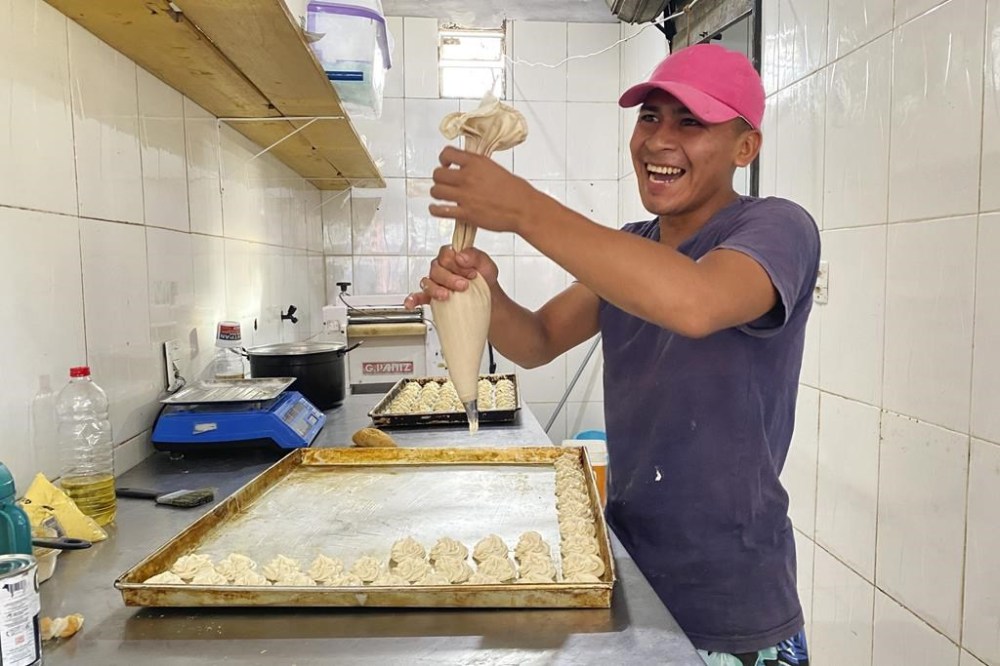
Thousands of Indigenous like Tumi are migrating to cities like Atalaia do Norte, some in pursuit of a better education and some drawn by a federal welfare benefit that can ensnare them in urban poverty. Their exodus is leaving villages to wither and raising concern that the world’s largest tropical rainforest — crucial to stemming the worst of climate change — will be left without its most effective guardians.
About half of the 6,200 Indigenous people in the Javari Valley now live in urban centers, according to estimates by anthropologist Almério Alves Wadick. The Matis, one of several Indigenous peoples in the region, say almost half their 600 people now live in that city.
That number is likely to grow, said Binin Matis, who leads the Matis Indigenous Association and takes the name of his people as his surname. Binin Matis said he fears the loss of his people’s language and their exposure to drugs.
“In the village, there are few people; it’s the older leaders. The youngsters are in the city,” he said. “No young Matis knows how to make a blowgun, an arrow. When the students go to the village for vacation, they don’t want to learn from the elders. They want to play soccer, have fun, and do things of the white man.”
Bushe Matis, president of Univaja, the main association for Indigenous peoples in the Javari Valley, worries that the migration will lead to cuts in health and education programs and the potential revocation of Indigenous territories that might then be opened for mining and drilling.
The Amazon came under heavy pressure under far-right President Jair Bolsonaro, who favored development. His single term saw a surge in illegal mining and deforestation hit a 15-year high.
Univaja recently established its own surveillance team to guard against illegal fishermen, miners and loggers — a duty previously carried out by the villages. The initiative is crucial to protect isolated Indigenous who could be imperiled by something as simple as flu carried by invaders, Bushe said.
Such tension appears to be behind last year’s killings of Indigenous expert Bruno Pereira and British journalist Dom Phillips. Pereira was in the Javari Valley assisting the creation of Univaja’s surveillance system. Four fishermen and a businessman are under arrest in the killings.
Luiz Inácio Lula da Silva has sought to lessen pressure on the Amazon since defeating Bolsonaro in last year’s election. He established a Ministry of Indigenous Affairs in part to safeguard Indigenous communities. A crucial part of that is improving education, a significant challenge in remote areas of the Amazon.
Indigenous families also face hostility from non-Indigenous residents who see them as competition for limited resources, especially fish.
“The Indians come here, the government doesn’t give them food, and they fish on our side,” said fisherman Antonio Alves, 46. “When one of us mistreats someone, it’s for our survival.”
The Indigenous migration is being driven in part by a federal program created 20 years ago in Lula’s first term. The Bolsa Familia program was launched to provide cash to families if they immunize their children and keep them in school. Tens of thousands of Indigenous families started frequenting cities to withdraw the benefit from state bank branches.
There were dire consequences.
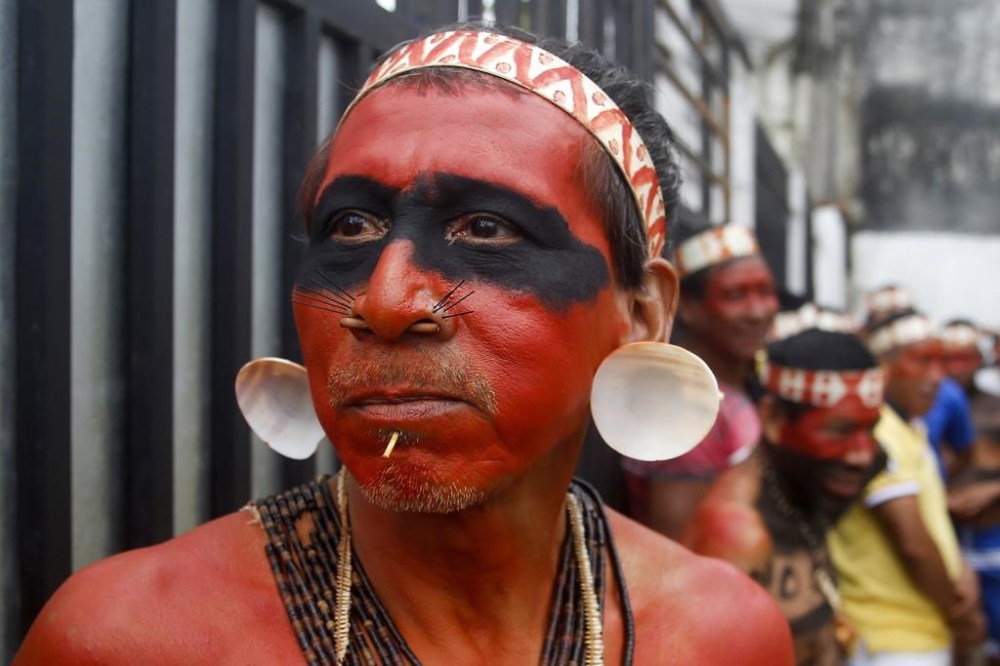
Indigenous people unaccustomed to handling money sometimes pay more than they should for long boat trips or have their debit cards illegally retained by unscrupulous merchants as collateral for installment or credit purchases. In the city, they stay in precarious conditions, vulnerable to alcohol and disease. Often, the Bolsa Familia payout isn’t enough to get them back home.
“They conclude that it’s better to stay in the city, receiving this amount and putting it towards studying since there isn’t even a complete primary education in the village,” said Wadick, the anthropologist. Indigenous leaders say village schools are in shambles from poor maintenance and lack of oversight by governments. Many Indigenous teachers have been spending long periods in the city, neglecting their work.
But the money isn’t enough to cover life in the city, either. The minimum payment is $125 per month, plus small additions for pregnant women and for children depending on age. Indigenous people often compete against each other for poorly paying jobs like collecting garbage or sweeping streets. Many endure hunger.
“We need clothing, to eat every day, to pay for electricity, and water bills. If all of that were free, we could sustain ourselves with $125,” said Tumi, who recently left the bakery to work for Univaja.
The Ministry of Indigenous Peoples is seeking to rework parts of the program so Indigenous peoples don’t have to travel as often to collect payment. Proposals include extending the withdrawal period for the money and flexible payment dates.
Another major ministry goal is to improve education in Indigenous territories to reduce the incentive to leave. That’s a daunting task with high costs for huge, remote and impoverished areas.
Nelly Marubo, an anthropologist who is Indigenous, said her ideal is culturally adapted village schools where students have access to both Indigenous and non-Indigenous knowledge without needing to be in the city. But she was shocked by what she found when, after a five-year absence, she recently visited her native region deep in the Javari Valley to film a documentary about her life.
“I always have in my mind lots of children and young people, but unfortunately, this time the visit was very sad,” she said. “I found an abandoned village with only four elderly women.”
___
Associated Press climate and environmental coverage receives support from several private foundations. See more about AP’s climate initiative here. The AP is solely responsible for all content.