Cities have long made plans for extreme heat. Are they enough in a warming world?
Advertisement
Read this article for free:
or
Already have an account? Log in here »
To continue reading, please subscribe:

Digital Subscription
One year of digital access for only $205*
- Enjoy unlimited reading on winnipegfreepress.com
- Read the E-Edition, our digital replica newspaper
- Access News Break, our award-winning app
- Play interactive puzzles
*First annual payment billed as $205.00 + GST for one year. This annual subscription will automatically renew at $233.00 + GST every 52 weeks (10% off the regular annual price of $259.35). Offer available to new and qualified returning subscribers only. Cancel any time.
To continue reading, please subscribe:
Add Free Press access to your Brandon Sun subscription for only an additional
$1 for the first 4 weeks*
- Enjoy unlimited reading on winnipegfreepress.com
- Read the E-Edition, our digital replica newspaper
- Access News Break, our award-winning app
- Play interactive puzzles
*Your next Brandon Sun subscription payment will increase by $1.00 and you will be charged $17.95 plus GST for four weeks. After four weeks, your payment will increase to $24.95 plus GST every four weeks.
Read unlimited articles for free today:
or
Already have an account? Log in here »
Hey there, time traveller!
This article was published 09/07/2023 (1194 days ago), so information in it may no longer be current.
CHICAGO (AP) — Natural disasters can be dramatic — barreling hurricanes, building-toppling tornadoes — but heat is more deadly.
Chicago learned that the hard way in 1995.
That July, a weeklong heat wave that hit 106 degrees Fahrenheit (41 degrees Celsius) killed more than 700 people. Most of the deaths occurred in poor and majority Black neighborhoods, where many elderly or isolated people suffered without proper ventilation or air conditioning. Power outages from an overwhelmed grid made it all worse.
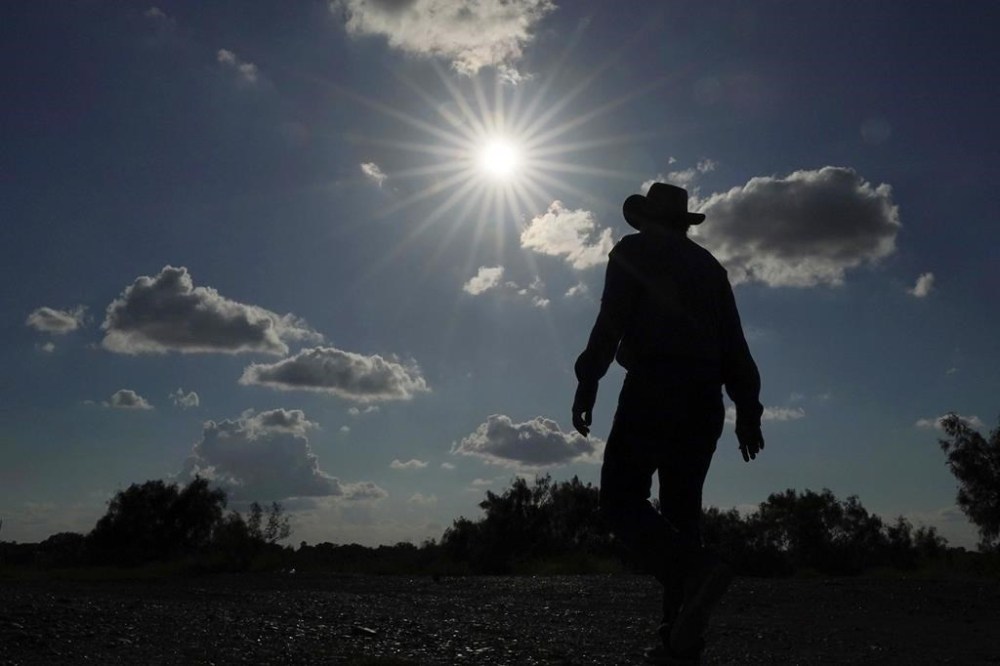
Initially slow to react, Chicago has since developed emergency heat response plans that include a massive push to alert the public and then connect the most vulnerable to the help they may need. Other cities like Los Angeles, Miami and Phoenix now have “chief heat officers” to coordinate planning and response for dangerous heat. Around the world, cities and countries have adopted similar measures.
But experts warn those steps might not be enough in a world that is seeing heat records consistently shatter and with continuing inequality in who is most vulnerable.
“I don’t know a single city that is truly prepared for the worst-case scenario that some climate scientists fear,” said Eric Klinenberg, a professor of social sciences at New York University who wrote a book about the Chicago heat wave.
Heat preparedness has generally improved over the years as forecasting has become more accurate, and as meteorologists, journalists and government officials have focused on spreading the word of upcoming danger. Chicago, for example, has expanded its emergency text and email notification system and identified its most vulnerable residents for outreach.
But what works in one city might not be as effective in another. That’s because each has its own unique architecture, transportation, layout and inequities, said Bharat Venkat, an associate professor at UCLA who directs the university’s Heat Lab, aimed at tackling what he calls “thermal inequality.”
Venkat thinks cities should address inequality by investing in labor rights, sustainable development and more. That may sound expensive — who pays, for instance, when a city tries to improve conditions for workers in blistering food trucks? — but Venkat thinks doing nothing will ultimately cost more.
“The status quo is actually deeply expensive,” he said. “We just don’t do the math.”
France launched a heat watch warning system after an extended heat wave in 2003 was estimated to have caused 15,000 deaths — many of them older people in city apartments and homes without air conditioning. The system includes public announcements urging people to hydrate. Just last month, Germany launched a new campaign against heatwave deaths that it said was inspired by France’s experience.
In India, a powerful heat wave in 2010 with temperatures over 118 degrees Fahrenheit (48 degrees Celsius) led to the deaths of over 1,300 people in the city of Ahmedabad. City officials now have a heat action plan to improve awareness in the local population and health care staff. Another simple initiative: Painting roofs white to reflect the blazing sun.
Ladd Keith, an assistant professor at the University of Arizona, cited Baltimore’s Code Red Extreme Heat alerts as an example of a well-designed alert system. The alerts go out when the forecast calls for a heat index of 105 Fahrenheit or higher, and sets in motion things like more social services in communities most vulnerable to heat risks.
He lauded the heat officers in cities like Los Angeles, Miami and Phoenix, but said there are “still over 19,000 cities and towns without them.”
Inkyu Han, an environmental health scientist at Temple University in Philadelphia, noted that cities are still struggling to get aids such as cooling centers and subsidized air conditioning into poorer neighborhoods. He said more can be done, too, with simple and sustainable solutions such as improving tree canopy.
“Notably, low-income neighborhoods and communities of color in Philadelphia often lack street trees and green spaces,” Han said.
In Providence, Rhode Island, the Atlantic Ocean typically moderates temperatures but the region can still get heat waves. Kate Moretti, an emergency room physician, said the city’s hospitals see more patients when the heat strikes — with increases in illnesses that may not be obviously related to heat, like heart attacks, kidney failure and mental health problems.
“We definitely notice that it puts a strain on the system,” Moretti said. Older people, people who work outdoors, people with disabilities and people who are homeless make up a big share of those admissions, she said.
Miami — considered a ground zero for the climate change threat due to its vulnerability to sea level rise, flooding, hurricanes and extreme heat — appointed its heat officer two years ago to develop strategies to keep people safe from the heat.
Robin Bachin, an associate professor of history and founding director of the Office of Civic and Community Engagement at the University of Miami, noted that the federal government has laws to protect people in cold climates from having their heat shut off in dangerous conditions, but doesn’t have something similar for cooling.
“For people in apartments that are not publicly subsidized, there is no requirement for landlords to provide air conditioning,” Bachin said. “That’s incredibly dangerous to particularly our local low-income population, let alone people who are unhoused or are outdoor workers.”
Klinenberg said that the United States has so far gotten lucky with the duration of most heat waves, but that electrical grids vulnerable to high demand in some regions, along with persistent social inequities, could spell serious trouble in the coming decades.
That’s partly because the underlying social problems that make heat events so deadly are only getting worse, Klinenberg said. Chicago’s 1995 deaths were clustered not only in poor and segregated neighborhoods, but also specifically within what he calls “depleted” neighborhoods, places where it’s harder for people to gather together and where social connections have been worn thin. Empty lots, abandoned restaurants and poorly maintained parks mean that people are less likely to check up on each other.
Noboru Nakamura, a professor of atmospheric sciences at the University of Chicago who specializes in extreme weather events, said he thinks Chicago has made plenty of smart changes by implementing heat emergency plans, routine wellness checks and cooling centers.
But he too cited inequality as a difficult challenge.
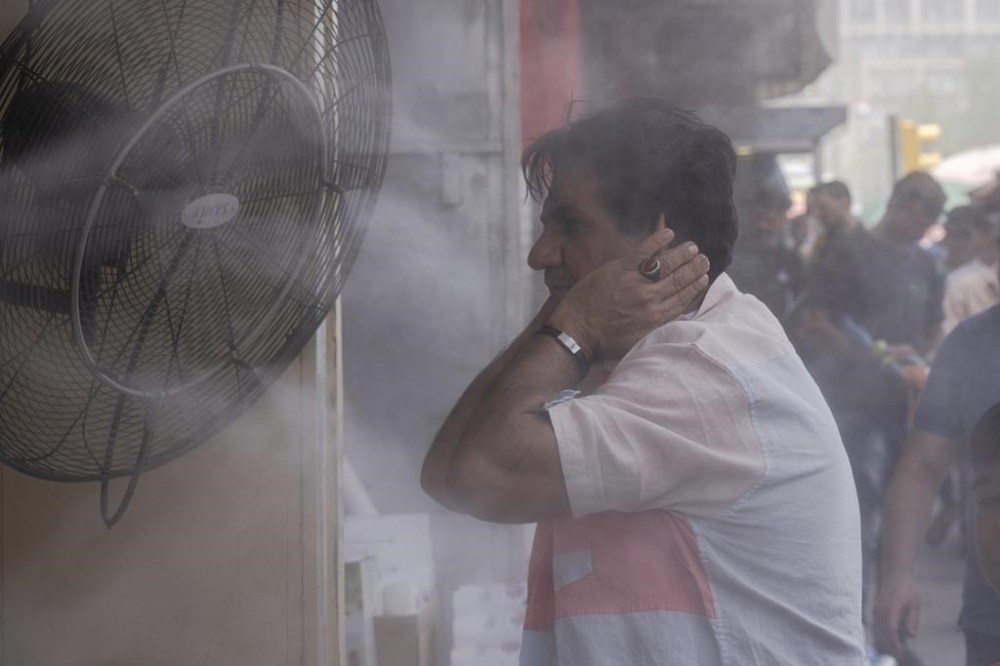
“A systemic problem of a resource inequity is something that you can’t really get rid of overnight. And we still have the same issue that we had back then today,” Nakamura said. “So that aspect still is a big, big, big, big unsolved problem.”
___
This story corrects Robin Bachin’s title.
___

O’Malley reported from Philadelphia.
___
Follow Melina Walling on Twitter @MelinaWalling.
___
Associated Press climate and environmental coverage receives support from several private foundations. See more about AP’s climate initiative here. The AP is solely responsible for all content.