As work begins on the largest US dam removal project, tribes look to a future of growth
Advertisement
Read this article for free:
or
Already have an account? Log in here »
To continue reading, please subscribe:

Digital Subscription
One year of digital access for only $205*
- Enjoy unlimited reading on winnipegfreepress.com
- Read the E-Edition, our digital replica newspaper
- Access News Break, our award-winning app
- Play interactive puzzles
*First annual payment billed as $205.00 + GST for one year. This annual subscription will automatically renew at $233.00 + GST every 52 weeks (10% off the regular annual price of $259.35). Offer available to new and qualified returning subscribers only. Cancel any time.
To continue reading, please subscribe:
Add Free Press access to your Brandon Sun subscription for only an additional
$1 for the first 4 weeks*
- Enjoy unlimited reading on winnipegfreepress.com
- Read the E-Edition, our digital replica newspaper
- Access News Break, our award-winning app
- Play interactive puzzles
*Your next Brandon Sun subscription payment will increase by $1.00 and you will be charged $17.95 plus GST for four weeks. After four weeks, your payment will increase to $24.95 plus GST every four weeks.
Read unlimited articles for free today:
or
Already have an account? Log in here »
Hey there, time traveller!
This article was published 30/07/2023 (1171 days ago), so information in it may no longer be current.
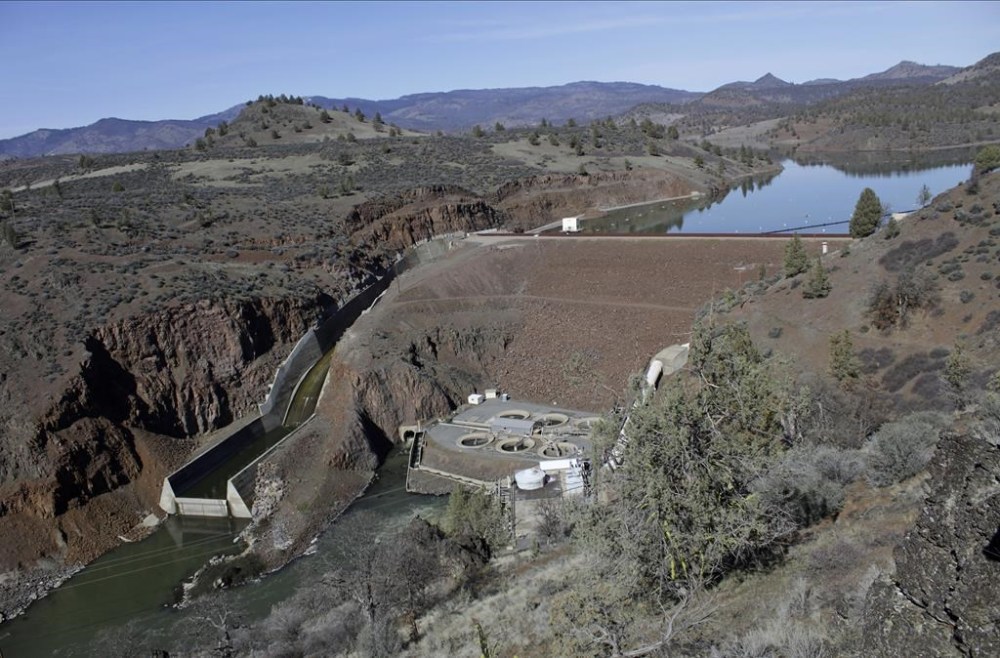
SACRAMENTO, Calif. (AP) — The largest dam removal project in United States history is underway along the California-Oregon border — a process that won’t conclude until the end of next year with the help of heavy machinery and explosives.
But in some ways, removing the dams is the easy part. The hard part will come over the next decade as workers, partnering with Native American tribes, plant and monitor nearly 17 billion seeds as they try to restore the Klamath River and the surrounding land to what it looked like before the dams started to go up more than a century ago.
The demolition is part of a national movement to return the natural flow of the nation’s rivers and restore habitat for fish and the ecosystems that sustain other wildlife. More than 2,000 dams have been removed in the U.S. as of February, with the bulk of those having come down within the last 25 years, according to the advocacy group American Rivers.
When demolition is completed by the end of next year, more than 400 miles (644 kilometers) of river will have opened for threatened species of fish and other wildlife. By comparison, the 65 dams removed in the U.S. last year combined to reconnect 430 miles (692 kilometers) of river.
Along the Klamath, the dam removals won’t be a major hit to the power supply; they produced less than 2% of power company PacifiCorp’s energy generation when they were running at full capacity — enough to power about 70,000 homes. Though the hydroelectric power produced by dams is considered a clean, renewable source of energy, many larger dams in the U.S. West have become a target for environmental groups and tribes because of the harm they cause to fish and river ecosystems.
The project will empty three reservoirs over about 3.5 square miles (9 square kilometers) near the California-Oregon border, exposing soil to sunlight in some places for the first time in more than a century.
For the past five years, Native American tribes have gathered seeds by hand and sent them to nurseries with plans to sow the seeds along the banks of the newly wild river. Helicopters will bring in hundreds of thousands of trees and shrubs to plant along the banks, including wads of tree roots to create habitat for fish.
This growth usually takes decades to happen naturally. But officials are pressing nature’s fast-forward button because they hope to repel an invasion of foreign plants, such as starthistle, which dominate the landscape at the expense of native plants.
“Why not just let nature take its course? Well, nature didn’t take its course when dams got put in. We can’t pretend this gigantic change in the landscape has not happened and we can’t just ignore the fact that invasive species are a big problem in the west and in California,” said Dave Meurer, director of community affairs for Resource Environmental Solutions, the company leading the restoration project.
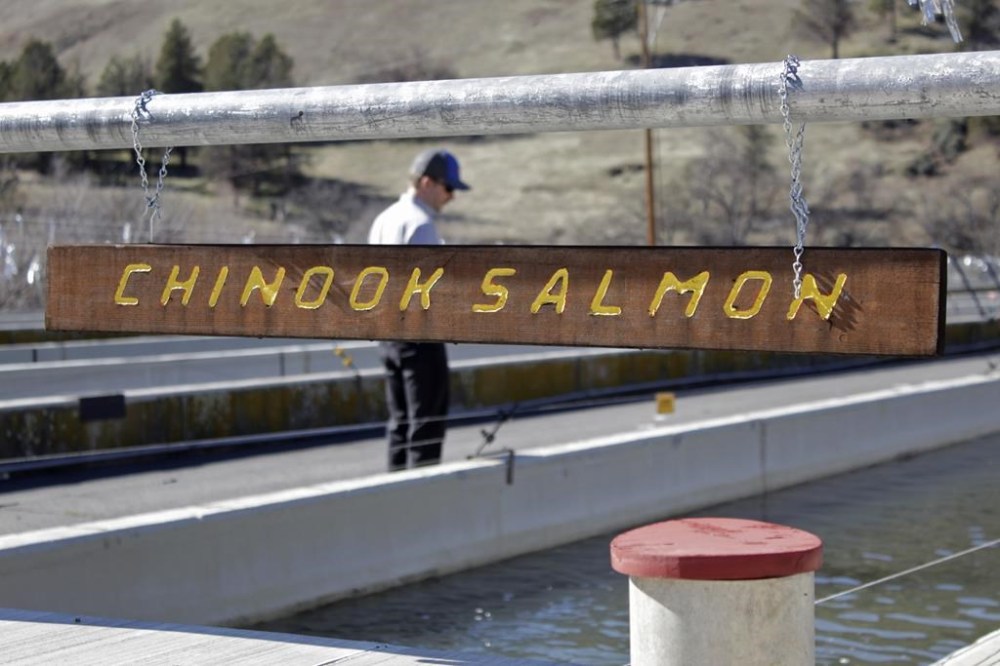
PacifiCorp built the dams starting in 1918 to generate electricity. The dams halted the natural flow of the river and disrupted the lifecycle of salmon, a fish that spends most of its life in the Pacific Ocean but returns to the chilly mountain streams to lay eggs. The fish are culturally and spiritually significant to a number of Native American tribes, who historically survived by fishing the massive runs of salmon that would come back to the rivers each year.
A combination of low water levels and warm temperatures in 2002 led to a bacterial outbreak that killed more than 34,000 fish, mostly Chinook salmon. The loss jumpstarted decades of advocacy from Native American tribes and environmental groups, culminating last year when federal regulators approved a plan to remove the dams.
“The river is our church, the salmon is our cross. That’s how it relates to the people. So it’s very sacred to us,” said Kenneth Brink, vice chairman of the Karuk Tribe. “The river is not just a place we go to swim. It’s life. It creates everything for our people.”
The project will cost $500 million, paid for by taxpayers and PacifiCorps ratepayers. Crews have mostly removed the smallest of the four dams, known as Copco No. 2. The other three dams are expected to come down next year. That will leave some homeowners in the area without the picturesque lake they have lived on for years.
The Siskiyou County Water Users Association, which formed about a decade ago to stop the dam removal project, filed a federal lawsuit. But so far they have been unable to stop the demolition.
“Unfortunately it’s a mistake you can’t turn back from,” association President Richard Marshall said.
The water level in the lakes will drop between 3 feet and 5 feet (1 meter to 1.5 meters) per day over the first few months of next year. Crews will follow that water line, taking advantage of the moisture in the soil to plant seeds from more than 98 native plant species including wooly sunflower, Idaho fescue and Blue bunch wheat grass.
Tribes have been invested in the process from the start. Resource Environmental Solutions hired tribal members to gather seeds from native plants by hand. The Yurok Tribe even hired a restoration botanist.
Each species has a role to play. Some, like lupine, grow quickly and prepare the soil for other plants. Others, like oak trees, take years to fully mature and provide shade for other plants.
“It’s a wonderful marriage of tribal traditional ecological knowledge and western science,” said Mark Bransom, CEO of the Klamath River Renewal Corporation, the nonprofit entity created to oversee the project.
The previous largest dam removal project was on Washington state’s Elwha River, which flows out of Olympic National Park into the Strait of Juan de Fuca. Congress in 1992 approved the demolition of the two dams on the river constructed in the early 1900s. After two decades of planning, workers finished removing them in 2014, opening about 70 miles (113 kilometers) of habitat for salmon and steelhead.
Biologists say it will take at least a generation for the river to recover, but within months of the dams being removed, salmon were already recolonizing sections of the river they had not accessed in more than a century. The Lower Elwha Klallam Tribe, which has been closely involved in restoration work, is opening a limited subsistence fishery this fall for coho salmon, its first since the dams came down.
Brink, the Karuk Tribe vice chair, hopes similar success will happen on the Klamath River. Multiple times per year, Brink and other tribal members participate in ceremonial salmon fishing using handheld nets. In many years, there have been no fish to catch, he said.
“When the river gets to flow freely again, the people can also begin to worship freely again,” he said.
___
Associated Press writer Eugene Johnson in Seattle contributed.