Iran will close government offices, banks and schools for 2 days over high temperatures
Advertisement
Read this article for free:
or
Already have an account? Log in here »
To continue reading, please subscribe:
Digital Subscription
One year of digital access for only $1.44 a week*
- Enjoy unlimited reading on winnipegfreepress.com
- Read the E-Edition, our digital replica newspaper
- Access News Break, our award-winning app
- Play interactive puzzles
*Billed as $5.77 plus GST every four weeks. After 52 weeks, price increases to the regular rate of $19.95 plus GST every four weeks. Offer available to new and qualified returning subscribers only. Cancel any time.
To continue reading, please subscribe:
Add Free Press access to your Brandon Sun subscription for only an additional
$1 for the first 4 weeks*
- Enjoy unlimited reading on winnipegfreepress.com
- Read the E-Edition, our digital replica newspaper
- Access News Break, our award-winning app
- Play interactive puzzles
*Your next Brandon Sun subscription payment will increase by $1.00 and you will be charged $17.95 plus GST for four weeks. After four weeks, your payment will increase to $24.95 plus GST every four weeks.
Read unlimited articles for free today:
or
Already have an account? Log in here »
Hey there, time traveller!
This article was published 01/08/2023 (1177 days ago), so information in it may no longer be current.
TEHRAN, Iran (AP) — Iran announced a nationwide two-day holiday because of increasing temperatures, state media reported Tuesday.
Government spokesperson Ali Bahadori Jahromi said the decision to close governmental offices, banks and schools on Wednesday and Thursday came after the health ministry warned about a possible increase in cases of heat exhaustion because of high temperatures, the official IRNA news agency reported.
In recent days, cities and towns in Iran saw temperatures around 40 degrees Celsius (104 degrees Fahrenheit). The capital, Tehran, experienced 38 C (100.4 F) on Tuesday.
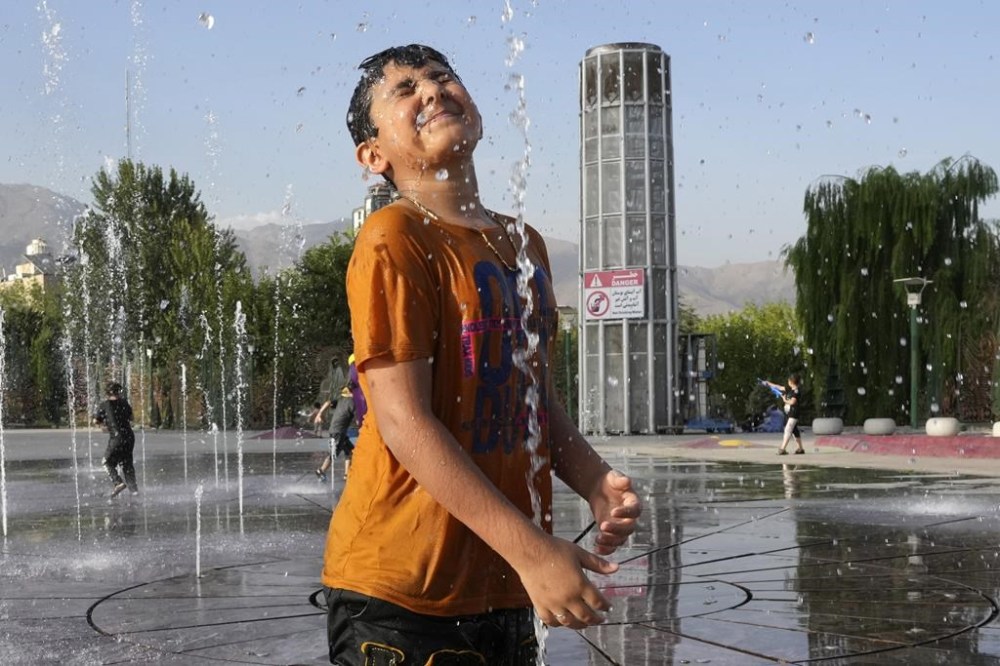
The metrological office predicted Tehran would see temperatures of 39 C (102.2 F) over the next three days.
Ahvaz, the capital of an oil-rich province in the country’s southwest, experienced 50 C (122 F) on Tuesday.
In 2022, Iran registered its hottest temperature at 53 C (127.4 F) in Ahvaz.
Earth’s hottest day in modern history was likely July 4, when the average global temperature reached 17.18 degrees Celsius (62.9 degrees Fahrenheit). It was mainly blamed on climate change and emerging El Nino pattern.
The highest registered air temperature on Earth is 56.7 C (134 F), recorded July 10, 1913, in Death Valley in the United States.