After helping prevent extinctions for 50 years, the Endangered Species Act itself may be in peril
Advertisement
Read this article for free:
or
Already have an account? Log in here »
To continue reading, please subscribe:

Digital Subscription
One year of digital access for only $205*
- Enjoy unlimited reading on winnipegfreepress.com
- Read the E-Edition, our digital replica newspaper
- Access News Break, our award-winning app
- Play interactive puzzles
*First annual payment billed as $205.00 + GST for one year. This annual subscription will automatically renew at $233.00 + GST every 52 weeks (10% off the regular annual price of $259.35). Offer available to new and qualified returning subscribers only. Cancel any time.
To continue reading, please subscribe:
Add Free Press access to your Brandon Sun subscription for only an additional
$1 for the first 4 weeks*
- Enjoy unlimited reading on winnipegfreepress.com
- Read the E-Edition, our digital replica newspaper
- Access News Break, our award-winning app
- Play interactive puzzles
*Your next Brandon Sun subscription payment will increase by $1.00 and you will be charged $17.95 plus GST for four weeks. After four weeks, your payment will increase to $24.95 plus GST every four weeks.
Read unlimited articles for free today:
or
Already have an account? Log in here »
Hey there, time traveller!
This article was published 04/08/2023 (1147 days ago), so information in it may no longer be current.
SHARON TOWNSHIP, Mich. (AP) — Biologist Ashley Wilson carefully disentangled a bat from netting above a tree-lined river and examined the wriggling, furry mammal in her headlamp’s glow. “Another big brown,” she said.
It was a common type, one of many Wilson and colleagues had snagged in the southern Michigan countryside. They were looking for increasingly scarce Indiana and northern long-eared bats, which historically migrated there for birthing season.
“It’s a bad suggestion if we do not catch one,” said Allen Kurta, an Eastern Michigan University professor who has studied bats for more than 40 years.
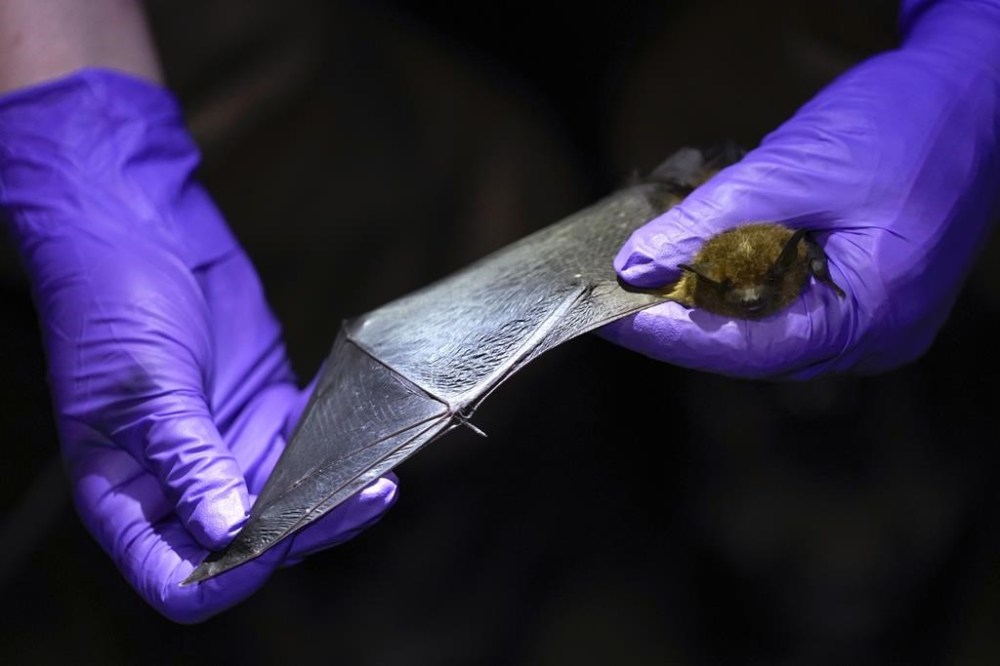
They didn’t that evening. During 16 nights this summer, they netted 177 bats — but just one Indiana and no northern long-eared specimens.
Both are designated as imperiled under the Endangered Species Act, the U.S. law intended to keep animal and plant types from dying out. Enacted in 1973, it protects 1,683 domestic species.
More than 99% of those listed as “endangered” — on the verge of extinction — or the less severe “threatened” have survived.
“The Endangered Species Act has been very successful,” Interior Secretary Deb Haaland said in an Associated Press interview.
Fifty years after taking effect, environmental advocates and scientists say the law is as essential as ever. Habitat loss, pollution, climate change and disease are putting an estimated 1 million species worldwide at risk.
Yet it’s so controversial, some worry it won’t last another half-century.
Conservative administrations and lawmakers have stepped up efforts to weaken it, backed by landowner and industry groups that contend the act stifles property rights and economic growth.
The act is “well-intentioned but entirely outdated … twisted and morphed by radical litigants,” said Bruce Westerman, an Arkansas Republican and chairman of the House Committee on Natural Resources.
Environmentalists accuse regulators of slow-walking new listings to appease critics and say Congress provides too little funding to fulfill the act’s mission.
“Its biggest challenge is it’s starving,” said Jamie Rappaport Clark, president of the advocacy group Defenders of Wildlife.
The Senate voted in May to nullify the northern long-eared bat’s recent endangered designation. An ominous sign, said Kurta, the Michigan scientist, donning waders to slosh across the river bottom for the June netting project.
“Its population has dropped 90% in a very short period of time,” he said. “If that doesn’t make you go on the endangered species list, what’s going to?”
The act made it illegal to kill or harm listed animals and plants or ruin their habitats. It ordered federal agencies not to authorize or fund actions likely to jeopardize their existence, although amendments later allowed incidental kills from otherwise legal projects.
Congress passed it overwhelmingly, and Republican President Richard Nixon signed it.
Backlash emerged as the statute spurred regulation of oil and gas development, logging, ranching and other industries. The endangered list grew to include little-known creatures — from the frosted flatwoods salamander to the tooth cave spider — and nearly 1,000 plants.
An early battle involved the snail darter, a tiny Southeastern fish that delayed construction of a Tennessee river dam.
The northern spotted owl’s listing as threatened in 1990 sparked years of feuding between conservationists and the timber industry in the Pacific Northwest.
Rappaport Clark, who headed the U.S. Fish and Wildlife Service under President Bill Clinton, said there were enough GOP moderates then to help Democrats thwart sweeping changes sought by hardline congressional Republicans.
“Fast-forward to today, and support has declined pretty dramatically,” she said.
Former President Donald Trump’s administration ended blanket protection for animals newly deemed threatened. It let federal authorities consider economic costs of protecting species.
A federal judge blocked some of those moves and President Joe Biden’s administration repealed or announced plans to rewrite others.
But Congress voted this year to undo protections for a rare grouse known as the lesser prairie chicken as well as the northern long-eared bat. Biden has threatened vetoes.
Other pending bills would prohibit new listings expected to cause “significant” economic harm and remove most gray wolves and grizzly bears from the protected list.
“Science is supposed to be the fundamental principle of managing endangered species,” said Mike Leahy, a senior director of the National Wildlife Federation. “It’s getting increasingly overruled by politics.”
Since the law took effect, 64 of roughly 1,780 listed U.S. species have rebounded enough to be removed, while another 64 have improved from endangered to threatened. Eleven have been declared extinct, a label proposed for 23 others.
That’s a poor showing, said Jonathan Wood, vice president of law and policy with the Property and Environment Research Center, which represents landowners.
The act was supposed to function like a hospital emergency room, providing lifesaving but short-term treatment, Wood said. Instead, it resembles perpetual hospice care.
But species typically need at least a half-century to recover and most haven’t been listed that long, said Noah Greenwald, endangered species director with the Center for Biological Diversity, an environmental group. Hundreds more await consideration.
The Fish and Wildlife Service “is not getting the job done,” Greenwald said. “Part is lack of funding but it’s mixed with timidity.”
Agency officials acknowledge struggling to keep up with listing proposals and restoring species, blaming tight budgets and competing priorities.
To address the funding problem and mollify federal government critics, supporters of the act propose steering more conservation money to state and tribal programs.
The Fish and Wildlife Service is developing strategies for getting species off the list sooner, Director Martha Williams told a House subcommittee in July.
It’s also seeking accommodation on another thorny issue: providing enough space where imperiled species can feed, shelter and reproduce.
The act empowers the government to identify “critical habitat” where economic development can be limited. Many early supporters believed public lands and waters would be enough. But now about two-thirds of listed species occupy private property.
Meeting the rising demand will require more deals with property owners instead of critical habitat designations, which lower property values and breed resentment, said Wood of the landowners group.
“You can’t police your way” to cooperation, he said.
The Fish and Wildlife Service proposed regulatory changes this year to encourage voluntary efforts. Environmentalists insist that’s no substitute for legally enforceable protection.
“Did the makers of DDT voluntarily stop making it? No,” said Greenwald, arguing few landowners or businesses will sacrifice profits to help the environment.
“We have to have strong laws and regulations if we want to address the climate and extinction crises and leave a livable planet for future generations.”
———
Associated Press climate and environmental coverage receives support from several private foundations. See more about AP’s climate initiative here. The AP is solely responsible for all content.
———
Follow John Flesher on Twitter at http://www.twitter.com@johnflesher