Extreme weather risk changing Canada’s insurance industry, raising costs
Advertisement
Read this article for free:
or
Already have an account? Log in here »
To continue reading, please subscribe:

Digital Subscription
One year of digital access for only $205*
- Enjoy unlimited reading on winnipegfreepress.com
- Read the E-Edition, our digital replica newspaper
- Access News Break, our award-winning app
- Play interactive puzzles
*First annual payment billed as $205.00 + GST for one year. This annual subscription will automatically renew at $233.00 + GST every 52 weeks (10% off the regular annual price of $259.35). Offer available to new and qualified returning subscribers only. Cancel any time.
To continue reading, please subscribe:
Add Free Press access to your Brandon Sun subscription for only an additional
$1 for the first 4 weeks*
- Enjoy unlimited reading on winnipegfreepress.com
- Read the E-Edition, our digital replica newspaper
- Access News Break, our award-winning app
- Play interactive puzzles
*Your next Brandon Sun subscription payment will increase by $1.00 and you will be charged $17.95 plus GST for four weeks. After four weeks, your payment will increase to $24.95 plus GST every four weeks.
Read unlimited articles for free today:
or
Already have an account? Log in here »
Hey there, time traveller!
This article was published 04/08/2023 (1155 days ago), so information in it may no longer be current.
OTTAWA – Climate change is driving up insurance rates and raising questions about whether private coverage will even be available for some Canadians in the future.
The problem could mean the National Flood Insurance Program that Canada is developing to ensure access to affordable overland flood coverage might have to be expanded to wildfires, wind storms and hurricanes in short order.
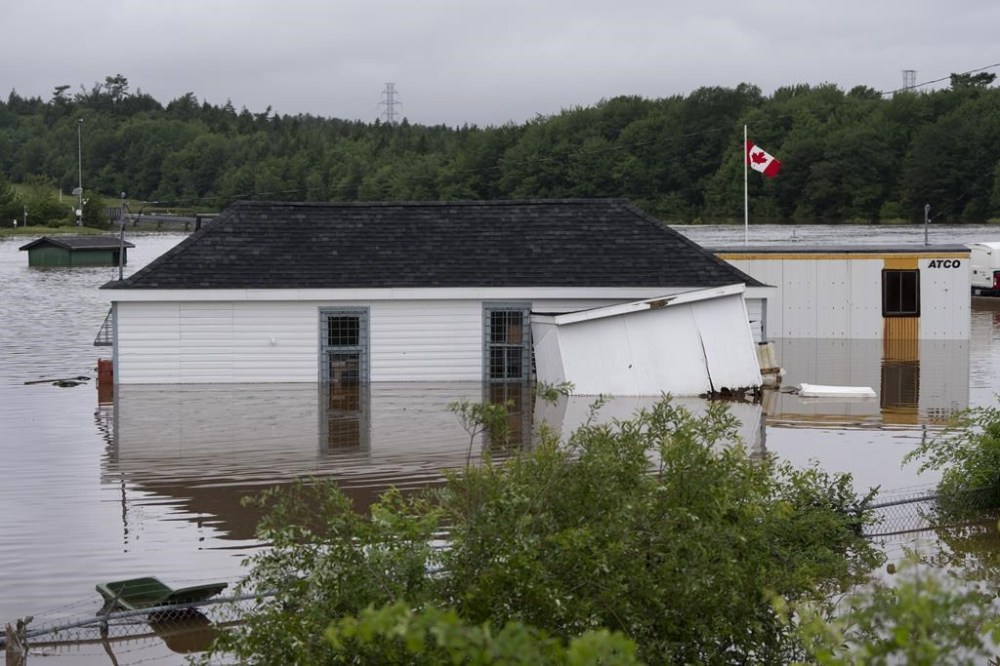
Statistics Canada’s latest inflation report showed home insurance costs were up 8.2 per cent nationally in June, compared with one year earlier. Increases were about 10 per cent in Alberta, British Columbia and Saskatchewan, and nearly 12 per cent in Nova Scotia.
Some of the increase to premiums was due to inflation, but Craig Stewart, vice-president of climate and federal affairs for the Insurance Bureau of Canada, said a big chunk of it was because global reinsurance companies re-evaluated Canada’s risk profile and jacked up their prices.
Most companies that sell property insurance in Canada turn around and transfer some of the risk associated with their policies to global companies called reinsurers. So when you make a claim to your local insurance agent, that company will in turn cover some of its expenses by buying insurance from a big global backer.
Stewart said the reinsurance premiums rose between 25 and 100 per cent in the last year, and while not all of it was passed on to consumers, some of it had to be. He said the analysis found Canada among the countries where climate change has affected insurance risks the most.
The Insurance Bureau of Canada reported last year that claim costs for personal property insurance averaged more than $7 billion annually over the last five years in Canada. That compares with $5.8 billion in the previous five years, and $2 billion a year in the late 1990s and early 2000s.
The bureau said severe weather caused about $3.1 billion in insured damage in Canada last year, the third-worst year on record. And there was no single major event — like the Fort McMurray wildfire in 2016 — accounting for a majority of the costs.
Rather, the costs were spread across the country, including the May derecho in Ontario and Quebec, post-tropical storm Fiona, flooding in Manitoba, and a series of major winter and summer storms in Ontario, Quebec, and British Columbia.
Stewart said for now the biggest effect is rising premiums, but he added some businesses, particularly tourism and hospitality operators in parts of western Canada, that haven’t been able to renew their insurance in recent years.
Some major insurance companies have withdrawn from California and Florida completely in the last 18 months. Farmers Insurance stopped selling home and auto insurance in Florida in July, and State Farm did the same in California in May. In California, it’s the high risk of wildfires, and in Florida, hurricanes, driving the companies out.
Stewart said it is not imminent, but possible, that those conversations might eventually happen in Canada. “The amplification of these events over the last five years just happened quicker than anyone could have imagined, so unfortunately we may be having that conversation sooner rather than later.”
Paul Kovacs, executive director at the Institute for Catastrophic Loss Reduction in Toronto, said he doesn’t think it will happen here. He said premiums will go up but he thinks the costs can be managed in Canada.
But he cited a need for better protection from severe weather — fireproof siding in areas of higher fire risk for example, or flood-proofing in areas getting hit more often with heavy rains.
“If we look after our homes, then even with the climate changing you don’t necessarily have to see more damage.”
He said it has been proven that investing $1 in prevention can save governments, insurance companies and individuals between $5 to $10 when disaster strikes, but getting those investments made can still be a hard sell.
Kovacs said usually the best time to make such improvements is immediately after a major event, when people are already rebuilding and the most open to doing so in a way that better protects them in the future.
He said the only significant example of being unable to get insurance is for overland flooding, which wasn’t available at all in Canada until 2016.

Since then, Kovacs said, 10 million Canadians have signed up for it.
Stewart said about 10 per cent of Canada’s homes — or 1.5 million households — are considered too high risk to get such insurance.
The National Flood Insurance Program, promised in the most recent federal budget, is intended to close that gap.
It’s still in development, with a target date of April 2025. Stewart said the program needs to be designed so it can be expanded to cover other weather events if needed in the future.
This report by The Canadian Press was first published Aug. 4, 2023.
Related Articles
US east cleans up after deadly storms as New England braces for flooding


Advertisement Advertise With Us
Advertisement Advertise With Us