Petroleum asphalt remains in Yellowstone River, even after cleanup from train derailment
Advertisement
Read this article for free:
or
Already have an account? Log in here »
To continue reading, please subscribe:

Digital Subscription
One year of digital access for only $205*
- Enjoy unlimited reading on winnipegfreepress.com
- Read the E-Edition, our digital replica newspaper
- Access News Break, our award-winning app
- Play interactive puzzles
*First annual payment billed as $205.00 + GST for one year. This annual subscription will automatically renew at $233.00 + GST every 52 weeks (10% off the regular annual price of $259.35). Offer available to new and qualified returning subscribers only. Cancel any time.
To continue reading, please subscribe:
Add Free Press access to your Brandon Sun subscription for only an additional
$1 for the first 4 weeks*
- Enjoy unlimited reading on winnipegfreepress.com
- Read the E-Edition, our digital replica newspaper
- Access News Break, our award-winning app
- Play interactive puzzles
*Your next Brandon Sun subscription payment will increase by $1.00 and you will be charged $17.95 plus GST for four weeks. After four weeks, your payment will increase to $24.95 plus GST every four weeks.
Read unlimited articles for free today:
or
Already have an account? Log in here »
Hey there, time traveller!
This article was published 23/08/2023 (1137 days ago), so information in it may no longer be current.
REED POINT, Mont. (AP) — Two months after a railroad bridge collapse sent carloads of hazardous oil products plunging into Montana’s Yellowstone River, the cleanup workers are gone and a mess remains.
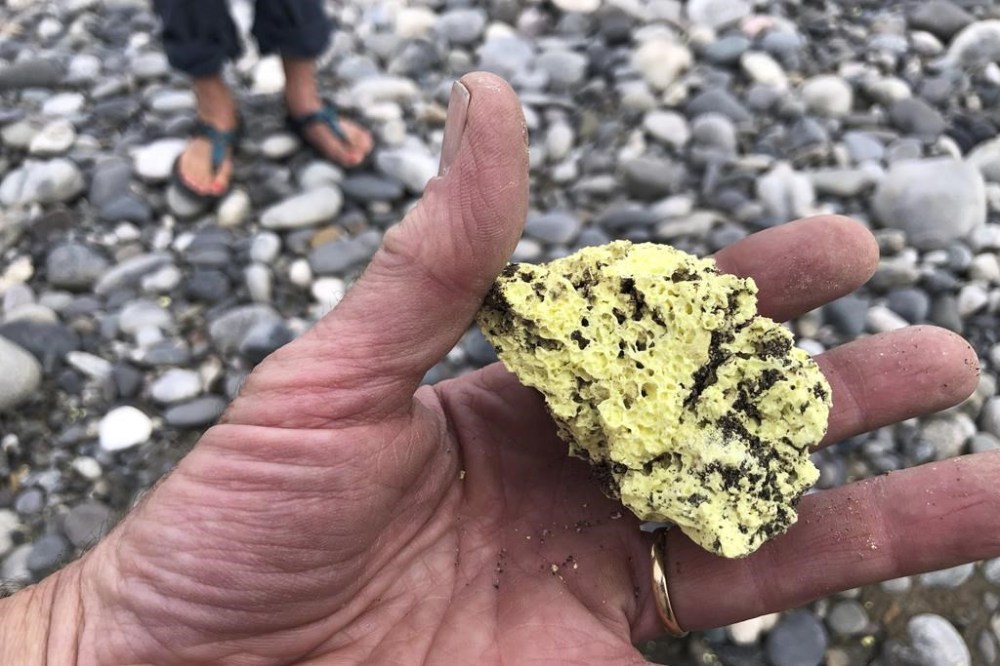
Thick mats of tarry petroleum asphalt cover portions of sandbars. Oil-speckled rocks and bushes line the shore along with chunks of yellow sulfur, a component of crude. In the middle of the river downstream of the bridge, a tangle of black steel juts out of the water from a large piece of ruptured tank car.
The railroad, Montana Rail Link, in conjunction with federal and state officials last week halted most cleanup work and stopped actively looking for contaminated sites. They said falling river levels that have been exposing more pollution also make it harder to safely operate the large power boats used by cleanup crews.
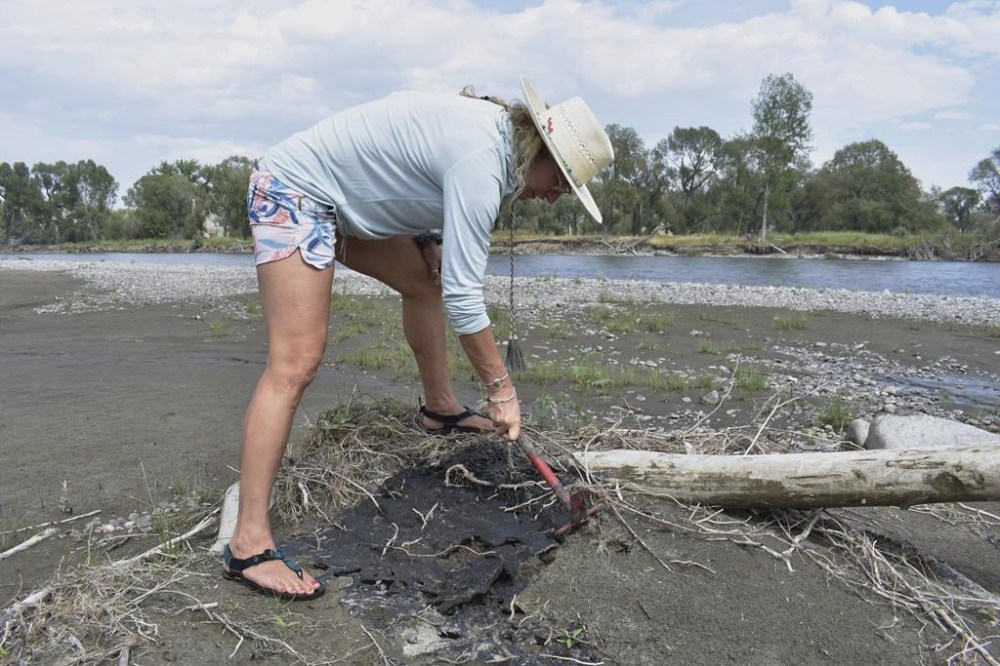
Almost half of the 48,000 gallons (180,000 liters) of molten petroleum asphalt that spilled has not been recovered, officials said. That includes 450 sites with asphalt in quantities considered too small or too difficult for efficient removal, according to data provided to The Associated Press.
The spill extends more than 125 miles (200 kilometers) along a stretch of river popular among anglers and recreationists and relied upon by farmers to irrigate crops. Yellowstone National Park is upstream and not impacted.
The scope of remaining pollution was evident this week when viewed by boat downstream of the collapsed bridge, which has since been repaired. Asphalt could be seen on every river island visited, ranging from globs stuck on riverside vegetation and rocks, to thick mats of tar oozing across sandbars as summer temperatures heat it into a viscous liquid.
“What we’ve seen out there tells us that there should be a second phase of cleanup. They need to come back and they need to do a better job,” said Wendy Weaver, executive director of Montana Freshwater Partners.
The nonprofit group focused on water protection has received reports of tar balls and other asphalt at more than 40 sites where cleanup workers previously passed through.
Elevated levels of a toxic component of oil known as polycyclic aromatic hydrocarbons, or PAHs, have been detected in mountain whitefish downstream of the spill site, prompting an advisory against eating any caught along a 41-mile (66-kilometer) stretch of the Yellowstone. The contamination has not been conclusively linked to the derailment but the spilled asphalt contained PAHs, according to documents submitted to federal officials.
Test results on other fish species are pending, said Chrissy Webb with Montana Fish Wildlife and Parks. At least eight snakes and 11 birds have been killed after encountering the sticky asphalt.
Downstream intakes for drinking water and irrigation were temporarily shut down after the spill and later reopened with no impacts reported.
Asphalt is not as volatile as other oil products such as gasoline. It emits chemicals that are toxic to humans and the environment at a slower rate, but breaks down slowly and can have a more lasting impact, said University of Houston chemistry Professor Ramanan Krishnamoorti.
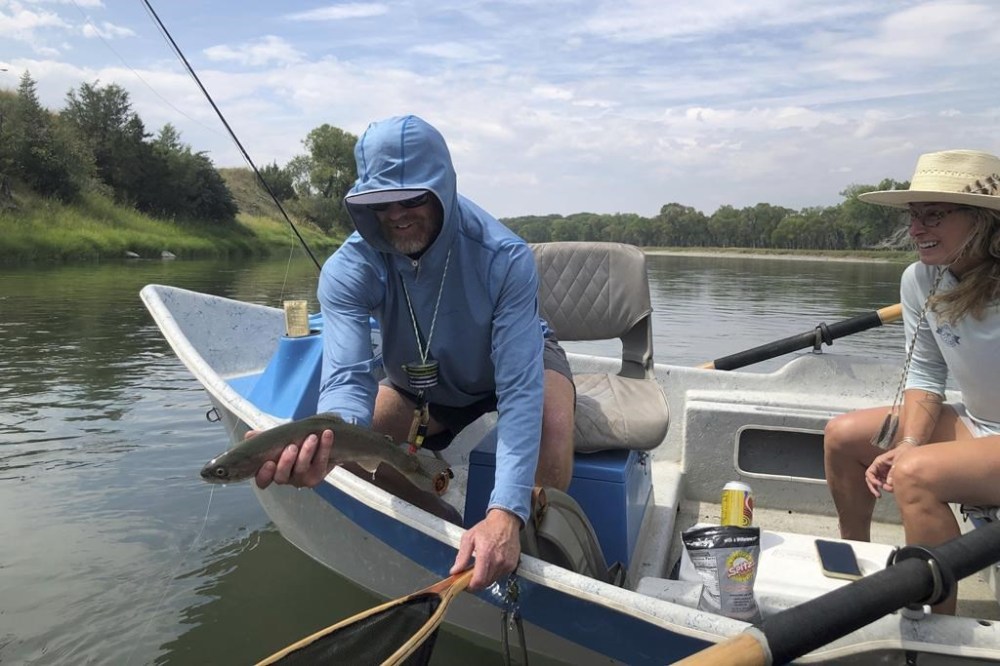
Asphalt in the water could be especially problematic, he said, because it won’t readily set or harden as it does when used in road construction or roofing.
“It can be toxic, especially once you let it sit in the environment without it getting really set,” Krishnamoorti said. “It could also get ingested by fish in the water and that could be a massive challenge, because it’s essentially not digestible by most living things so it can sit in the body.”
Federal and state officials cautioned in the days after the derailment that much of the spill would not be recovered and a too-aggressive cleanup risked further harm to the environment. Cleanup crews collected asphalt at 377 sites — along with more than 20 tons of rocks, sand and vegetation that stuck to the asphalt as it began to harden, according to data provided by federal officials.
Montana Rail Link spokesperson Andy Garland said the company was committed to addressing the derailment’s impacts, and decided in coordination with state and federal officials that “a different approach” was needed as the river dropped and decreasing amounts of asphalt were being recovered. A local task force will continue responding to reports of spilled material, he said.
To merit removal, the asphalt must cover an area greater than 20 inches (50 centimeters) wide when found in pebbles or rocks, or greater than 6 inches (15 centimeters) in sand.
As recently as Aug. 3, officials anticipated the cleanup work continuing “via boat and land” into fall, according to a planning document approved by the government and railroad. Less than two weeks later officials said they met conditions to start winding down the cleanup. That threshold was three or fewer sites with contamination deemed extensive enough for removal, over any 10-mile (16-kilometer) stretch of the river.
Crews working downstream reached that point east of Custer, Montana, about 136 miles (219 kilometers) from the bridge collapse.
Six tank cars filled with asphalt went in the river during the June 24 derailment along with three cars filled with another petroleum product, molten sulfur. Railroad representatives and government officials have not disclosed how much sulfur was released or cleaned up. It can produce hazardous vapors at high temperatures, but is not considered a threat once it cools and hardens, Krishnamoorti said
The derailment marked the third large petroleum spill into the Yellowstone in recent years, following ruptures of crude oil pipelines that crossed beneath the river in 2011 near Laurel, Montana, and in 2015 near Glendive. A small fraction of oil from those spills was recovered.
The cause of the June bridge collapse remains under investigation. It happened following torrential rainfall and at a time when the river was swollen with melting mountain snow.
Montana Gov. Greg Gianforte’s press secretary, Kaitlin Price, declined to say whether the Republican was satisfied with the cleanup. She said his priority was protecting public health and the river.
A follow-up search for asphalt is planned next year and officials said shifting sandbars could reveal more that can be removed. Weaver worries next year’s spring surge of snowmelt could wash the remaining asphalt further downstream or bury it.
“I feel like they’re trying to sweep this under the rug,” she said.
___
Report asphalt seen on the Yellowstone to rptrainderailment@mtrail.com.