Fukushima residents are cautious after the wrecked nuclear plant began releasing treated wastewater
Advertisement
Read this article for free:
or
Already have an account? Log in here »
To continue reading, please subscribe:
Digital Subscription
One year of digital access for only $1.44 a week*
- Enjoy unlimited reading on winnipegfreepress.com
- Read the E-Edition, our digital replica newspaper
- Access News Break, our award-winning app
- Play interactive puzzles
*Billed as $5.77 plus GST every four weeks. After 52 weeks, price increases to the regular rate of $19.95 plus GST every four weeks. Offer available to new and qualified returning subscribers only. Cancel any time.
To continue reading, please subscribe:
Add Free Press access to your Brandon Sun subscription for only an additional
$1 for the first 4 weeks*
- Enjoy unlimited reading on winnipegfreepress.com
- Read the E-Edition, our digital replica newspaper
- Access News Break, our award-winning app
- Play interactive puzzles
*Your next Brandon Sun subscription payment will increase by $1.00 and you will be charged $17.95 plus GST for four weeks. After four weeks, your payment will increase to $24.95 plus GST every four weeks.
Read unlimited articles for free today:
or
Already have an account? Log in here »
Hey there, time traveller!
This article was published 25/08/2023 (1151 days ago), so information in it may no longer be current.
IWAKI, Japan (AP) — Fish auction prices at a port south of the Fukushima Daiichi nuclear power plant were mixed amid uncertainty over how seafood consumers will respond to the release of treated and diluted radioactive wastewater into the ocean.
The plant, which was damaged in the 2011 earthquake and tsunami, began sending the treated water into the Pacific on Thursday despite protests at home and in nearby countries that are adding political and diplomatic pressures to the economic worries.
Hideaki Igari, a middleman at the Numanouchi fishing port, said the price of larger flounder, Fukushima’s signature fish known as Joban-mono, was more than 10% lower at the Friday morning auction, the first since the water release began. Prices of some average-size flounder rose, but presumably due to a limited catch, says Igari. Others fell.
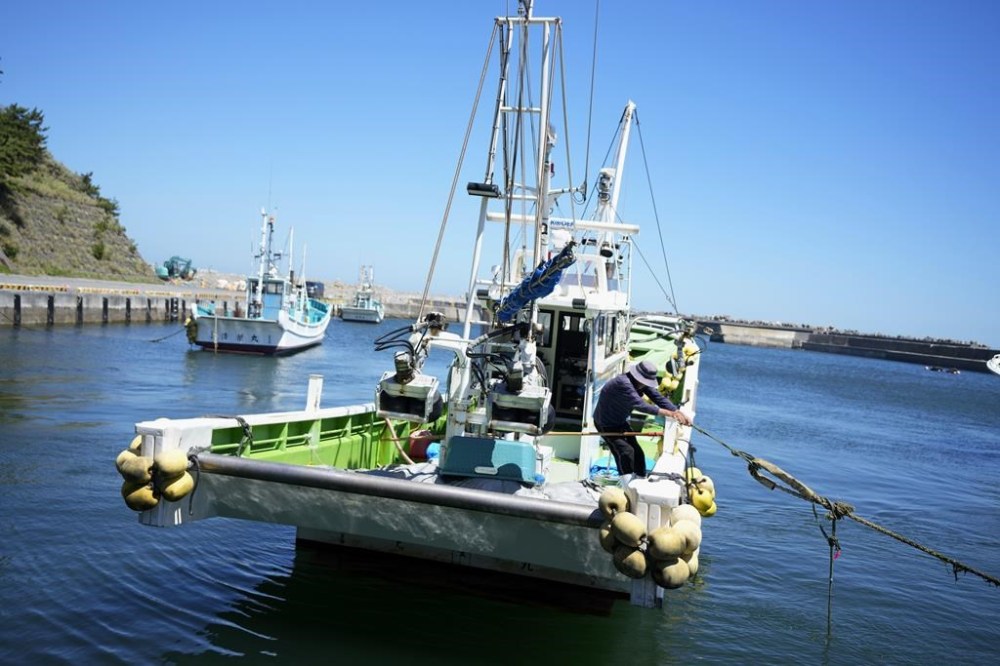
It was a relatively calm market reaction to the water release. But, Igari said, “we still have to see how it goes next week.”
The decadeslong release has been strongly opposed by fishing groups and criticized by neighboring countries. China immediately banned imports of seafood from Japan in response, adding to worries in the fisheries community and related businesses.
In Seoul on Saturday, thousands of South Koreans took to the streets to condemn the release of wastewater and to criticize the South Korean government for endorsing the plan. The protesters called on Japan to store radioactive water in tanks instead of releasing it into the Pacific Ocean.
A citizens’ radiation testing center in Japan said it’s getting inquiries and expects more people might bring in food, water and other samples as radiation data is now a key barometer for what to eat.
Japanese fishing groups fear the release will do more harm to the reputation of seafood from the Fukushima area. They are still striving to repair the damage to their businesses from the meltdown at the power plant after the earthquake and tsunami.
“We now have this water after all these years of struggle when the fish market price is finally becoming stable,” Igari said after Friday’s auction. “Fisheries people fear that prices of the fish they catch for their living may crash again, and worry about their future living.”
The Japanese government and the plant’s operator, Tokyo Electric Power Company Holdings, say the water must be released to make way for the facility’s decommissioning and to prevent accidental leaks of insufficiently treated water. Much of tank-held water still contains radioactive materials exceeding releasable levels.
Some wastewater at the plant is recycled as coolant after treatment, and the rest is stored in around 1,000 tanks, which are filled to 98% of their 1.37 million-ton capacity. The tanks cover much of the complex and must be cleared out to make room for new facilities needed for the decommissioning process, officials say.
Authorities say the wastewater after treatment and dilution is safer than international standards require, and that its environmental impact will be negligible. On Friday, the first seawater samples collected after the release were significantly below the legally releasable levels, the power company said.
But, having suffered a series of accidental and intended releases of contaminated water from the plant early in the disaster, hard feelings and distrust of the government and TEPCO run deep in Fukushima — especially in the fishing community.
TEPCO says the release will take 30 years, or until the end of the plant decommissioning. People fear that could mean a tough future for youths in the fishing town, where many businesses are family-run.
Fukushima’s current catch already is only about one-fifth its pre-disaster level due to a decline in the number of fishers and decreased catch sizes.
The government has allocated 80 billion yen ($550 million) to support fisheries and seafood processing, and to combat potential reputation damage by sponsoring campaigns to promote Fukushima’s Joban-mono and processed seafood. TEPCO has promised to deal with reputational damage claims, and those hurt by China’s export ban.
Tetsu Nozaki, head of the Fukushima prefectural fisheries cooperatives, said in a statement that worries of the fishing community will continue for as long as the water is released.
“Our only wish is to continue fishing for generations in our home town, like we used to before the accident,” Nozaki said.
Fish prices largely depend on the sentiment of wholesalers and consumers in the Tokyo region, where large portions of the Fukushima catch goes.
At the Friday auction at the Numanouchi port, the price for flounder was down from its usual level of about 3,500 yen ($24) per kilogram (2.2 pounds) to around 3,000 yen ($20), said Igari, the middleman.
“I suspect the result is because of the start of the treated water release from the Fukushima Daiichi and fear about its impact,” he said.
Igari said the discharge is discouraging but hopes careful testing can prove the safety of their fish. “From the consumers’ point of view about food safety at home, I think the best barometer is data,” he said.
At Mother’s Radiation Lab Fukushima in Iwaki, a citizens’ testing center known as Tarachine, tests were being conducted on water samples, including on tritium levels for seawater that the lab collected from just off the Fukushima Daiichi plant before the release.
Lab director Ai Kimura said anyone can bring in food, water or even soil, though the lab has big backlogs because testing take time.
She joined the lab after regretting she might not have fully protected her daughters because of the lack of information and knowledge earlier in the disaster. She says having independent test results is important not because of distrust of government data, but because “we learned over the past 12 years the importance of testing in order to get data” on what mothers want to know for serving safe and healthy food to their children and families.
Kimura said people have different views about safety — some are fine with government standards, others want them to be as close to zero as possible.
“It’s very difficult to make everyone feel safe. … That’s why we conduct testing so we can visualize data on food from different places and help people have more options to make a decision,” she said.
Kimura said the lab’s testing has shown Fukushima fish to be safe over the past few years, and she happily eats local fish.
“It’s totally fine to eat fish that does not contain radiation,” she said.
But now the treated wastewater release will bring new questions, she said.
Aeon, a major supermarket chain that has been testing cesium and iodine levels in fish, announced plans to also test for tritium, a radionuclide inseparable from water.
Katsumasa Okawa, a fish store and restaurant operator who was at one of his four shops Thursday, said customers were sparse after the plant started its final steps of the treated water release at 1 p.m. and media reports covered the development.
But on Friday, he said, his Yamako seafood restaurant next to Iwaki’s main train station seemed to be doing business as usual, with customers coming in and out during lunchtime.
Okawa said he’s been looking forward to the wastewater draining as a big step toward decommissioning the nuclear plant. “I feel more at ease thinking those tanks will finally go away.”
Okawa, who said he did voluntary testing of his products for a number of years after the disaster, is worried about returning to the days of radiation testing and data as a benchmark of what to eat.
“I think too much testing data only triggers concerns,” he said. “I’m confident about what I sell and I will just keep up the work.”
Some people say they want to eat good fish and not worry.
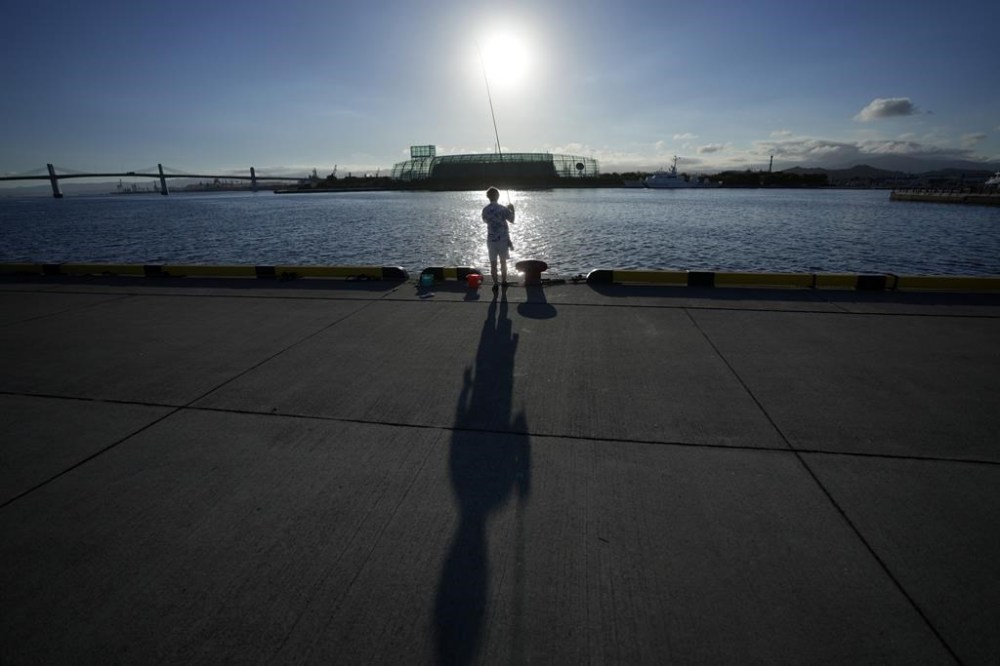
Bus driver Hideki Tanaka, on vacation and fishing at another Iwaki port of Onagawa, said he hoped to catch horse mackerel.
“If you worry too much, you can’t eat fish from anywhere,” he said.