This trans woman was begging on India’s streets. A donated electric rickshaw changed her life
Advertisement
Read this article for free:
or
Already have an account? Log in here »
To continue reading, please subscribe:

Digital Subscription
One year of digital access for only $205*
- Enjoy unlimited reading on winnipegfreepress.com
- Read the E-Edition, our digital replica newspaper
- Access News Break, our award-winning app
- Play interactive puzzles
*First annual payment billed as $205.00 + GST for one year. This annual subscription will automatically renew at $233.00 + GST every 52 weeks (10% off the regular annual price of $259.35). Offer available to new and qualified returning subscribers only. Cancel any time.
To continue reading, please subscribe:
Add Free Press access to your Brandon Sun subscription for only an additional
$1 for the first 4 weeks*
- Enjoy unlimited reading on winnipegfreepress.com
- Read the E-Edition, our digital replica newspaper
- Access News Break, our award-winning app
- Play interactive puzzles
*Your next Brandon Sun subscription payment will increase by $1.00 and you will be charged $17.95 plus GST for four weeks. After four weeks, your payment will increase to $24.95 plus GST every four weeks.
Read unlimited articles for free today:
or
Already have an account? Log in here »
Hey there, time traveller!
This article was published 30/08/2023 (1132 days ago), so information in it may no longer be current.
BENGALURU, India (AP) — When Preethi moved to Bengaluru in southern India 10 years ago after being kicked out of her family home for being transgender, she hoped for a better future.
But 38-year-old Preethi, who only uses her first name, couldn’t get consistent work. For most of the decade, her main way of making money was begging on the city’s streets, making her susceptible to abuse and violent crime. “I just didn’t want that kind of life anymore,” she recalls.
Then in March last year, she got a chance to turn things around. She got the keys to her very own electric rickshaw, using it to make a living by transporting passengers around Bengaluru’s clogged roads. She’s now one of millions of electric vehicle owners in India, but one of very few to have received an EV through a charitable donation.
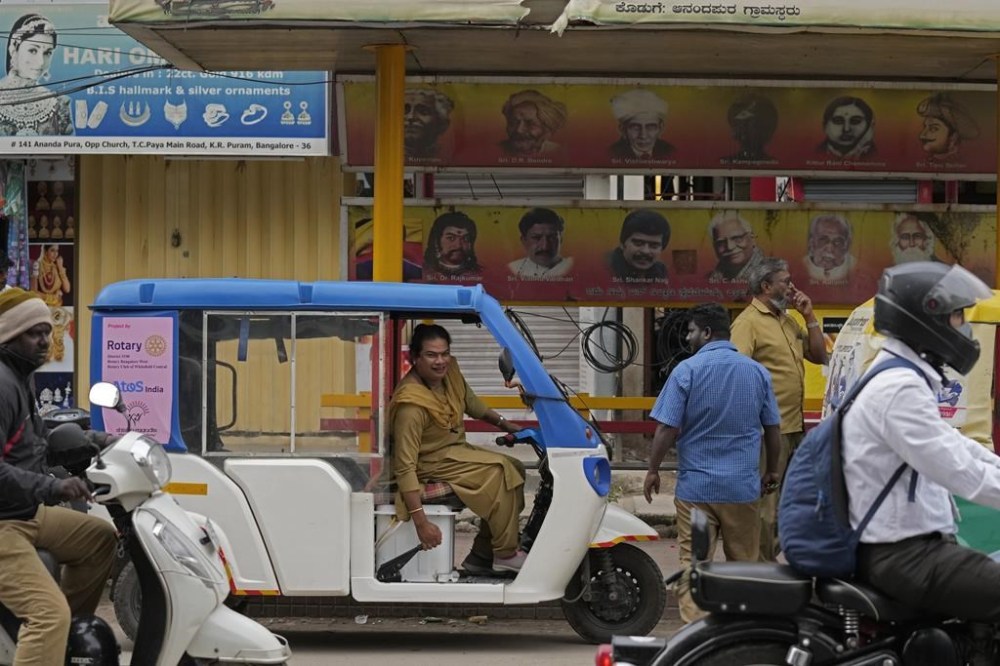
Preethi can be seen as a success story as India attempts to slash planet-warming emissions in a way that benefits people across economic backgrounds, known as a “just transition.” Electric vehicles sales are skyrocketing, and experts say it’s crucial that everyone benefits from these big moves toward clean energy. While EV donations are rare, analysts say electric vehicle companies and government programs can also lift up those with lower incomes, through training, jobs and affordable transport.
The charity that donated Preethi’s EV, Shishu Mandir, received donations to give a number of smaller electric vehicles to women and nonbinary people to use as a ride-hailing service.
The organization asked Preethi if she’d be interested and when she said she was, the team provided her training, got her the license and registered the electric rickshaw in her name.
“We wanted this program to have the twin benefits of reducing pollution while also empowering women and transgender people,” said C. Anand, the organization’s secretary.
Since March last year, the charity has donated 17 electric rickshaws and is preparing to donate five more within the next two months, as well as providing training and licenses to the people offered them.
“Upskilling of local communities to make them eligible for the jobs clean energy offers is crucial” for a just transition, said N.C. Thirumalai, sector head, strategic studies at the Bengaluru-based think tank Center for Study of Science, Technology and Policy.
He said federal job training plans, such as the Skill India program, can be pivoted to ready workers for clean energy jobs. People across the auto industry for example — from manufacturers to mechanics — have to be retrained. “If we don’t do this, we risk leaving many millions behind,” he said.
After Preethi completed her training, starting work brought a mix of fear and excitement. Those worries soon subsided after some positive initial experiences.
“I don’t remember much about the customers but the first few I ferried were all supportive,” said Preethi, adding that many of the customers said they were happy to see a trans person driving the electric rickshaw. She did have a few bad experiences, but said she “learned how to deal with these kind of men.”
Sticking with it paid off: Her new job means she can afford her own home, pay off debt and save every month for the first time in her life. Her customers benefit too, she said.
“I have regular customers who range from vegetable vendors to mothers in my neighborhood who prefer to send their daughters to schools and colleges with me,” said Preethi.
She now earns up to 2,000 rupees ($24) a day and has small overhead costs since she doesn’t have to pay for gas and there’s little maintenance. One charge lets her ride for more than 90 kilometers (56 miles), she said.
But “more than money, it is about the respect I get in society now,” Preethi said. “I am my own master. Work is hard but it provides steady returns.”
Helena Christina, 35, who lives in Bengaluru and is the sole breadwinner for a family of nine, also received an EV through a donation from Shishu Mandir. She fled an abusive marriage, and though she found some work cleaning people’s homes, she couldn’t earn enough to support her large family.
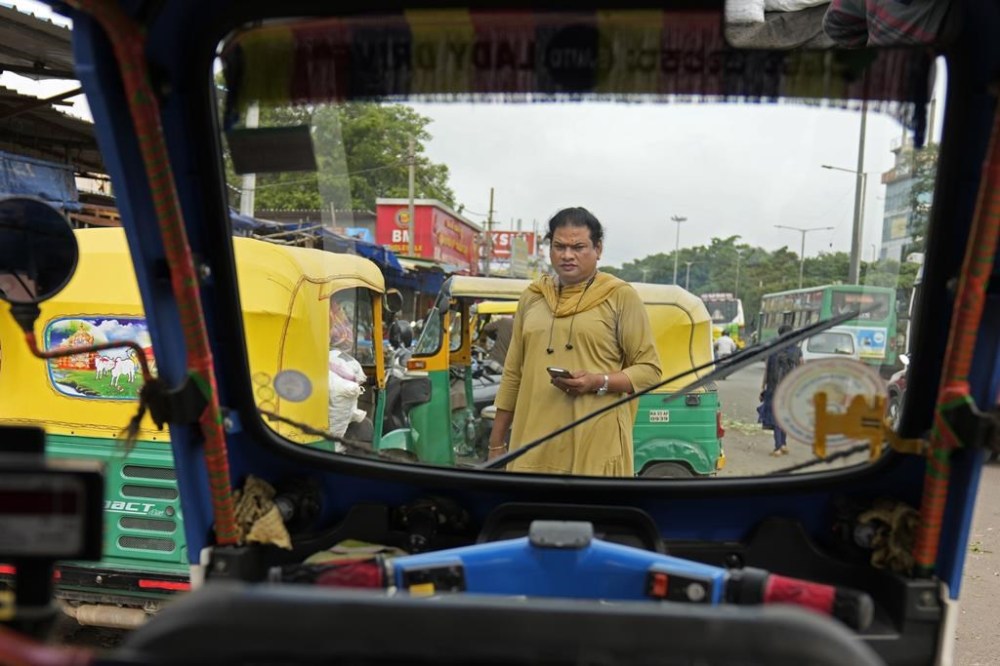
Christina said the electric rickshaw is the only thing standing between her family and extreme poverty. “I work more than 10 hours every day but I don’t mind since my children, parents and extended family depend on me,” she said.
Experts say charities play a very small role in a just transition, and Preethi’s and Christina’s experiences need to be replicated by large corporations and government programs.
“Everyone needs to be on board for the clean energy transition to benefit all Indians,” said Thirumalai. While India’s federal government programs and subsidies are playing a role in making EVs affordable, “the private sector can definitely do more so the benefit of the transition is more wide-reaching.”
He suggested companies invest in training for people living near their EV factories so they can be employed, and for firms to price EVs competitively so they’re affordable to more people.
Preethi said she wants to see more people take up electric vehicles, particularly other transgender women. Meanwhile, she’s hoping to be able to buy a larger electric vehicle in the future from the income she’s earned driving her rickshaw.

“I want to eventually buy an electric car and drive it as a taxi,” she said. “That’s my next goal.”
___
Follow Sibi Arasu on Twitter at @sibi123
___
Associated Press climate and environmental coverage receives support from several private foundations. See more about AP’s climate initiative here. The AP is solely responsible for all content.