Reshaped Death Valley park could take months to reopen after damage from Hilary
Advertisement
Read this article for free:
or
Already have an account? Log in here »
To continue reading, please subscribe:

Digital Subscription
One year of digital access for only $205*
- Enjoy unlimited reading on winnipegfreepress.com
- Read the E-Edition, our digital replica newspaper
- Access News Break, our award-winning app
- Play interactive puzzles
*First annual payment billed as $205.00 + GST for one year. This annual subscription will automatically renew at $233.00 + GST every 52 weeks (10% off the regular annual price of $259.35). Offer available to new and qualified returning subscribers only. Cancel any time.
To continue reading, please subscribe:
Add Free Press access to your Brandon Sun subscription for only an additional
$1 for the first 4 weeks*
- Enjoy unlimited reading on winnipegfreepress.com
- Read the E-Edition, our digital replica newspaper
- Access News Break, our award-winning app
- Play interactive puzzles
*Your next Brandon Sun subscription payment will increase by $1.00 and you will be charged $17.95 plus GST for four weeks. After four weeks, your payment will increase to $24.95 plus GST every four weeks.
Read unlimited articles for free today:
or
Already have an account? Log in here »
Hey there, time traveller!
This article was published 04/09/2023 (1124 days ago), so information in it may no longer be current.
DEATH VALLEY JUNCTION, Calif. (AP) — It’s unclear when Death Valley National Park will reopen to visitors after heavy rains from Tropical Storm Hilary forged new gullies and crumbled roadways at the site of one of the hottest places in the world, officials said.
The storm dumped a furious 2.2 inches (6 centimeters) of rain Aug. 20, roughly the amount of rainfall the park usually receives in a year. This year’s rainfall broke its previous record of 1.7 inches (4 centimeters) in one day, set in August of last year.
“Two inches of rain does not sound like a lot, but here, it really does stay on the surface,” Matthew Lamar, a park ranger, told the Los Angeles Times. “Two inches of rain here can have a dramatic impact.”
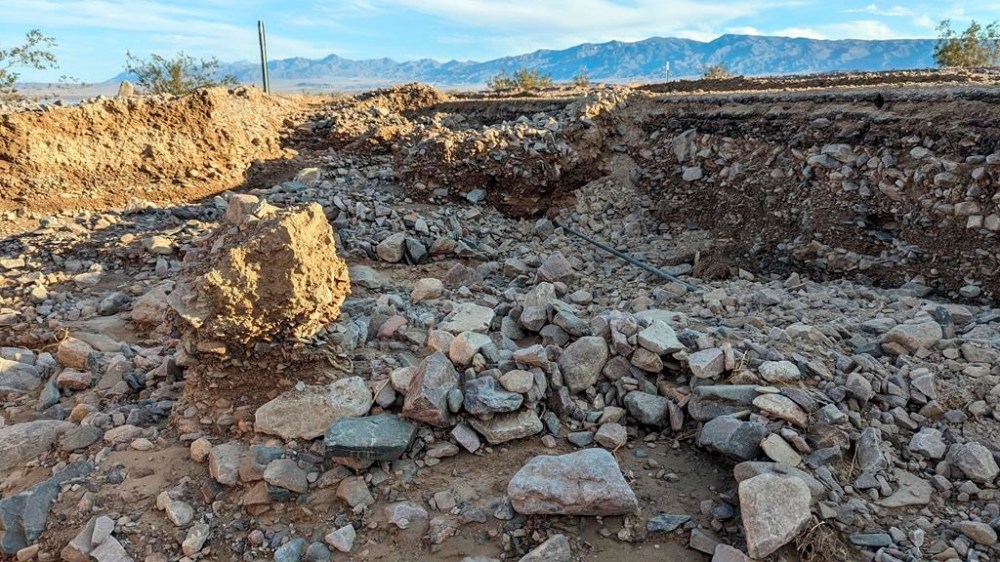
The park, which straddles eastern California and Nevada, holds the record for the hottest temperature recorded on the planet — 134 degrees Fahrenheit (57 degrees Celsius), reached in 1913.
Officials say it could be months before the park reopens. It has been closed since Hilary.
Matthew Lamar, a park ranger, told the Times that about 900 of the park’s nearly 1,400 miles (2,250 kilometers) of roads have been assessed.
Repair costs are estimated at $6 million, but only for one of the park’s main roads, State Route 190, and a small part of State Route 136.
“We don’t have a timeline yet,” park spokesperson Abby Wines told The Associated Press on Monday. “Caltrans has said they expect to fully open 190 within three months, but they often are able to open parts of it earlier.”
Some familiar sites survived the storm, including Scotty’s Castle, a popular visitor destination.
Young and adult endangered pupfish at Devils Hole cavern survived, although eggs were likely smothered by sediment, the park said on social media last month. Endangered Salt Creek pupfish also survived, the newspaper reported.
___
This story has been updated to remove an erroneous reference to Hilary being the first tropical storm to hit Southern California in 84 years. It has also been updated to correct the name of the person who detailed the the number of miles of the park’s roads that have been assessed. It was Matthew Lamar, a park ranger, not Christopher Andriessen, a spokesperson with the California Department of Transportation.