Invasive species report outlines costs, solutions for world governments
Advertisement
Read this article for free:
or
Already have an account? Log in here »
To continue reading, please subscribe:
Digital Subscription
One year of digital access for only $1.44 a week*
- Enjoy unlimited reading on winnipegfreepress.com
- Read the E-Edition, our digital replica newspaper
- Access News Break, our award-winning app
- Play interactive puzzles
*Billed as $5.77 plus GST every four weeks. After 52 weeks, price increases to the regular rate of $19.95 plus GST every four weeks. Offer available to new and qualified returning subscribers only. Cancel any time.
To continue reading, please subscribe:
Add Free Press access to your Brandon Sun subscription for only an additional
$1 for the first 4 weeks*
- Enjoy unlimited reading on winnipegfreepress.com
- Read the E-Edition, our digital replica newspaper
- Access News Break, our award-winning app
- Play interactive puzzles
*Your next Brandon Sun subscription payment will increase by $1.00 and you will be charged $17.95 plus GST for four weeks. After four weeks, your payment will increase to $24.95 plus GST every four weeks.
Read unlimited articles for free today:
or
Already have an account? Log in here »
Hey there, time traveller!
This article was published 05/09/2023 (1140 days ago), so information in it may no longer be current.
An international organization has produced a report on alien invasive species which says the global problem costs billions of dollars annually and is, in some cases, being worsened by climate change.
The executive summary of the report from the Intergovernmental Science-Policy Platform on Biodiversity and Ecosystem Services was approved over the weekend in Bonn, Germany, by the organization’s 143 member states.
It said that while 80 per cent of countries have targets related to managing invasive alien species in their national biodiversity plans, only 17 per cent have national laws or regulations specifically addressing these issues and about 45 per cent of all countries don’t invest in the management of biological invasions.
“I would certainly give Canada strong marks in terms of its overall effort but it might be time for a re-think,” said Peter Stoett, a faculty member of Ontario Tech University in Oshawa, Ont., who was one of the report’s three co-authors.
“Canada’s got a fairly solid reputation. Most provinces have an invasive species council, for example,” he said in an interview from Bonn.
The report, which took four years to complete, drew on the work of 80 scientists, other contributing authors and involved several consultations with Indigenous groups.
Overall, it said there are around 37,000 alien species that human activities have introduced to regions and biomes around the world, but only around 3,500 of those are considered harmful invasive, meaning they seriously threaten nature or nature’s contributions to people and quality of life.
The report found the global economic cost of invasive alien species exceeded $423 billion annually in 2019, with costs at least quadrupling every decade since 1970.
The report notes that invasive alien plants can interact with climate change, often resulting in more intense and frequent fires such as some of the devastating wildfires recently experienced in Canada and around the world. Those blazes, it found, release even more carbon dioxide into the atmosphere.
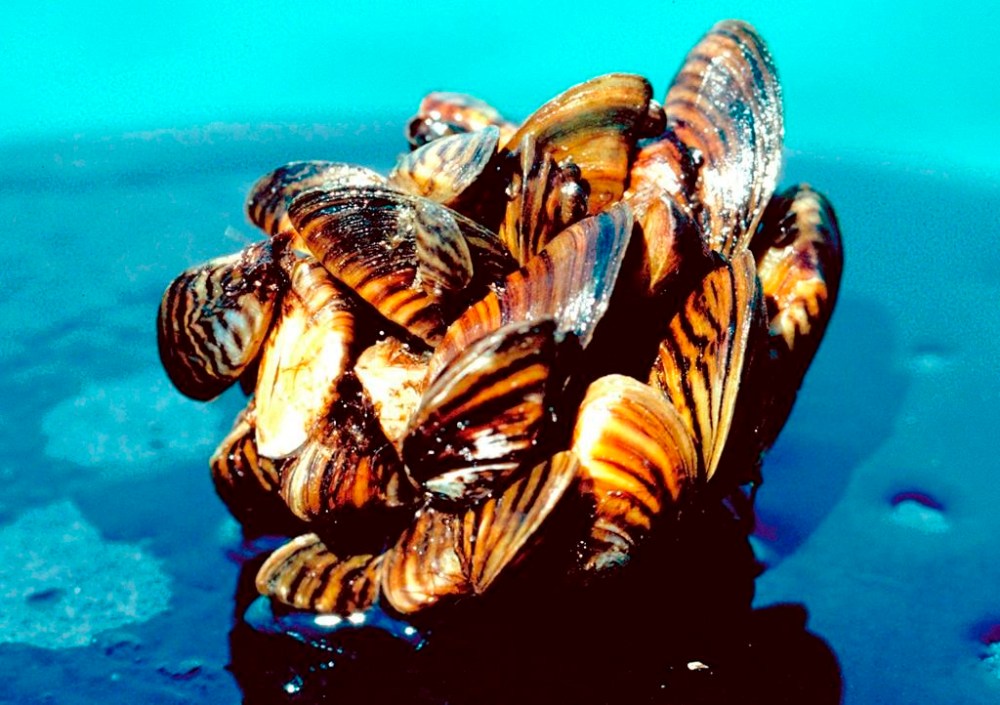
Stoett says zebra mussels in Canada’s Great Lakes have driven native mussel species to extinction and cost millions of dollars every year to control.
He says the emerald ash borer, an Asian beetle, has had a serious impact on ash trees in Quebec. That affects Canada’s Anishinaabe peoples, who use the malleable wood for making culturally relevant items.
“We’re concerned that the arctic is more and more susceptible to invasive species now with climate change as species make their way northwards,” said Stoett.
The report found Canada is itself a source of invasive alien species. The North American beaver, a beloved national symbol, is an environmental problem in South America where ecosystems struggle to deal with dammed rivers.
“For me, it points to the reciprocity of this. It’s not just species coming here. It’s species going out and affecting the rest of the world,” Stoett said.
Anne Larigauderie, executive director of IPBES, noted world governments agreed in December as part of the new Kunming-Montreal global biodiversity framework to reduce the introduction and establishment of priority invasive alien species by at least 50 per cent by 2030.
“The immediate urgency of invasive alien species, with extensive and growing harm to nature and people, makes this report so valuable and timely,” Larigauderie said in a news release.
Solutions in the report include suggestions to help governments deal with prevention and biosecurity at borders. It found eradication of invasive species has also worked in some locations, especially when their populations are small and slow-spreading in isolated ecosystems such as islands.
Getting co-ordination is key, Stoett said. Right now, invasive alien species are seen as problems for a country’s environment department, possibly extending into the agriculture department. But he said those departments also need to know what those responsible for forestry and transport are doing.
Cost can be a problem, too. Not every country can afford more customs or biosecurity agents at borders or programs to contain the spread of invasive species.
The entire report is about 3,000 pages and getting the executive summary approved by member countries wasn’t exactly easy, Stoett said. Negotiations with delegates spanned four days last week.
“We don’t tell governments what to do, but we tell them what they can do,” he said.
“If we can prevent these problems in the first place, that’s where we’re cost-effective.”
This report by The Canadian Press was first published Sept. 5, 2023.
— By Rob Drinkwater in Edmonton
Related Articles
Parks Canada hopes Clear Lake boat ban stems westward spread of invasive species — but not everyone is on board with the controversial decision

Advertisement Advertise With Us
Advertisement Advertise With Us