Low Mississippi River limits barges just as farmers want to move their crops downriver
Advertisement
Read this article for free:
or
Already have an account? Log in here »
To continue reading, please subscribe:

Digital Subscription
One year of digital access for only $205*
- Enjoy unlimited reading on winnipegfreepress.com
- Read the E-Edition, our digital replica newspaper
- Access News Break, our award-winning app
- Play interactive puzzles
*First annual payment billed as $205.00 + GST for one year. This annual subscription will automatically renew at $233.00 + GST every 52 weeks (10% off the regular annual price of $259.35). Offer available to new and qualified returning subscribers only. Cancel any time.
To continue reading, please subscribe:
Add Free Press access to your Brandon Sun subscription for only an additional
$1 for the first 4 weeks*
- Enjoy unlimited reading on winnipegfreepress.com
- Read the E-Edition, our digital replica newspaper
- Access News Break, our award-winning app
- Play interactive puzzles
*Your next Brandon Sun subscription payment will increase by $1.00 and you will be charged $17.95 plus GST for four weeks. After four weeks, your payment will increase to $24.95 plus GST every four weeks.
Read unlimited articles for free today:
or
Already have an account? Log in here »
Hey there, time traveller!
This article was published 17/09/2023 (1115 days ago), so information in it may no longer be current.
DES MOINES, Iowa (AP) — A long stretch of hot, dry weather has left the Mississippi River so low that barge companies are reducing their loads just as Midwest farmers are preparing to harvest crops and send tons of corn and soybeans downriver to the Gulf of Mexico.
The transport restrictions are a headache for barge companies, but even more worrisome for thousands of farmers who have watched drought scorch their fields for much of the summer. Now they will face higher prices to transport what remains of their crops.
Farmer Bruce Peterson, who grows corn and soybeans in southeastern Minnesota, chuckled wryly that the dry weather had withered his family’s crop so extensively they won’t need to worry so much about the high cost of transporting the goods downriver.
“We haven’t had rain here for several weeks so our crop size is shrinking,” Peterson said. “Unfortunately, that has taken care of part of the issue.”
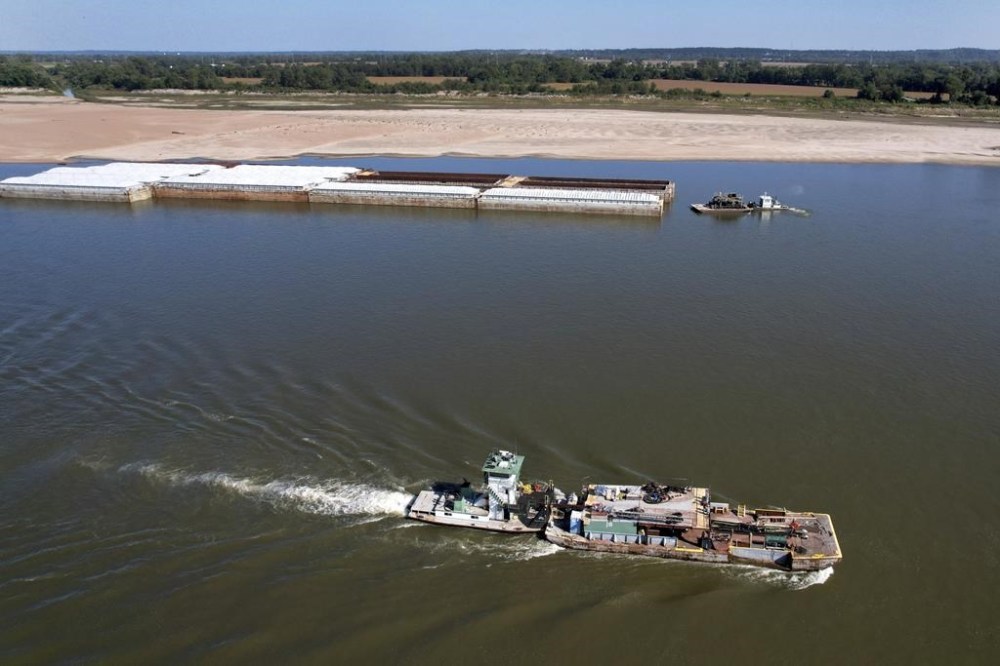
About 60% of U.S. grain exports are taken by barge down the Mississippi to New Orleans, where the corn, soybeans and wheat is stored and ultimately transferred to other ships. It’s usually an inexpensive, efficient way to transport crops, as a typical group of 15 barges lashed together carries as much cargo as about 1,000 trucks.
But as river levels drop, that cost has soared. The cargo rate from St. Louis southward is now up 77% above the three-year average.
Prices have risen because the river south of St. Louis does not remain consistently deep enough now to accommodate typical barges, forcing companies to load less into each vessel and string fewer barges together.
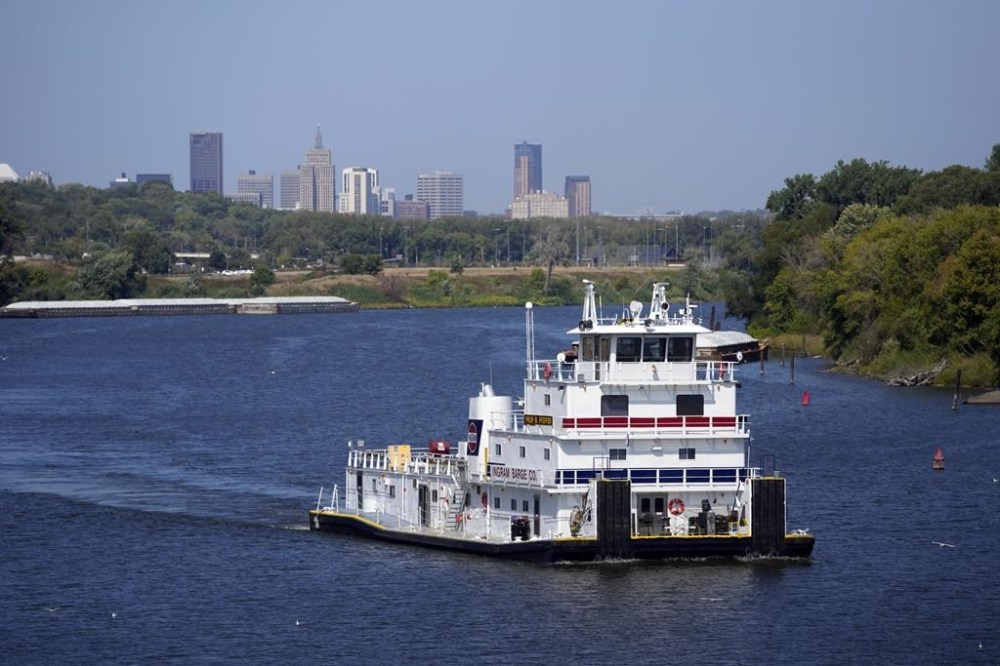
North of St. Louis, a series of locks and dams guarantees a 9-foot-deep (2.7-meter) channel as far north as Minneapolis-St. Paul. But that’s not the case in the lower Mississippi.
“We’re keeping things moving but could use some rain, some help from Mother Nature,” said Merritt Lane, president of Canal Barge Company of New Orleans.
Canal Barge, which works much of the Mississippi as well as the Illinois and Ohio rivers, has had to lighten loads so barges ride higher in the water. The company also can’t link as many barges together because the shipping lane is narrower, Lane said.
A narrowed shipping lane also means barges from different companies must squeeze into limited space, forcing backups and delays.
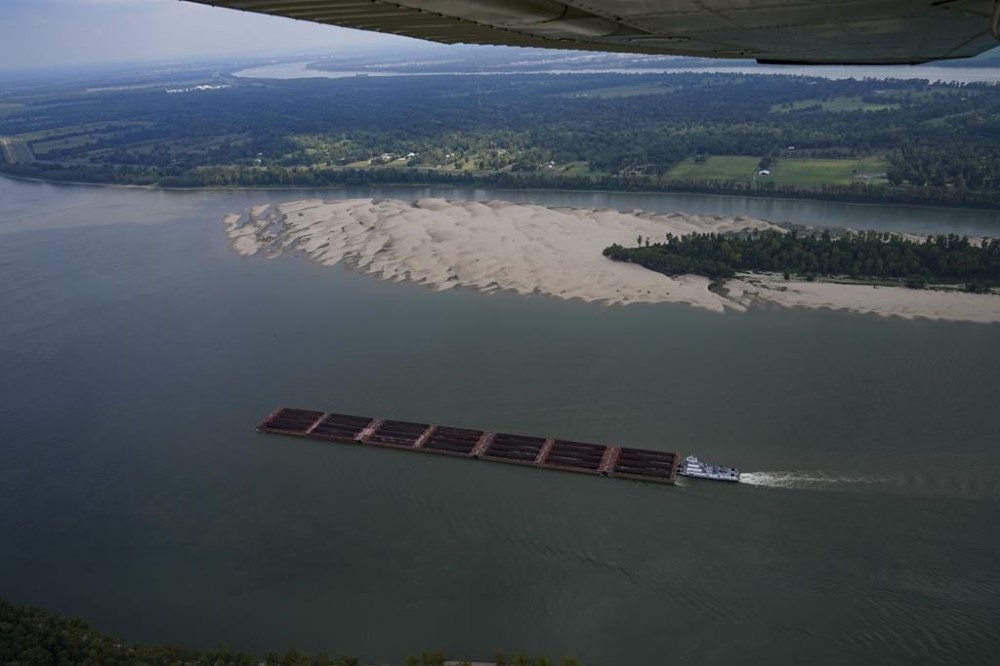
This is the second-straight year drought has caused the Mississippi to drop to near-record lows. With no significant rain in the forecast, it’s likely to keep falling.
The shallow river is especially striking given the height of the river just months ago. A huge snowpack in northern Minnesota and Wisconsin quickly melted, forcing riverfront communities such as Davenport, Iowa, and Savanna, Illinois, to hurriedly erect barriers to stay dry in late April and early May.
Though floodwaters quickly receded, they left behind mountains of underwater sand, forcing the Corps of Engineers to “dredge like crazy” to clear out a shipping channel, said Tom Heinold, who commands the Corps’ Rock Island district spanning 312 miles (500 kilometers) of the Mississippi from northern Iowa south to Missouri.
“After the flood came through this spring it was a touchy situation,” Heinold said. “In May and June we were jumping very quickly from place to place to try to get pilot channels open as the water was dropping.”
Northern stretches of the river are now in good shape, but dredging continues south of St. Louis, Heinold said.
Months of dry and warm weather have hit the Midwest hard, damaging crops in much of the region west of the Mississippi River. In Kansas, 40% of the soybean crop was reported in poor or very poor condition, with the same conditions for 40% of the corn crop in Missouri.
The Midwest grows most of the nation’s corn and soybeans. The percentage rated good to excellent nationwide was a little more than 50%, the worst rating in more than a decade.
Then there is the higher cost of shipping crops downriver.

Mike Steenhoek, executive director of the Soy Transportation Coalition, said many Midwest farmers have multiple transport options, among them trucking and shipment by train for use by nearby ethanol and biodiesel plants and for processing into animal feed. But for grain exported from the U.S., the higher cost of shipping down the Mississippi hurts.
“It’s the way that farmers in the middle of the United States connect with the international marketplace,” said Steenhoek, whose group advocates for effective crop transportation systems. “It allows these farmers to have a very efficient way of moving their products a long distance in a very economical manner.”
Rising barge costs eating directly into farmers’ profits come at a time when American soybean and corn exports face increased international competition, he said.
From his work site beside the Mississippi River in Red Wing, Minnesota, Jim Larson watches as the river rises and falls through the seasons. He has seen plenty of droughts and floods during 30 years in the business and said it forces everyone who relies on the river to remain nimble.
“Some years you have flood and some years you have drought and sometimes you have them both in the same year,” said Larson, manager of Red Wing Grain, a storage and grain-loading operation. “It’s crazy and it seems like lately we’re having more of both, and so you have to be adaptable and change with the situation that is given to you. Kind of keeps you on your toes.”