Banning plastic waste exports won’t solve the world’s plastic trash woes: Guilbeault
Advertisement
Read this article for free:
or
Already have an account? Log in here »
To continue reading, please subscribe:

Digital Subscription
One year of digital access for only $205*
- Enjoy unlimited reading on winnipegfreepress.com
- Read the E-Edition, our digital replica newspaper
- Access News Break, our award-winning app
- Play interactive puzzles
*First annual payment billed as $205.00 + GST for one year. This annual subscription will automatically renew at $233.00 + GST every 52 weeks (10% off the regular annual price of $259.35). Offer available to new and qualified returning subscribers only. Cancel any time.
To continue reading, please subscribe:
Add Free Press access to your Brandon Sun subscription for only an additional
$1 for the first 4 weeks*
- Enjoy unlimited reading on winnipegfreepress.com
- Read the E-Edition, our digital replica newspaper
- Access News Break, our award-winning app
- Play interactive puzzles
*Your next Brandon Sun subscription payment will increase by $1.00 and you will be charged $17.95 plus GST for four weeks. After four weeks, your payment will increase to $24.95 plus GST every four weeks.
Read unlimited articles for free today:
or
Already have an account? Log in here »
Hey there, time traveller!
This article was published 20/10/2023 (1082 days ago), so information in it may no longer be current.
OTTAWA – The mountains of trash from foreign countries seen piling up around homes and temples in Myanmar are renewing calls for Canada and other wealthy countries to deal with their own plastic garbage at home, instead of exporting waste — and the problem — to the developing world.
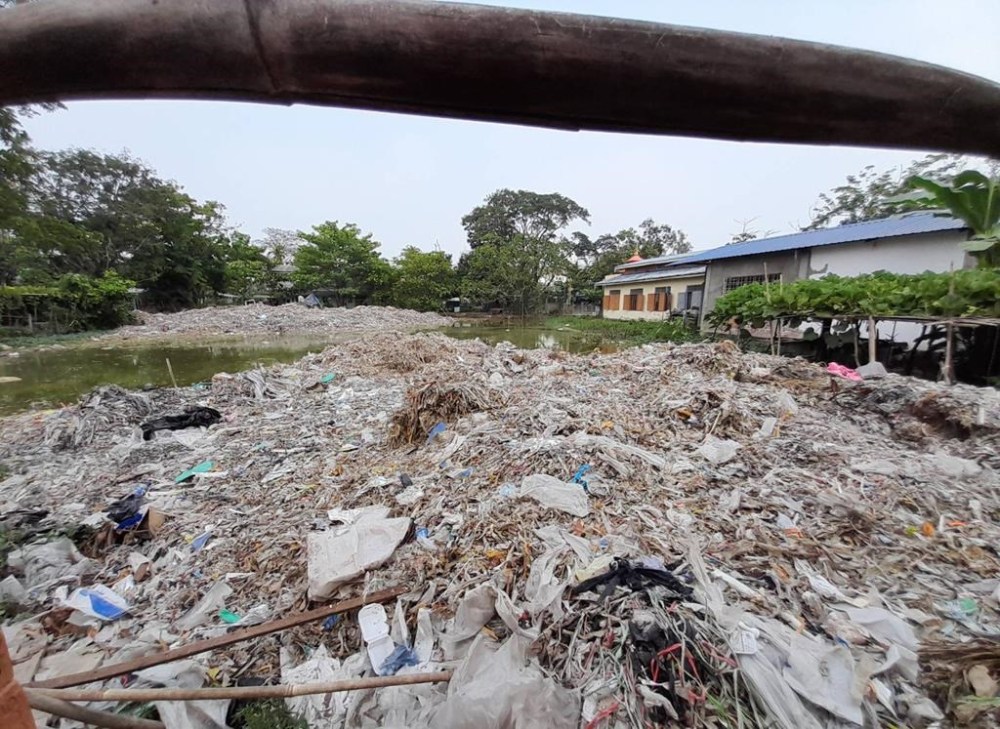
While there is some local trash in the heaps of plastic waste all over the township of Shwepyithar, in the north of Yangon, there is clear evidence of plastic packaging from foreign brands there too, including from Canada.
Kathleen Ruff, a human rights advocate from British Columbia, said more than 100 countries have now agreed to ban the export of plastic waste entirely. Canada has not.
“Why would Canada fight for the right to be able to export, (to) dump waste in developing countries?” asked Ruff. “It makes no sense.”
Earlier this year, journalists from Frontier Myanmar, an English-language magazine published in Yangon, made several visits to Shwepyithar to document the trash problem.
Reporters Allegra Mendelson and Rachel Moon shared their observations and images with The Canadian Press as part of a partnership with investigative newsroom Lighthouse Reports, and media outlets in Thailand, Poland, the United Kingdom and Belgium.
Among the plastic remnants they can identify were Canadian brands of pasta and yogurt. On another pile they found a plastic bag that once held PVC plumbing parts, labelled as being made in Canada at a factory in Milverton, Ont.
None of the brands are sold in Myanmar itself.
Myanmar, a country of about 54 million, is bearing a bigger brunt of foreign trash in recent years as other countries in Asia, including neighbouring China and Thailand, ban or severely limit any imported plastic waste.
Myanmar has also banned most of it, but a 2021 military coup in that country has meant limited enforcement of that ban. The military rule has also left local citizens powerless to prevent the trash from being dumped on their doorsteps.
The trash in some places in Shwepyithar is so tall it reaches the top of single-storey homes. It lines ponds and covers empty lots that were supposed to become parks and playgrounds. It fills alleyways behind homes in an informal settlement, where small structures with fabric walls sit atop bamboo poles to keep them out of the standing water below.
One photo shown to The Canadian Press shows small children in that settlement wading through knee-deep water that is lined on either side with faded grey bits of plastic, remnants of what appear to be rubber strips and a few bright pops of colour from plastic that once held together cans from a foreign brand of soda, or the wrapper of a chocolate bar.
Last year, Canada exported 183 million kilograms of plastic waste. On paper, 90 per cent of it went to the United States, and about 4,800 kilograms went to Myanmar. But Canada does not track most of it and cannot say what happened once the plastic left its shores.
Ruff is among those demanding Canada agree to an amendment to the Basel Convention on hazardous waste that would ban outright the exporting of hazardous trash to developing countries. This would include most plastics, even those intended for recycling.
Canada has never agreed to the amendment, and still has no intention of doing so.
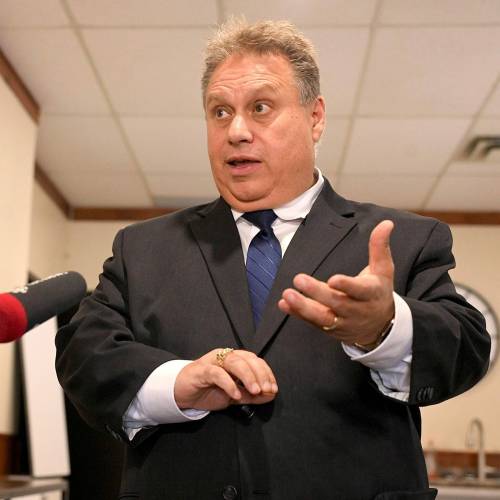
Environment Minister Steven Guilbeault said in a recent interview that reducing plastic waste requires creating a circular economy for its recycling and reuse. He said banning exports would harm that.
“If we want to have a circular economy which would include plastic, it doesn’t make a lot of sense to put trade barriers or physical barriers to the movement of this good,” he said. “But I do think we need to do a better job when it comes to ensuring that what is being shipped around is plastics that can be recycled.”
The Basel Convention, named for the Swiss city where it was first negotiated, was developed in the 1980s following several high-profile cases of rich countries off-loading their hazardous waste onto poorer countries, including a ship that attempted to dump incinerator ash from Philadelphia onto a beach in Haiti. It currently has 193 member countries.
Canada ratified the convention in 1992. Under Basel, OECD member nations must get prior informed consent from developing countries before shipping hazardous waste to them. The United States, which has never joined the convention, is the notable exception.
In 2021, Canada agreed to an amendment that added some plastic waste to the list of products requiring prior and informed consent. But that does not include plastic that is claimed to be clean, sorted and intended for recycling. And Canada’s plastic exports have gone up more than 30 per cent in the last four years.
In 2019, Canada exported about 140 million kilograms. That rose to 150 million kilograms in 2020, 170 million in 2021 and 183 million kilograms in 2022.
New Democrat MP Gord Johns, who successfully pushed a motion in Parliament five years ago calling for a national strategy to address plastic pollution, said it is appalling that Canada is not among the 103 Basel countries that agreed to stop exporting plastic waste entirely.
“We need to be a global leader instead of creating plastic slums where children are playing,” Johns said. “That’s absolutely unethical and it needs to stop, full stop.”
Johns said a major problem with the Basel Convention is there is simply nobody enforcing it.
Just before Canada agreed to add plastic waste to the treaty, it signed a new arrangement with the United States, outlining how the two countries can export plastic waste to each other. Now more than 90 per cent of Canada’s plastic exports — 167 million kilograms in 2022 alone — goes to the United States. Canada cannot say what happened to any of it.
Johns and Ruff both consider the U.S. agreement to be a loophole that should be considered illegal under the international environment treaty.
Ruff said Canada’s refusal to ban plastic waste exports entirely is extremely disappointing. She said Canada should not claim that it is sending waste only to places that can handle it better than it can. How can a rich country like Canada argue that developing countries can handle our waste, when we can’t, she asked.
“It’s ridiculous,” she said. “It’s ludicrous. It’s obviously untrue.”
Canada has a very limited recycling industry. A 2019 report documented fewer than a dozen domestic recycling companies, and that less than one-tenth of plastic waste produced in Canada is ultimately recycled. Most often, recycling costs more than making new plastics, particularly for packaging, and the market for using recycled plastic is limited.
Canada is trying to change that by introducing new standards requiring minimum amounts of recycled content in packaging that will create a bigger market. But Ruff said if Canada could not export its trash problem, it would have already found a way to handle it better here.
“When you deal with your own waste, it’s a real incentive to cut back on your waste, right? Because it doesn’t disappear in the middle of the night on some ship off to some other developing country so we can just forget about it,” she said.
Ruff has been pushing Canada to stop exporting plastic waste for years, after having been pulled in by environment groups in the Philippines nearly a decade ago. They were seeking help to get Canada to take back dozens of shipping containers of Canadian trash, falsely labelled as plastics for recycling, that had been sent to their country.
That incident, which took more than six years to resolve, led to an international diplomatic row that saw Manila temporarily recall its ambassador from Canada. That prompted the federal government in 2016 to change its regulations requiring permits for the export of some plastic waste. Those regulations were updated again in 2021, when Canada agreed to add plastic waste to the Basel Convention.
But Canada’s agreement and regulations on plastic waste extend only so far. If the waste is considered to be clean and sorted, destined for a recycling factory overseas, no export permits are required, and it is not tracked to see if it is actually recycled on the other end.
It is not clear exactly how Canadian plastic waste came to end up in the mountains of garbage polluting the streets of Shwepyithar. Canada has issued no export permits to send waste to Myanmar, or to Thailand, from where much of the foreign waste in Myanmar is imported.
Trade data does show Canada exported almost 80,000 kilograms of plastic waste to Myanmar between 2020 and 2022 and nearly 2.7 million kilograms to Thailand. Without permits, none of that waste would be tracked to see what happened to it.
Guilbeault also acknowledges that claims about plastic being clean and sorted for recycling are not always accurate.
“I think that, by and large, companies in Canada are responsible from that point of view and if they say they’re exporting plastics that are recyclable that’s true,” he said. “But we’ve seen, unfortunately, instances where it’s not and I think we need we need to do a better job of enforcing those rules in Canada. And the department and I are looking at ways to do that.”
Guilbeault said more than a year ago he was disturbed by Canada’s lack of a way to track waste exports to ensure proper disposal or recycling at the other end. He said in the recent interview that the Liberal government has still not figured out how to fix that, but said it could come in another update to the Canadian Environmental Protection Act.
That law was updated earlier this year for the first time in two decades. Canada also recently updated CEPA to include plastic as one of the substances considered to be toxic, and is using that designation to ban some single-use plastics such as straws, grocery bags and takeout containers. Canada’s goal is to produce no plastic that isn’t reused or recycled by 2030.
A ban on exports might not be the only solution. The European Union has agreed to the amendment that would phase in a full ban and yet much of the foreign plastic waste discovered in Myanmar appears to have originated there.
Interpol has documented a significant rise in the illegal trade of plastic waste, because the lack of enforcement to inspect shipping containers allows a lot of waste to sneak through undetected.
Guilbeault, who was an environmental activist before becoming a Liberal MP in 2019, is personally trying to play a leadership role, alongside Canada, to negotiate a new global plastics treaty that, in part, would cut down on plastic waste by encouraging or even requiring recycling and reuse.
Some, including French President Emmanuel Macron, are advocating for it to include a reduction in plastic production, though Guilbeault has expressed reservations at that.
Canada is hosting the next round of talks in June.

Guilbeault does not think signs of Canadian waste in Myanmar undermine his government’s leadership on the plastics issue, though he acknowledged that “the optics aren’t great.”
“Of course we need to get our house in order in Canada,” he said.
“But I think it just shows the necessity of having this international plastic treaty we’re working on to ensure that everyone around the world is doing what they need to do to prevent and eliminate this plastic pollution from happening,” he said.
“We know it won’t happen overnight, but we have some pretty ambitious collective goals and I think by working together we can do this.”
This report by The Canadian Press was first published Oct. 20, 2023.