Born after Superstorm Sandy’s destruction, 2 big flood control projects get underway in New Jersey
Advertisement
Read this article for free:
or
Already have an account? Log in here »
To continue reading, please subscribe:

Digital Subscription
One year of digital access for only $205*
- Enjoy unlimited reading on winnipegfreepress.com
- Read the E-Edition, our digital replica newspaper
- Access News Break, our award-winning app
- Play interactive puzzles
*First annual payment billed as $205.00 + GST for one year. This annual subscription will automatically renew at $233.00 + GST every 52 weeks (10% off the regular annual price of $259.35). Offer available to new and qualified returning subscribers only. Cancel any time.
To continue reading, please subscribe:
Add Free Press access to your Brandon Sun subscription for only an additional
$1 for the first 4 weeks*
- Enjoy unlimited reading on winnipegfreepress.com
- Read the E-Edition, our digital replica newspaper
- Access News Break, our award-winning app
- Play interactive puzzles
*Your next Brandon Sun subscription payment will increase by $1.00 and you will be charged $17.95 plus GST for four weeks. After four weeks, your payment will increase to $24.95 plus GST every four weeks.
Read unlimited articles for free today:
or
Already have an account? Log in here »
Hey there, time traveller!
This article was published 24/10/2023 (1074 days ago), so information in it may no longer be current.
HOBOKEN, N.J. (AP) — A decade after they were first envisioned in the aftermath of Superstorm Sandy ’s destruction, two of the largest flood control projects designed to protect the densely populated cities of New Jersey that lie just outside New York City finally got underway Wednesday.
A project in Hoboken, which was inundated by flooding during the 2012 storm, and another in the densely populated Meadowlands region, which also saw catastrophic flooding, kicked off. The projects will cost nearly $298 million and are designed to protect some of the region’s most vulnerable communities.
Both projects were formulated by the group Rebuild By Design, which was initiated by the U.S. Department of Housing and Urban Development in 2013, and New Jersey environmental officials. Rebuild By Design looked at ways to reduce flood risk and increase resiliency in New Jersey, New York and Connecticut, and it launched a series of projects that are in various phases of planning or construction.
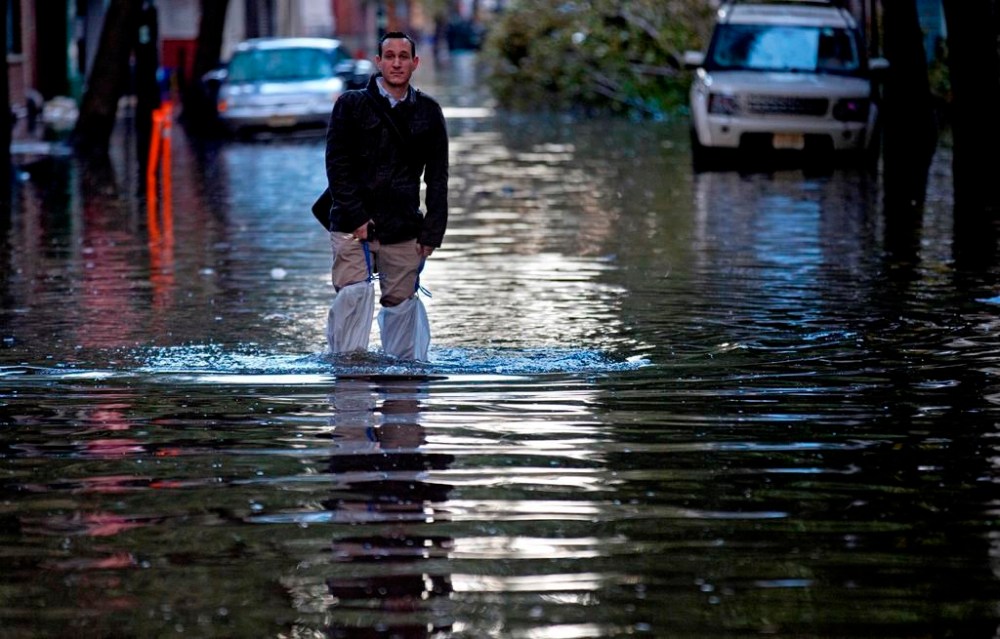
“Eleven years ago, Superstorm Sandy pounded this community,” said Shawn LaTourette, New Jersey’s environmental protection commissioner. He noted that properties were under water for prolonged periods and there were deaths in the region attributable to the storm.
“That experience was a wake-up call in New Jersey that we need to invest more deeply to build our resilience to these risks,” he said.
Former Hoboken Mayor Dawn Zimmer, who was in office when Sandy hit on Oct. 29, 2012, said “we realize how lucky we are that we have not had a major storm surge event in 11 years.”
“It’s not a matter of whether the next storm will hit,” she said. “It’s a matter of when.”
RBD Hudson River is by far the larger of the two undertakings, costing $215 million. It calls for building 9,000 linear feet (about 1.7 miles or 2.7 kilometers) of flood walls, installation of flood gates and construction of berms and levees. Most of the work will be done in Hoboken, but parts will extend to protect areas of Jersey City and Weehawken, which also sit along the Hudson Riverfront across from Manhattan.
Ravi Bhalla, the current Hoboken mayor, said that when the current project is completed in a few years, nearly 80% of the city will be protected by some form of storm barrier.
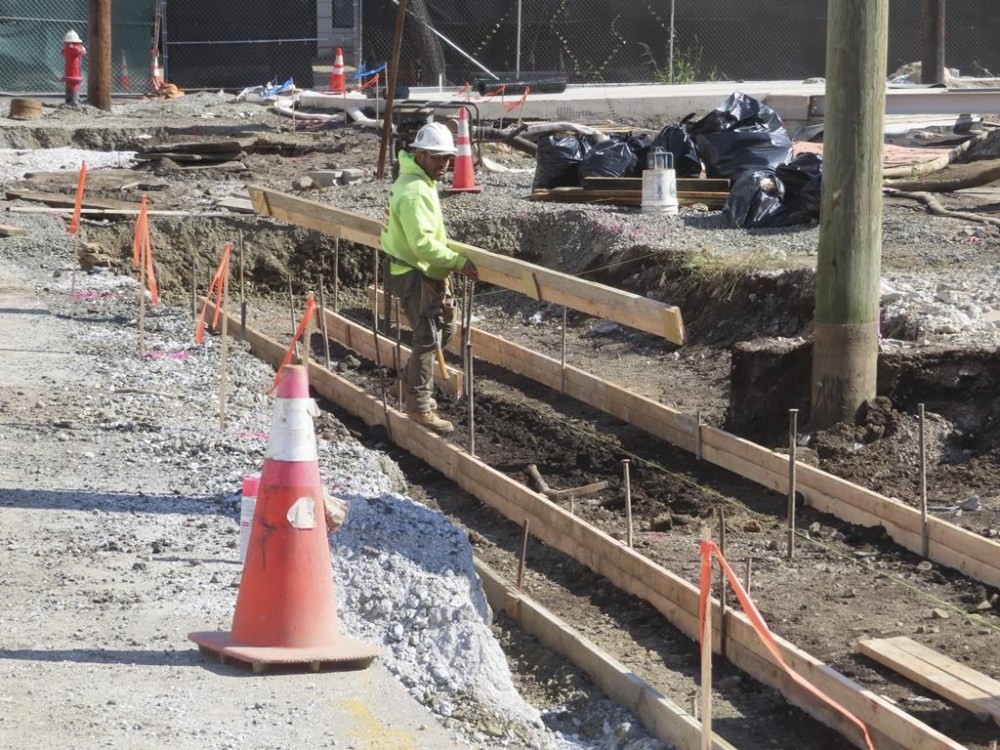
The RBD Meadowlands project will add a high-power pumping station capable of moving 50 cubic feet (1.4 cubic meters) of water per second in Little Ferry, a flood-prone community along the Hackensack River.
It also will add another new pumping station capable of moving 10 times that much water on a waterway in Carlstadt and Moonachie. Channel improvements also will be made there.
Sandy hit the nation’s most populous metro area on Oct. 29, 2012. It swamped coastline communities, knocking out power, flooding transit systems and setting neighborhoods ablaze. It’s blamed for 182 deaths, including 12 in New Jersey and 48 in New York, and caused tens of billions of dollars worth of damage, including $36.8 billion in New Jersey and $32.8 billion in New York.
Chester cited numerous projects already completed in Hoboken as part of the post-Sandy flood-proofing efforts. They include planting more grass, trees and vegetation in urban areas to absorb rainfall and allow less runoff to flood streets and storm sewers.

Hoboken has already built three so-called “resiliency parks” in which green space is designed to absorb water, while runoff is collected in underground storage tanks and slowly released after a storm has passed.
Amy Chester, managing director of Rebuild By Design, said recent heavy rains that caused massive flooding in New York City did not cause similar chaos in Hoboken, due in part to the resiliency work.

And as big as they are, the two projects starting Wednesday pale in comparison to huge flood control efforts being contemplated by the federal government. They include a $52 billion plan to build movable barriers and gates across bays, rivers and other waterways in New York and New Jersey, and a $16 billion plan to address back-bay flooding in New Jersey by building movable storm gates at inlets and across bays. There’s also discussion of elevating 19,000 buildings near waterways in many parts of the state.
___
Follow Wayne Parry on X, formerly known as Twitter, at https://twitter.com/WayneParryAC.