

Iceland evacuates town and raises aviation alert as concerns rise a volcano may erupt
Advertisement
Read this article for free:
or
Already have an account? Log in here »
To continue reading, please subscribe:

Digital Subscription
One year of digital access for only $205*
- Enjoy unlimited reading on winnipegfreepress.com
- Read the E-Edition, our digital replica newspaper
- Access News Break, our award-winning app
- Play interactive puzzles
*First annual payment billed as $205.00 + GST for one year. This annual subscription will automatically renew at $233.00 + GST every 52 weeks (10% off the regular annual price of $259.35). Offer available to new and qualified returning subscribers only. Cancel any time.
To continue reading, please subscribe:
Add Free Press access to your Brandon Sun subscription for only an additional
$1 for the first 4 weeks*
- Enjoy unlimited reading on winnipegfreepress.com
- Read the E-Edition, our digital replica newspaper
- Access News Break, our award-winning app
- Play interactive puzzles
*Your next Brandon Sun subscription payment will increase by $1.00 and you will be charged $17.95 plus GST for four weeks. After four weeks, your payment will increase to $24.95 plus GST every four weeks.
Read unlimited articles for free today:
or
Already have an account? Log in here »
Hey there, time traveller!
This article was published 11/11/2023 (1068 days ago), so information in it may no longer be current.
LONDON (AP) — Residents of a fishing town in southwestern Iceland left their homes Saturday after increasing concern about a potential volcanic eruption caused civil defense authorities to declare a state of emergency in the region.
Police decided to evacuate Grindavik after recent seismic activity in the area moved south toward the town and monitoring indicated that a corridor of magma, or semi-molten rock, now extends under the community, Iceland’s Meteorological Office said. The town of 3,400 is on the Reykjanes Peninsula, about 50 kilometers (31 miles) southwest of the capital, Reykjavik.
“At this stage, it is not possible to determine exactly whether and where magma might reach the surface,” the Meteorological Office said.
Authorities also raised their aviation alert to orange, indicating an increased risk of a volcanic eruption. Volcanic eruptions pose a serious hazard to aviation because they can spew highly abrasive ash high into the atmosphere, where it can cause jet engines to fail, damage flight control systems and reduce visibility.
A major eruption in Iceland in 2010 caused widespread disruption to air travel between Europe and North America, costing airlines an estimated $3 billion as they canceled more than 100,000 flights.
The evacuation comes after the region was shaken by hundreds of small earthquakes every day for more than two weeks as scientists monitor a buildup of magma some 5 kilometers (3.1 miles) underground.
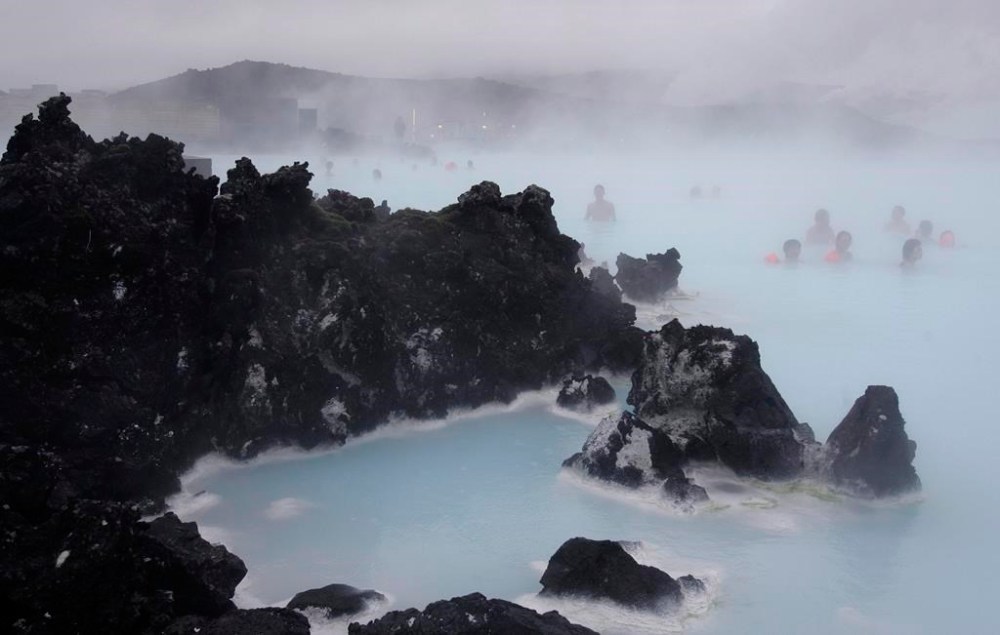
Concern about a possible eruption increased in the early hours of Thursday when a magnitude 4.8 earthquake hit the area, forcing the internationally known Blue Lagoon geothermal resort to close temporarily.
The seismic activity started in an area north of Grindavik where there is a network of 2,000-year-old craters, geology professor Pall Einarrson, told Iceland’s RUV. The magma corridor is about 10 kilometers (6.2 miles) long and spreading, he said.
“The biggest earthquakes originated there, under this old series of craters, but since then it (the magma corridor) has been getting longer, went under the urban area in Grindavík and is heading even further and towards the sea,” he said.





