Leaked memo reveals mooted changes to EU sustainability law critics say would make it unenforceable
Advertisement
Read this article for free:
or
Already have an account? Log in here »
To continue reading, please subscribe:

Digital Subscription
One year of digital access for only $205*
- Enjoy unlimited reading on winnipegfreepress.com
- Read the E-Edition, our digital replica newspaper
- Access News Break, our award-winning app
- Play interactive puzzles
*First annual payment billed as $205.00 + GST for one year. This annual subscription will automatically renew at $233.00 + GST every 52 weeks (10% off the regular annual price of $259.35). Offer available to new and qualified returning subscribers only. Cancel any time.
To continue reading, please subscribe:
Add Free Press access to your Brandon Sun subscription for only an additional
$1 for the first 4 weeks*
- Enjoy unlimited reading on winnipegfreepress.com
- Read the E-Edition, our digital replica newspaper
- Access News Break, our award-winning app
- Play interactive puzzles
*Your next Brandon Sun subscription payment will increase by $1.00 and you will be charged $17.95 plus GST for four weeks. After four weeks, your payment will increase to $24.95 plus GST every four weeks.
Read unlimited articles for free today:
or
Already have an account? Log in here »
Hey there, time traveller!
This article was published 14/11/2023 (1054 days ago), so information in it may no longer be current.
LONDON (AP) — A flagship EU law intended to push European companies toward net zero faces being seriously weakened by member states, a confidential document passed to The Associated Press reveals, with firms seemingly no longer forced to implement Paris Agreement goals.
The Corporate Sustainability Due Diligence Directive was designed to make companies eliminate environmental and human rights violations throughout all areas of their business. The legislation was meant to ensure firms’ operations were aligned with a global rise in temperatures of no more than 1.5 degrees Celsius (2.7 Fahrenheit).
But a Nov. 9 briefing obtained by The AP details a watered-down proposal that would drop the entire financial sector from the initial law.
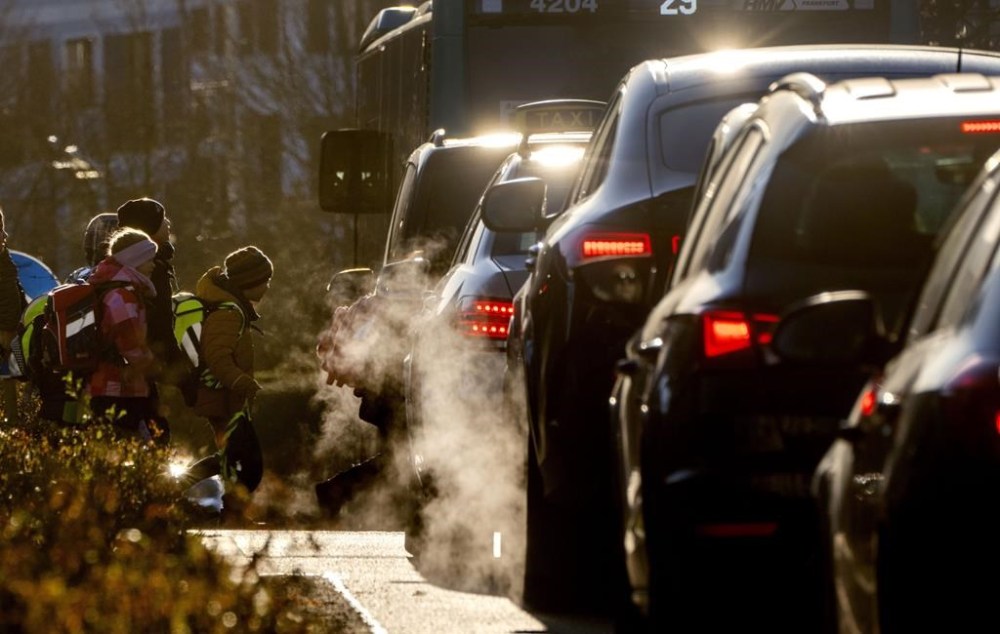
Banks and insurers are among Europe’s biggest contributors to global warming, by financing or insuring new oil and gas projects, or agribusinesses that chop down tropical rainforests. Nonprofits also warn the new proposal would mean firms merely need to have plans to hit low carbon targets, not actually deliver them – a recipe for greenwashing.
When it was unveiled, environmentalists hailed the law. But there’s currently a standoff on the final text between the European Parliament, which wants tough legislation, and the Council of the European Union, formed of ministers from all 27 member countries.
Many of the latter want less onerous provisions, worried about the impact of stringent regulation on their economies.
Spain currently holds the council’s presidency, and is trying to get all the member states to agree on their desired version of the law. Its attempt at breaking the impasse was set out in the confidential briefing.
The proposed rules on the financial sector had led to “difficult problems to overcome in working out a reasonable landing zone” with the European Parliament, it said. As a solution, “the Presidency proposes … a possible exclusion of the financial sector which would delay the extension to the financial sector to a later stage.”
This came as a shock to campaigners, who warn if it’s kicked into the long grass, the inclusion of finance may never happen. The next European elections are due in June 2024, and many believe after that the chance to add to it will be gone.
As part of its plan to become climate neutral by 2050, the European Union has adopted a wide range of measures, from reducing energy consumption to sharply cutting transportation emissions and reforming the EU’s trading system for greenhouse gases. But with the elections looming, some leaders and lawmakers are concerned about antagonizing voters with binding legislation and restrictive requirements.
As recently as October, the council’s proposal was to create laws for the financial sector that individual nation states could opt in or out of.
Richard Gardiner, head of EU policy at the World Benchmarking Alliance, a Dutch nonprofit that examines the sustainability of global companies, called the current approach a “massive rowback on the progress made.”
“When you exclude finance you exclude a major driver of change,” he said. “It goes against the majority views of the EU parliament, Commission and most member states,” he added, questioning the “undue influence” of large countries “willing to pander to the financial sector’s lobbying needs.”
René Repasi, lead negotiator on the law’s financial clauses, said in a phone interview that finance was the fuel of the world economy and fundamentally connected to the environment.
He laid the blame for the change firmly at the door of France, but said he was yet to hear a credible or convincing argument justifying their stance. A deal on finance was previously supported by all member states, he revealed. “And then in a last minute move, France said they will veto it.”
“France is the driving factor,” he said.
A document authored by French officials last November obtained by The AP shows it proposed removing legal obligations for the financial sector to address environmental harms linked to its financing activities. Meanwhile, minutes from an EU meeting this October also seen by AP show France “spoke out against the proposal and against all options” then proposed on finance.
A source in the French negotiation team said on the phone, “France supports the exclusion of the financial sector from the scope of the directive.
“But France supports a certain number of dispositions that reinforce obligations of the financial sector in the framework of this directive.”
“We know companies are responsible for the vast majority of climate-wrecking emissions,” said Alban Grosdidier, of Friends of the Earth Europe. He warned the proposed changes would make the new law “weak and unenforceable.”
And Grosdidier said another clause, forcing companies to adhere to the Paris Agreement, would be left toothless by the changes. The European Parliament wants member states to ensure their companies implement a plan to limit global warming to 1.5 C above pre-industrial levels. But the council’s preferred version would merely order companies to “adopt a plan” aligned with the Paris Agreement, along with some actions.
They also want to amend the enforcement of the bill to make clear that nations need only police whether plans have been “adopted.” The implication, campaigners say, is that these plans wouldn’t necessarily need to be delivered.
The leaked briefing shows the EU Presidency now prefers the weaker regulation, nonprofits warn. As a “proposed solution” to the standoff, it said companies should show an “obligation of means” to align with the Paris Agreement.
In legal terms, an “obligation of results” would have been much stronger, said Marion Lupin, a lawyer and policy officer at the European Coalition for Corporate Justice.
“Use of the phrase ‘obligation of means’ here has the effect of meaning companies only need to have a plan for aligning with Paris, as opposed to actually implementing that plan,” said Romain Hubert, a research fellow at Paris-based analysts the Institute for Climate Economics.

Friends of the Earth’s Grosdidier said the new proposed could even be counterproductive, as the adoption of a plan with no duty to implement was a “license to greenwash.”
A spokesman for the Spanish presidency of the EU Council declined to comment.
Ambassadors of member countries are due to discuss the new proposals Wednesday. If they agree on them, they will form the basis for the final negotiation with the European Parliament. Once negotiators from all side will have brokered a compromise, it will need to get formal approval from both the parliament and council to become a law across the bloc with about 450 million citizens.
——
Associated Press climate and environmental coverage receives support from several private foundations. See more about AP’s climate initiative here. The AP is solely responsible for all content.