

Colombia begins sterilization of hippos descended from pets of drug kingpin Pablo Escobar
Advertisement
Read this article for free:
or
Already have an account? Log in here »
To continue reading, please subscribe:
Monthly Digital Subscription
$0 for the first 4 weeks*
- Enjoy unlimited reading on winnipegfreepress.com
- Read the E-Edition, our digital replica newspaper
- Access News Break, our award-winning app
- Play interactive puzzles
*No charge for 4 weeks then price increases to the regular rate of $19.00 plus GST every four weeks. Offer available to new and qualified returning subscribers only. Cancel any time.
Monthly Digital Subscription
$4.75/week*
- Enjoy unlimited reading on winnipegfreepress.com
- Read the E-Edition, our digital replica newspaper
- Access News Break, our award-winning app
- Play interactive puzzles
*Billed as $19 plus GST every four weeks. Cancel any time.
To continue reading, please subscribe:
Add Free Press access to your Brandon Sun subscription for only an additional
$1 for the first 4 weeks*
*Your next subscription payment will increase by $1.00 and you will be charged $16.99 plus GST for four weeks. After four weeks, your payment will increase to $23.99 plus GST every four weeks.
Read unlimited articles for free today:
or
Already have an account? Log in here »
Hey there, time traveller!
This article was published 14/11/2023 (750 days ago), so information in it may no longer be current.
BOGOTA, Colombia (AP) — Colombia on Tuesday began the sterilization of hippopotamuses, descendants of animals illegally brought to the country by late drug kingpin Pablo Escobar in the 1980s.
Two male hippos and one female underwent surgical sterilization, environmental authorities said. It is part of a larger government effort to control the population of more than 100 of the mammals that roam around unsupervised in some rivers.
The plan includes the sterilization of 40 hippos a year, transfer some of them to other countries and possibly euthanasia.
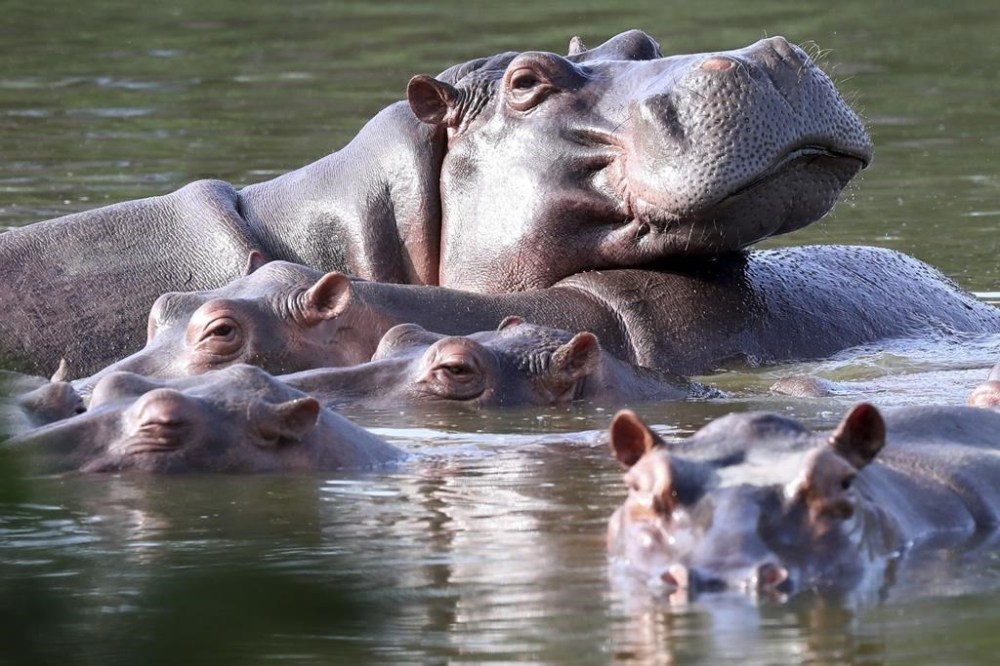
The hippos, which spread from Escobar’s estate into nearby rivers where they flourished, have no natural predators in Colombia and have been declared an invasive species that could upset the ecosystem.
A group of hippos was brought in the 1980s to Hacienda Nápoles, Escobar’s private zoo that became a tourist attraction after his death in 1993. Most of the animals live freely in rivers and reproduce without control.
Sterilization takes time, because spotting and capturing the territorial, aggressive 3-ton animals is complicated, David Echeverry López, chief of the environment office in charge of the plan, said in a video distributed to the press.

Rain events around the area have complicated efforts to capture the animals. More grass means “they have an oversupply of food, so baiting them to capture them becomes even more complicated,” Echeverry said.
The government estimates there are 169 hippos in Colombia, especially in the Magdalena River basin, and that if no measures are taken, there could be 1,000 by 2035.
When the plan was first announced, the environment ministry said the procedure is expensive — each sterilization costs about $9,800 — and entails risks for the hippopotamus, including allergic reactions to anesthesia or death, as well as risks to the animal health personnel.
____
Follow AP’s coverage of Latin America and the Caribbean at https://apnews.com/hub/latin-america

Advertisement Advertise With Us
Advertisement Advertise With Us