Long-awaited bill would give First Nations ‘tools and powers’ to protect water: Hajdu
Advertisement
Read this article for free:
or
Already have an account? Log in here »
To continue reading, please subscribe:

Digital Subscription
One year of digital access for only $205*
- Enjoy unlimited reading on winnipegfreepress.com
- Read the E-Edition, our digital replica newspaper
- Access News Break, our award-winning app
- Play interactive puzzles
*First annual payment billed as $205.00 + GST for one year. This annual subscription will automatically renew at $233.00 + GST every 52 weeks (10% off the regular annual price of $259.35). Offer available to new and qualified returning subscribers only. Cancel any time.
To continue reading, please subscribe:
Add Free Press access to your Brandon Sun subscription for only an additional
$1 for the first 4 weeks*
- Enjoy unlimited reading on winnipegfreepress.com
- Read the E-Edition, our digital replica newspaper
- Access News Break, our award-winning app
- Play interactive puzzles
*Your next Brandon Sun subscription payment will increase by $1.00 and you will be charged $17.95 plus GST for four weeks. After four weeks, your payment will increase to $24.95 plus GST every four weeks.
Read unlimited articles for free today:
or
Already have an account? Log in here »
Hey there, time traveller!
This article was published 11/12/2023 (1003 days ago), so information in it may no longer be current.
OTTAWA – The Liberal government tabled much-anticipated legislation Monday that aims to improve water quality in First Nations communities, improve collaboration on water protection and codify a new First Nations-led commission.
The long-promised bill, which Indigenous Services Minister Patty Hajdu is touting as the result of immense collaboration and knowledge-sharing, would apply a new framework for source water, drinking water, wastewater and related infrastructure on First Nations land.
Hajdu wore a light blue sweater and blue ribbon skirt as she gave a press conference about the bill on Parliament Hill.
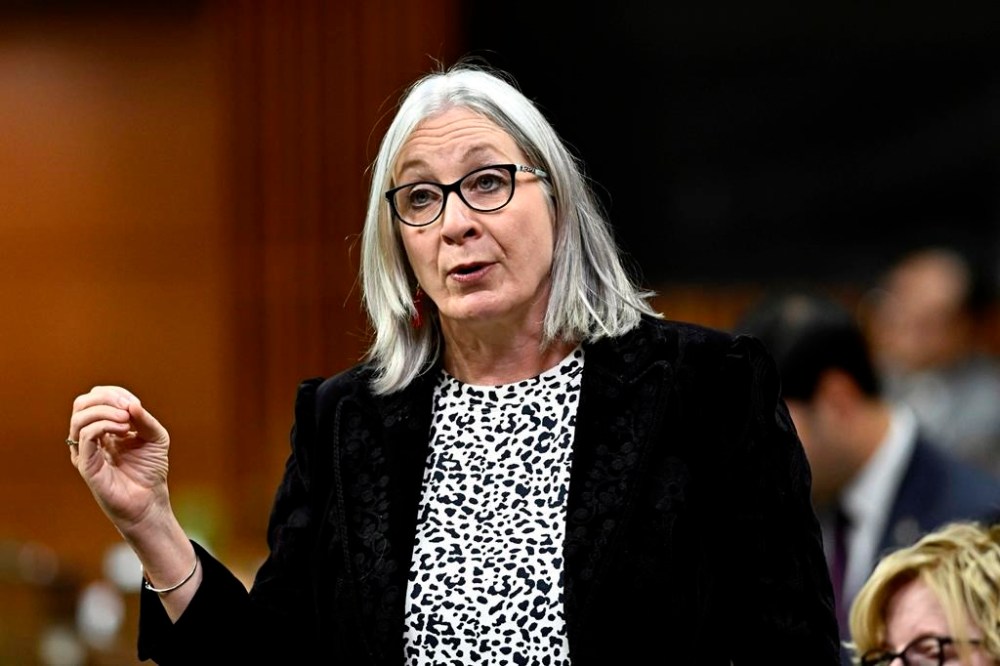
“First Nations made it clear they must have the tools and powers to protect their inherent right to clean water,” she told reporters outside the House of Commons.
“And this bill today is the first on a new path of law-making together.”
Assembly of First Nations Ontario regional chief Glen Hare, who appeared alongside Hajdu, stressed the legislation is essential to keep families together.
He said teachers often call the Children’s Aid Society on parents who live in First Nations and don’t have access to clean water, accusing them of neglect.
He asked all parties to support the legislation “because we want our kids (to be) clean just like everybody else. … Stop accusing our parents that we don’t take care of our loved ones.”
Hajdu had previously said the legislation she was working on was the closest the federal government had come to co-developing law with First Nations, though some chiefs have been disputing that assertion — especially those in Alberta.
The minister was asked Monday whether she would release a list of First Nations and other bodies that were consulted on the legislation.
She said all First Nations were provided with the draft legislation, as well as a second draft based on consultations with communities.
She added that consultation will be ongoing as the bill moves through the legislative process, and she “looks forward” to hearing from all stakeholders.
In 2015, the Liberals committed to ending all boil-water advisories in First Nations communities by 2021 — a self-imposed deadline that has since passed, and one that has led to criticism from First Nations.
Under the new legislation, drinking water quality and standards in First Nations communities would be determined by the federal government and First Nations together.
But such standards would at least need to match federal, provincial or territorial guidelines.
The bill stipulates that the federal government commit to provide funding at a level that is “comparable” to that provided by other levels of government off-reserve. And if that isn’t provided, the bill says First Nations can bring their cases to the courts.
Hajdu suggested that is intended to keep the funding model in place in perpetuity.
“This bill would put that into law and make it a firm, forever commitment.”
A new, First Nations-led water commission promised by the bill would monitor water in communities, help them obtain legal advice and make recommendationsto federal, provincial and territorial governments.
The legislation also opens the door to First Nations negotiating shared jurisdiction with provinces and territories to manage and preserve water sources under so-called water protection zones.
“There’s an opportunity here for First Nations people to teach provinces and territories how better to work together to make sure that we can protect that source water for the generations to come,” Hajdu said.
Asked Monday how the federal government could help manage conflicting priorities from First Nations and other jurisdictions on how best to protect water, Hajdu said she hopes they can come together.
“The government will support those consultations and that collaboration, and I would expect that there’ll be vigorous participation by provinces and territories,” she said.
Dawn Martin-Hill, a professor at McMaster University, said more Indigenous involvement would be a good thing.
“Most people that are addressing, monitoring and managing our waters are non-Indigenous, and they don’t consult with us regarding their findings or their initiatives,” said Martin-Hill, who leads the Indigenous water research program Ohneganos Ohnegahdę:gyo.
But if people who live nearby were able to manage waters themselves, she said, they’d be able to clean them up on their own and make decisions about what enters them.
Maybe the sturgeon that were once plentiful in the Grand River, which runs through her community of Six Nations in southern Ontario, would decide to return, too, she said.
The bill comes more than a year after the federal government repealed legislation on drinking water for First Nations dating back to Stephen Harper’s Conservative government.
Harper’s government said at the time that the 2013 Safe Drinking Water for First Nations Act aimed to support the development of federal regulations that would improve First Nations’ access to clean drinking water and the effective treatment of wastewater.
But many First Nations said the legislation was ineffective and dangerous, citing concerns about a lack of sustainable funding and the infringement of constitutional rights.
In December 2021, the Federal Court and the Court of Queen’s Bench of Manitoba decided to approve the settlement of an $8-billion class-action lawsuit.
The settlement aimed to provide $1.5-billion in compensation to any First Nations and their members who were subject to drinking water advisories lasting at least one year, between November 1995 and June 2021.
It also dedicated $400 million to create a First Nations Economic and Cultural Restoration Fund, allocated at least $6 billion to help support access to drinking water in First Nations communities and promised the new legislation ultimately tabled on Monday.
Martin-Hill called the whole process an exercise in “how colonialism operates.”
“They remove and appropriate lands and waters, remove your authority. You fight back and spend a lot of time and money in courts doing what you can, and then you get a little bit of movement,” she said. “It’s exhausting,”
NDP MP Lori Idlout, who serves as her party’s Crown-Indigenous relations critic, said she is “cautiously optimistic” about the legislation tabled Monday.
“But I’ll be reviewing it with a fine-tooth comb.”
This report by The Canadian Press was first published Dec. 11, 2023.
Related Articles
Too long a wait for water help
Advertisement Advertise With Us
Advertisement Advertise With Us