Experts at odds over result of UN climate talks in Dubai; ‘Historic,’ ‘pipsqueak’ or something else?
Advertisement
Read this article for free:
or
Already have an account? Log in here »
To continue reading, please subscribe:

Digital Subscription
One year of digital access for only $205*
- Enjoy unlimited reading on winnipegfreepress.com
- Read the E-Edition, our digital replica newspaper
- Access News Break, our award-winning app
- Play interactive puzzles
*First annual payment billed as $205.00 + GST for one year. This annual subscription will automatically renew at $233.00 + GST every 52 weeks (10% off the regular annual price of $259.35). Offer available to new and qualified returning subscribers only. Cancel any time.
To continue reading, please subscribe:
Add Free Press access to your Brandon Sun subscription for only an additional
$1 for the first 4 weeks*
- Enjoy unlimited reading on winnipegfreepress.com
- Read the E-Edition, our digital replica newspaper
- Access News Break, our award-winning app
- Play interactive puzzles
*Your next Brandon Sun subscription payment will increase by $1.00 and you will be charged $17.95 plus GST for four weeks. After four weeks, your payment will increase to $24.95 plus GST every four weeks.
Read unlimited articles for free today:
or
Already have an account? Log in here »
Hey there, time traveller!
This article was published 14/12/2023 (1034 days ago), so information in it may no longer be current.
DUBAI, United Arab Emirates (AP) — The climate negotiations that just finished in Dubai hit upon the essence of compromise, finding common language that nearly 200 countries accepted, at times grudgingly.
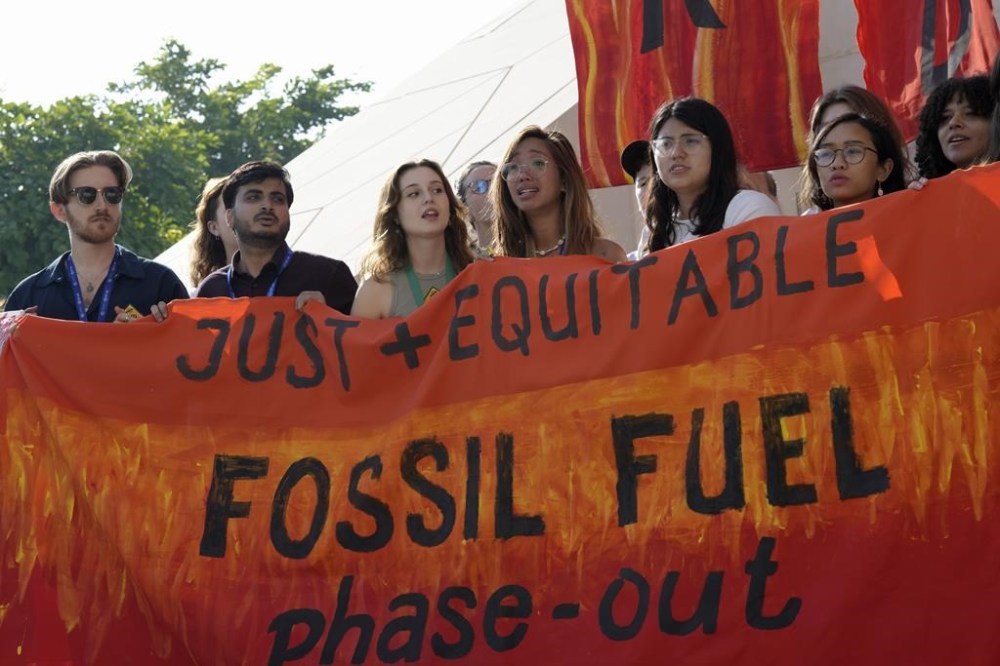
For the first time in nearly three decades of such talks, the final agreement mentioned fossil fuels — coal, oil and natural gas — as the cause of climate change and said the world needs to be “transitioning away” from them. But it did not use the words “phase out,” sought by advocates and more than 100 countries who argued it would provide sharper direction for the world to move quickly toward renewable energies that don’t produce the greenhouse gas emissions that heat the planet.
For an agreement so steeped in compromise, what experts thought of it, including what impact it could have in the years to come, was as polarizing as can be.
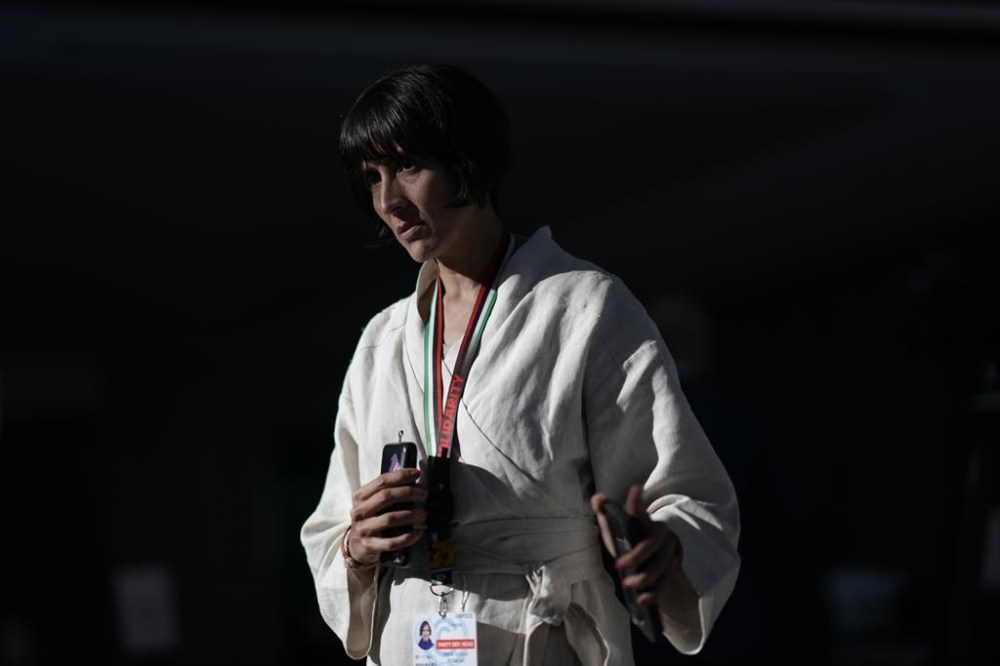
The Associated Press asked 23 different delegates, analysts, scientists and activists where they would rank COP28 among all climate conferences. More than half said COP28 was the most significant climate talks ever. Yet a smaller but still large chunk dismissed it as awful. Even some who deemed it the most significant also highlighted what they characterized as big problems.
Thirteen of the 23 said they’d rank what COP28 president Sultan al-Jaber calls the UAE Consensus in the top five of negotiations and deals. Several called it the most significant since the 2015 Paris talks, which set specific goals to limit temperature increases and was the nearly unanimous choice for the most meaningful climate meeting.
The two weeks of negotiations at COP28 also put into effect a new compensation fund for nations hit hard by the impacts of climate change, like cyclones, floods and drought. Called loss and damage, the fund drew nearly $800 million in pledges during the talks. Nations also agreed to triple the use of renewable fuel, double energy efficiency and adopted stronger language and commitments to help poorer nations adapt to worsening extreme weather from climate change.
Leaders, mostly non-scientists, said Dubai kept alive the world’s slim and fading hopes to limit global warming to 1.5 degrees Celsius (2.7 degrees Fahrenheit) above pre-industrial temperatures, the goal adopted in Paris. The world has already warmed 1.2 degrees (2.2 degrees Fahrenheit). Many scientific calculations that look at policies and pledges project at least 2.5 to nearly 3 degrees of warming (4.3 to nearly 5.4 degrees Fahrenheit), which could lead to more extremes and make it harder for humans to adapt.
Negotiators, who spent late Tuesday night and early Wednesday morning in special closed-door meetings with al-Jaber before the agreement was reached, were especially proud, using the word historic frequently in public pronouncements. When asked where COP28 fit in that history, they stayed on message.
“I think it ranks very high,” said Zambia Green Economy and Environment Minister Collins Nzovu, who headed his nation’s delegation. “Loss and damages is there. GGA (the adaptation agreement) is there. We talked about fossil fuels, as well. So I think we’re going somewhere.”
German climate special envoy Jennifer Morgan, who has attended all these talks either as an analyst, environmental activist and now negotiator, said it “is very significant” and not just for the list of actions agreed to.
“It shows that multilateralism works in a world where we are having trouble cooperating in a number of different areas,” Morgan told the AP hours after the agreement was gaveled through.
Former U.S. special climate envoy Todd Stern, who helped craft the Paris deal, put the UAE agreement as number five in his list of significant climate meetings, with Paris first.
Stern’s colleague at the RMI think-tank, CEO Jon Creyts, put this year’s deal second only to Paris “precisely because the message is comprehensive, economywide. It also engaged the private sector and local communities at a scale that is unprecedented. The U.S. and China were once again united in leadership mode while voices of the most vulnerable were heard.”
Power Shift Africa’s Mohamed Adow also thought it ranked second only to Paris: “This COP saw the loss and damage fund established, it finally named the cause of the climate crisis — fossil fuels — for the first time and it committed the world to transition away from them, with action required in this decade. That is a lot more than we get from most COPs.”
Johan Rockstrom, a scientist who heads the Potsdam Institute for Climate Impact Research in Germany, praised what happened, but like so many others who ranked it high, also saw problems.
“Finally, we have a plan the world can work with towards a phase-out of oil, coal and gas. It is not perfect, by far, and not entirely aligned with science, but it is something we can work with,” Rockstrom said in an email. “Will it deliver 1.5°C (even if implemented)? The answer is no.”
The problem is the agreement has too many loopholes that allow countries to continue producing and even expand use of fossil fuels, said Center for Biological Diversity’s Jean Su. She also cited a portion of the text that allows for “transitional” fuels — a term the industry often uses for natural gas that isn’t as polluting as coal but still contributes to warming.
“Politically it broke a major barrier, but it also contained poison pills that could lead to the expansion of fossil fuels and climate injustice,” she said.
Joanna Depledge, a climate negotiations historian at Cambridge University in England, said the idea that the weak language is “somehow seen as a triumph” shows the world is in trouble, Depledge said.
“The yawning chasm between science and policy, between intention and action, barely shifted in Dubai,” she added.
Scientists were among those who ranked the UAE deal low.
“In the context of these previous, truly significant COPs, Dubai is a pipsqueak,” said Princeton University climate scientist Michael Oppenheimer, who is also a professor of international affairs.
The agreement language was “like promising your doctor that you will ‘transition away from doughnuts’ after being diagnosed with diabetes,” said University of Pennsylvania climate scientist Michael Mann. “The lack of an agreement to phase out fossil fuels was devastating.”
Mann, like former U.S. Vice President Al Gore, called for a dramatic reform of the COP process. For his part, Gore said it’s too early to judge this COP’s significance, but he’s unhappy with the slow progress.
“It’s been 31 years since Rio, and eight since the Paris Agreement,” Gore said. “Only now are we even summoning the political will to name the core problem, which has otherwise been blocked by fossil fuel companies and petrostates.”
Gore and others still have hope, though.
“I think 1.5 is achievable,” said Thibyan Ibrahim, who led negotiations on adaptation on behalf of the Alliance of Small Island States. “You need to ensure that people are going to do the things that they have said they’ll do, that the pledges will be actually reached and that commitments will be followed through.”
___
Sibi Arasu and Jamey Keaten contributed to this report.
___

Read more of AP’s climate coverage at http://www.apnews.com/climate-and-environment
___
Follow Seth Borenstein on Twitter at @borenbears
___
Associated Press climate and environmental coverage receives support from several private foundations. See more about AP’s climate initiative here. The AP is solely responsible for all content.