It’s raining microplastics: Hurricane Larry dropped plastic particles all over N.L.
Advertisement
Read this article for free:
or
Already have an account? Log in here »
To continue reading, please subscribe:

Digital Subscription
One year of digital access for only $205*
- Enjoy unlimited reading on winnipegfreepress.com
- Read the E-Edition, our digital replica newspaper
- Access News Break, our award-winning app
- Play interactive puzzles
*First annual payment billed as $205.00 + GST for one year. This annual subscription will automatically renew at $233.00 + GST every 52 weeks (10% off the regular annual price of $259.35). Offer available to new and qualified returning subscribers only. Cancel any time.
To continue reading, please subscribe:
Add Free Press access to your Brandon Sun subscription for only an additional
$1 for the first 4 weeks*
- Enjoy unlimited reading on winnipegfreepress.com
- Read the E-Edition, our digital replica newspaper
- Access News Break, our award-winning app
- Play interactive puzzles
*Your next Brandon Sun subscription payment will increase by $1.00 and you will be charged $17.95 plus GST for four weeks. After four weeks, your payment will increase to $24.95 plus GST every four weeks.
Read unlimited articles for free today:
or
Already have an account? Log in here »
Hey there, time traveller!
This article was published 16/12/2023 (1004 days ago), so information in it may no longer be current.
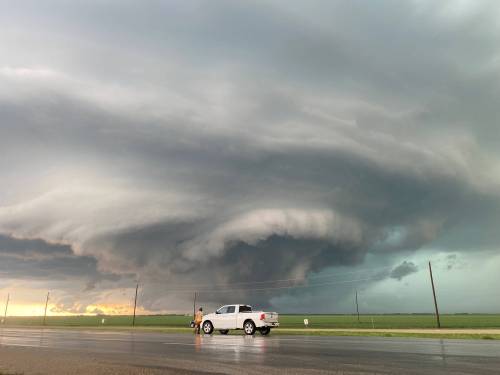
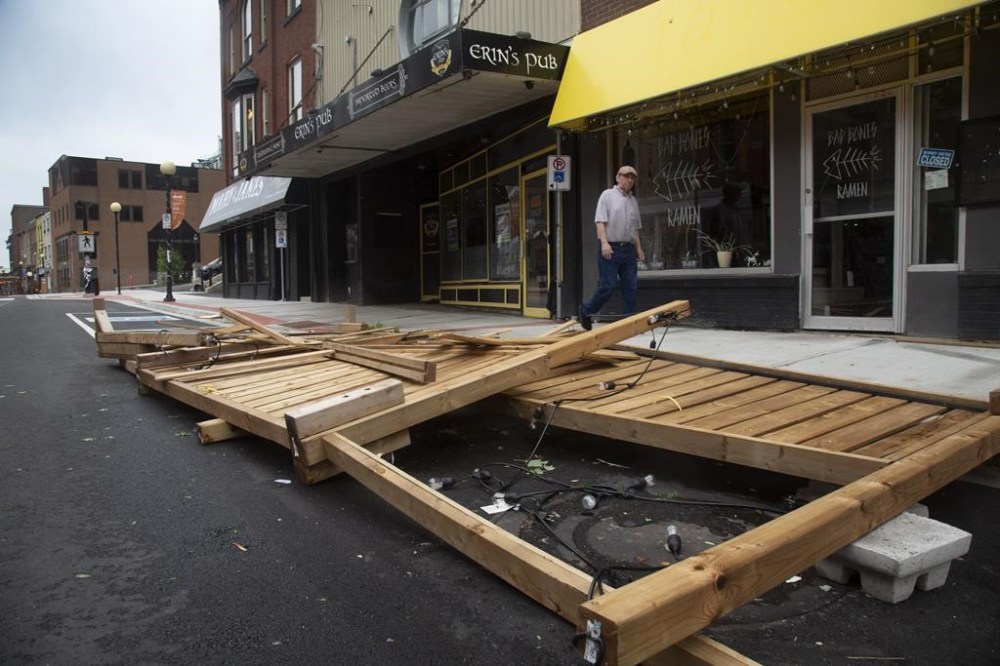
When hurricane Larry made landfall in Newfoundland and Labrador in 2021, the powerful storm brought heavy rain and wind across the province — and millions of microplastic particles originating from the Atlantic Ocean, researchers from Dalhousie University have found.
“So we have a saying … it’s raining cats and dogs,” Tony Walker, a professor in Dalhousie’s school for resource and environmental studies, said in an interview. “But now it’s raining cats and dogs and microplastics.”
Larry offered researchers a unique opportunity because the hurricane never flew over land between its formation off the western coast of Africa and its landfall in Canada. The storm, however, passed through a patch of the North Atlantic where thousands of tonnes of rubbish accumulate.
“What was important about this hurricane is typically hurricanes kind of pass through the Caribbean and then come up through Florida and the United States, and they probably would have also contained microplastics, but it’s really hard to determine whether those microplastics came from land-based sources of plastic or the ocean,” Walker said.
“Larry never made landfall … so the only place those microplastics could have come from was the North Atlantic garbage patch.”
As soon as the path of the storm became clear, two students, Anna Ryan and Amber LeBlanc, moved quickly to collect rainwater from Larry. They used a cylindrical glass container to avoid contaminating the sample with more plastic — and even wore cotton clothing, Walker said.
The storm made landfall near Great Bona Cove as a Category 1 hurricane on Sept. 11, 2021, with winds of 130 kilometres per hour and gusts more than 180 km/h.
The researchers collected rainwater samples between Sept. 9 and Sept. 12 of that year. A new sample was taken every six hours, for a total of eleven. They collected, on average, 20,000 microplastic particles per square metre per day before and after Larry’s passing. At the height of the storm, that number jumped significantly to nearly 115,000 particles per square metre per day.
“So during the storm, it was actually five times higher,” Walker said.
Because of Larry’s trajectory — and all the precautions the researchers took — Walker said he’s confident the microplastics could only have come from the waste vortex in the Ocean and not from North America.
Newfoundland and Labrador is approximately 405,000 square kilometres; the approximately 115,000 microplastic particles per square metre when Larry was at its strongest represents an astronomical amount of pollution.
Microplastic particles are less than five millimetres long. Most are so small that they are impossible to discern with the naked eye. They come from the degradation of other, larger plastic products and have been detected in every environment on the planet.
The risk they pose to the health of humans, animals and ecosystems remains poorly understood. The researchers point out, for example, that these particles are small enough to contaminate groundwater.
Additionally, the study notes that “because of their small size and because they are already airborne, microplastics can enter organisms, including humans, through respiration, which has health consequences that are still largely unknown.”
Walker said it’s important for the public to recognize how pervasive microplastic pollution is.
“I think it’s important now for members of the public to recognize that microplastic pollution is everywhere,” Walker said. “Knowledge is really important because we can then help change decision-makers and give them the power to actually make really important decisions to curb plastic production.”
The conclusions of this study were published in November in the scientific journal Nature.
This report by The Canadian Press was first published Dec. 16, 2023.
Note to readers: This is a corrected story. A previous version suggested all microplastics were too small to be seen by the naked eye.